Material
How to Glue Nylon (Polyamide)
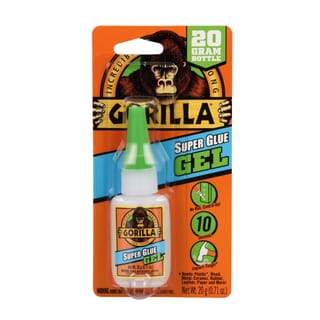
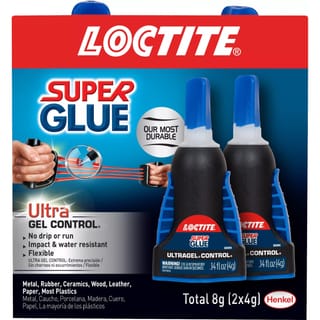
Use Toughened cyanoacrylate (Super glue) for most nylon (polyamide) jobs. Cyanoacrylate reacts strongly with polyamide surface chemistry, bonding tight-fitting nylon breaks securely.
Cable zip ties, appliance gears, door latch bushings, caster wheels, power tool housings, backpack buckles, drawer rollers
Best Glue for Nylon (Polyamide)
Toughened cyanoacrylate (Super glue)
Cyanoacrylate reacts strongly with polyamide surface chemistry, bonding tight-fitting nylon breaks securely.
Not for: Gap or poor fit, Flexing or movement
Derived from our material compatibility data.
Identify
How to Identify Nylon (Polyamide) Before Gluing
Tough, slippery, slightly flexible, and resists gouging and abrasive wear. It does not dissolve or soften when exposed to acetone, and emits a faint celery-like odor when melted or burned.
Character
How Nylon (Polyamide) Behaves When Glued
A durable engineering plastic prized for low friction and fatigue resistance. Nylon's chemical resistance and semi-crystalline structure make it harder to bond than ABS or PVC. Cyanoacrylate bonds small, close-fitting breaks; toughened 2-part epoxy holds structural loads if the surface is aggressively sanded or flame-treated. Common hardware store solvent cements cannot soften or weld nylon.
Properties
Why Toughened cyanoacrylate (Super glue) Works on Nylon (Polyamide)
Why this answer
- A durable engineering plastic prized for low friction and fatigue resistance. Nylon's chemical resistance and semi-crystalline structure make it harder to bond than ABS or PVC. Cyanoacrylate bonds small, close-fitting breaks; toughened 2-part epoxy holds structural loads if the surface is aggressively sanded or flame-treated. Common hardware store solvent cements cannot soften or weld nylon.
- Cyanoacrylate reacts strongly with polyamide surface chemistry, bonding tight-fitting nylon breaks securely.
- PorosityNon-porous
- How much adhesive can soak in.
- Surface energyMedium
- Low surface energy sheds ordinary glue.
- StiffnessSemi-rigid
- Whether the joint has to bend with the part.
- Heat sensitivityMedium
- How the material itself handles heat.
- Solvent sensitivityLow
- Whether solvent-based glues attack it.
Compatibility
Which Glues Work on Nylon (Polyamide)
Works well
- Toughened cyanoacrylate (Super glue)Works well
Cyanoacrylate reacts strongly with polyamide surface chemistry, bonding tight-fitting nylon breaks securely.
Also works, with conditions
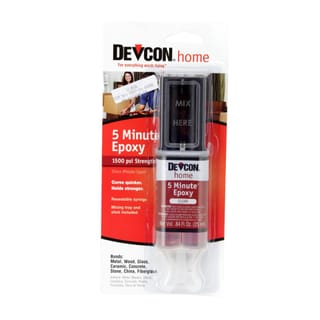
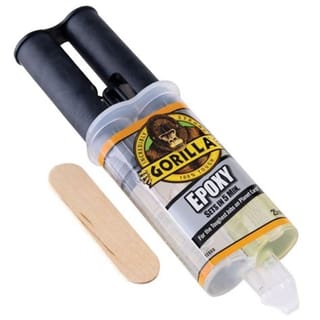
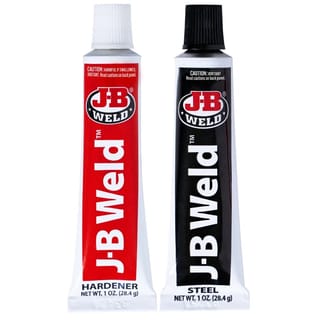
- EpoxyDepends on conditions
Toughened 2-part structural epoxy grips nylon well, but requires deep sanding to create mechanical bite on slippery faces.
Extra prep: Coarsely abrade the mating faces with 120-grit sandpaper and wipe clean with alcohol before applying epoxy.
The fallback when the part flexes or gets wet; it seals rather than carries load.
For large panels like PVC trim, where a bead along the back is the point.
Waterproof and tough on scuffed rigid plastic, but it needs real clamping and the foam squeeze-out has to be trimmed.
Right for laminating a flexible plastic sheet down flat — but its solvent attacks polystyrene and ABS, so test a corner first.
Only when the other side is cloth: flexible enough for a fabric-to-plastic seam, far too weak for a structural one.
3 families don’t hold
- Solvent cementDoesn’t hold
Solvent cements for PVC or ABS cannot dissolve nylon's chemical-resistant polymer matrix and will not weld the joint.
Spray adhesive — a repositionable film, not a bond; it slides off smooth plastic under any load.
Wood glue — plastic has no pores for it to soak into, so it peels off in a sheet.
Alternatives
Other Glues That Work on Nylon (Polyamide)
Toughened 2-part structural epoxy grips nylon well, but requires deep sanding to create mechanical bite on slippery faces.
Extra prep: Coarsely abrade the mating faces with 120-grit sandpaper and wipe clean with alcohol before applying epoxy.
The fallback when the part flexes or gets wet; it seals rather than carries load.
Better when: Flexing or movement, Water immersion
For large panels like PVC trim, where a bead along the back is the point.
Waterproof and tough on scuffed rigid plastic, but it needs real clamping and the foam squeeze-out has to be trimmed.
Better when: Outdoor exposure, Water immersion
Right for laminating a flexible plastic sheet down flat — but its solvent attacks polystyrene and ABS, so test a corner first.
Only when the other side is cloth: flexible enough for a fabric-to-plastic seam, far too weak for a structural one.
Guides
Common Repairs with Nylon (Polyamide)
Articles
Background on Gluing Nylon (Polyamide)
- Why glues don't stick to smooth plastics (and what actually works)Storage bins, toys, and bottle caps shed super glue and epoxy like water off wax. Here is how to identify non-stick plastics and the two methods that hold.
- How to remove super glue from skin and household surfacesCyanoacrylate bonds to skin moisture in seconds. Never pull glued fingers apart — use warm soapy water, acetone, or oil to release the bond safely.
- Epoxy vs Super Glue: Which one should you reach for?Super glue sets in seconds for hairline cracks; 2-part epoxy bridges gaps and supports heavy weight. Here is how to pick the right one in 30 seconds.
- Clamp time vs Cure time: Why moving glued parts too early ruins repairsA joint that feels dry to the touch has only reached 10% strength. Here is how working time, clamp time, and full cure work, plus 5 household clamping hacks.
Questions
Common Questions About Gluing Nylon (Polyamide)
- Can super glue bond broken nylon parts?
- Yes. Cyanoacrylate bonds relatively well to nylon compared to other smooth plastics because the amine groups in polyamide act as a natural polymerization accelerator. A gel formula or rubber-toughened CA gives the highest shock resistance.
- Can you solvent weld nylon using plastic cement?
- No. Typical hobby cements (MEK, acetone, dichloromethane) do not dissolve nylon. Nylon only dissolves in hazardous industrial acids (such as formic acid or concentrated sulfuric acid), making home solvent welding impractical.
- Does humidity affect gluing nylon?
- Nylon is hygroscopic, absorbing up to 8% atmospheric moisture. Surface moisture can cause rapid blooming on standard super glue; thoroughly dry the nylon part with a hairdryer before gluing for the strongest bond.
- What is the best way to repair a cracked nylon appliance gear?
- For high-torque gears, gluing the tooth or hub alone often fails under continuous load. Reinforce the repair with a tiny embedded metal pin or staple (plastic heat stapling) set in structural epoxy.