All articles
Article
Epoxy vs Super Glue: Which one should you reach for?
Super glue sets in seconds for hairline cracks; 2-part epoxy bridges gaps and supports heavy weight. Here is how to pick the right one in 30 seconds.
The core difference in 10 seconds
Most homeowners keep both Super Glue (cyanoacrylate) and 2-part epoxy in a utility drawer. While both are advertised as "super strong," they work completely differently:
- Super glue is water-thin and cures in 5 to 15 seconds by reacting with invisible moisture on surfaces. It has zero gap-filling ability — the two broken faces must touch with microscopic precision.
- 2-part epoxy consists of a resin and a hardener mixed in equal parts. It cures by internal chemical reaction, does not shrink, and hardens into a rigid solid plastic that fills holes, bridges missing chips, and holds heavy weight.
When to pick Super Glue
Reach for super glue when speed and a near-invisible glue line are all you need:
- Clean hairline cracks: A clean break where all broken pieces fit tightly together with zero missing slivers.
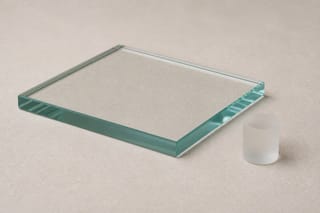
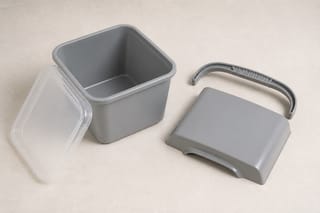
- Small, non-porous parts: Broken eyeglass nose pads, plastic toy limbs, decorative trinkets, and small jewelry.
- Rubber bonding: Super glue is exceptionally fast and strong on clean rubber O-rings, gaskets, and chair leg bumpers.
- When clamping is impossible: Because it sets in 10 seconds under light finger pressure, it works when you cannot attach a clamp.
When to pick 2-Part Epoxy
Reach for 2-part epoxy whenever the repair involves weight, gaps, water, or alignment time:
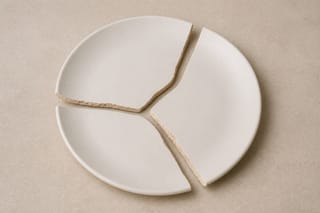
- Missing chips or uneven edges (gap-poor-fit): If tiny ceramic slivers crumbled away when an item broke, super glue will leave a hollow void that snaps instantly. Epoxy fills that gap completely.
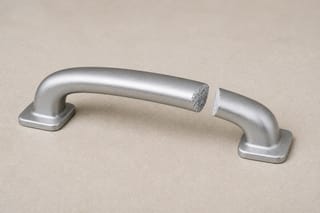
- Heavy leverage and shear loads: Mending a broken mug handle, a heavy tool handle, a metal bracket, or table legs.
- Water immersion and outdoor exposure: Cured epoxy is fully waterproof and shrugs off moisture, hand-washing, and humidity (see fix a broken ceramic mug).
- Complex multi-piece puzzles: Super glue gives you 5 seconds before it locks forever. 5-minute or 30-minute epoxy gives you generous working time to adjust and align multiple fragments into place.
The 30-second rule of thumb
Ask yourself three quick questions before opening a tube:
- Do the pieces snap back together seamlessly?
- Yes: Super glue.
- No (chipped or rough gap): Epoxy.
- Will someone pull, twist, or hang weight on it?
- Yes: Epoxy.
- No (decorative/static): Super glue.
- Will it be washed, soaked, or exposed to rain?
- Yes: Waterproof epoxy.
- No: Super glue.
Questions
Common questions
- Can I layer super glue to fill a missing chip in broken pottery?
- No. Thick beads of standard super glue take hours to cure, shrink significantly as they dry, and form a brittle, glassy core with weak shear resistance. Always use 2-part gap-filling epoxy or epoxy putty when pieces do not fit flush.
- Does adding baking soda to super glue make it act like epoxy?
- Sprinkling baking soda (sodium bicarbonate) over super glue instantly triggers polymerization, forming a hard acrylic cement in seconds. While great for rapid plastic reinforcement or filling holes, it is still more brittle than structural 2-part epoxy.
- Which glue has a longer shelf life after opening?
- 2-part epoxy lasts 2 to 5 years once opened because the resin and hardener remain separated in their individual tubes. Super glue reacts with ambient air moisture inside the bottle and typically dries out solid within 3 to 6 months after opening.
- Is epoxy or super glue safe for items washed in a hot dishwasher?
- Neither is completely dishwasher-safe for long-term repeated cycles. Hot dishwasher water (140°F/60°C+) and harsh alkaline detergents soften super glue and slowly degrade epoxy. Hand-washing in warm water is strongly recommended for all glued repairs.