Material
How to Glue Brick & Masonry
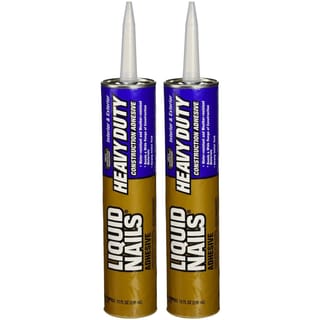
Use Heavy-duty polyurethane construction adhesive for most brick & masonry jobs. Heavy-duty exterior construction adhesive bridges rough, porous brick surfaces and withstands freeze-thaw cycles on landscape walls.
Red clay bricks, chimney veneer, garden retaining wall caps, walkway pavers, concrete masonry units (CMU)
Best Glue for Brick & Masonry
Heavy-duty polyurethane construction adhesive
Heavy-duty exterior construction adhesive bridges rough, porous brick surfaces and withstands freeze-thaw cycles on landscape walls.
Derived from our material compatibility data.
Identify
How to Identify Brick & Masonry Before Gluing
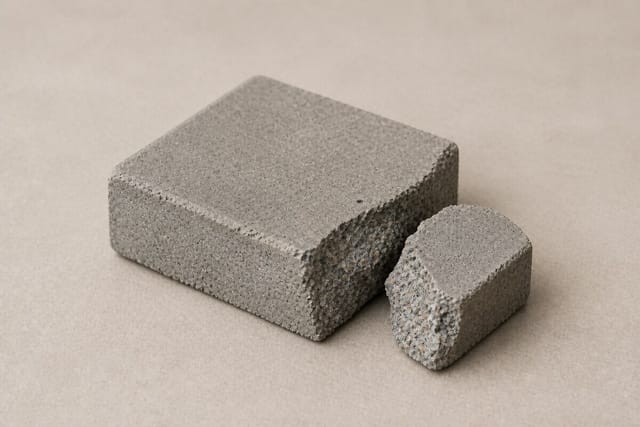
Rough, porous, earthy texture in red, tan, or gray shades. A water droplet placed on the surface soaks in within seconds due to porous capillary absorption.
Character
How Brick & Masonry Behaves When Glued
A heavy, kiln-fired clay or compressed aggregate masonry material. Highly porous, alkaline, and rough. Polyurethane construction adhesive is the standard for landscape caps and veneer repairs, bridging uneven textures and resisting freeze-thaw cycles. 2-part structural anchoring epoxy is required for anchoring heavy metal brackets. Thin adhesives (super glue, PVA) fail due to porous capillary starvation and weather degradation.
Properties
Why Heavy-duty polyurethane construction adhesive Works on Brick & Masonry
Why this answer
- A heavy, kiln-fired clay or compressed aggregate masonry material. Highly porous, alkaline, and rough. Polyurethane construction adhesive is the standard for landscape caps and veneer repairs, bridging uneven textures and resisting freeze-thaw cycles. 2-part structural anchoring epoxy is required for anchoring heavy metal brackets. Thin adhesives (super glue, PVA) fail due to porous capillary starvation and weather degradation.
- Heavy-duty exterior construction adhesive bridges rough, porous brick surfaces and withstands freeze-thaw cycles on landscape walls.
- PorosityPorous
- How much adhesive can soak in.
- Surface energyHigh
- Low surface energy sheds ordinary glue.
- StiffnessRigid
- Whether the joint has to bend with the part.
- Heat sensitivityLow
- How the material itself handles heat.
- Solvent sensitivityLow
- Whether solvent-based glues attack it.
Compatibility
Which Glues Work on Brick & Masonry
Works well
Heavy-duty exterior construction adhesive bridges rough, porous brick surfaces and withstands freeze-thaw cycles on landscape walls.
Also works, with conditions
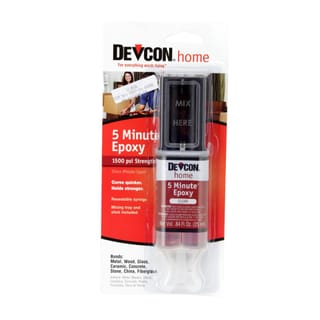
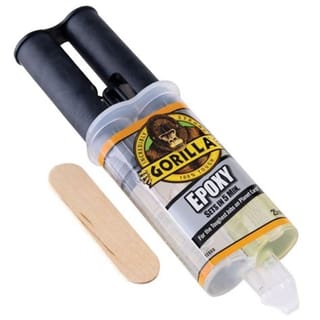
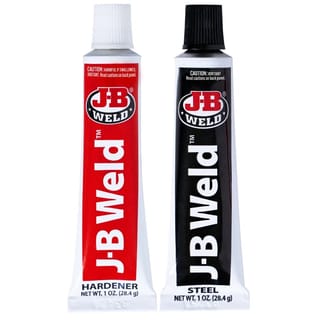
- 2-part masonry anchoring epoxyDepends on conditions
2-part masonry anchoring epoxy anchors heavy bolts and iron brackets directly into drilled brick holes without cracking surrounding masonry.
- PolyurethaneDepends on conditions
Foams deeply into porous clay micro-cavities to lock broken bricks and pavers together against rain exposure.
The answer for a joint that has to move — an expansion gap, a sill, a wet edge — rather than one that has to hold.
6 families don’t hold
Contact cement — dusty, alkaline concrete gives the film nothing solid to hold, and it lifts with the surface.
Spray adhesive — the mist soaks into the pores and leaves nothing behind to bond with.
Fabric adhesive — too thin to bridge a rough surface, and it has no water resistance on masonry.
Wood glue — it cannot cope with dust, alkalinity, or the damp that concrete always carries.
Super glue — it wicks into the pores before it can bond anything.
Solvent cement — masonry has nothing a solvent can dissolve, so it disappears into the pores and leaves the joint empty.
Alternatives
Other Glues That Work on Brick & Masonry
2-part masonry anchoring epoxy
2-part masonry anchoring epoxy anchors heavy bolts and iron brackets directly into drilled brick holes without cracking surrounding masonry.
Better when: Load-bearing / shear
Foams deeply into porous clay micro-cavities to lock broken bricks and pavers together against rain exposure.
Better when: Outdoor exposure, Water immersion
The answer for a joint that has to move — an expansion gap, a sill, a wet edge — rather than one that has to hold.
Better when: Flexing or movement, Water immersion, Outdoor exposure
Questions
Common Questions About Gluing Brick & Masonry
- What is the best adhesive to glue down loose landscape block and retaining wall caps?
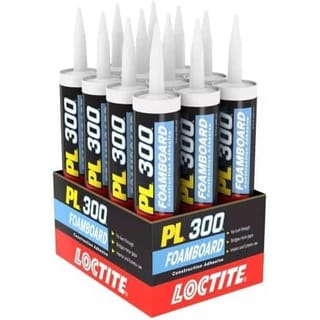
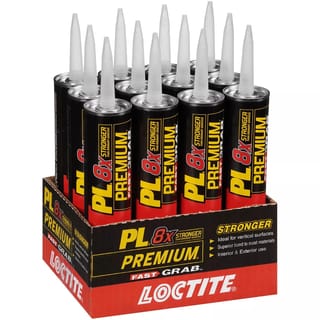
- Polyurethane landscape construction adhesive (such as Loctite PL Premium or Gorilla Heavy Duty Construction Adhesive) is the industry standard. It stays flexible through winter freeze-thaw cycles and bonds permanently to damp masonry.
- Can you glue a broken brick back together?
- Yes. Clean all crumbling dust with a stiff wire brush. For non-weight-bearing decorative bricks, polyurethane glue or 2-part epoxy bonds the two halves securely. For high-temperature firebox bricks, use refractory cement instead of organic adhesives.
- How should heavy metal railings or ledger boards be anchored into brick?
- Drill a hole with a masonry hammer drill, blow out all powdery brick dust completely, and inject a 2-part masonry anchoring epoxy cartridge before inserting the threaded anchor rod.
- When should I use construction adhesive instead of mortar on brick?
- Use construction adhesive for gluing wall capstones, replacing isolated loose bricks, or attaching brick veneers. Use traditional mortar when laying entire courses of load-bearing structural walls where leveling and joint thickness are required.