Material
Polycarbonate
Greenhouse and shed roof panels, machine guards, safety glasses, headlight lenses, twin-wall glazing
Default glue
A neutral-cure bead sticks without attacking the sheet and stretches as the panel moves against its frame, which is why glazing a polycarbonate panel is a sealant job rather than a glue job.
Extra prep
- Use a silicone the label clears for polycarbonate; an acid-cure bathroom sealant can craze the sheet as it cures.
Not for: Load-bearing / shear
Derived from our material compatibility data.
Identify
How to tell it’s polycarbonate
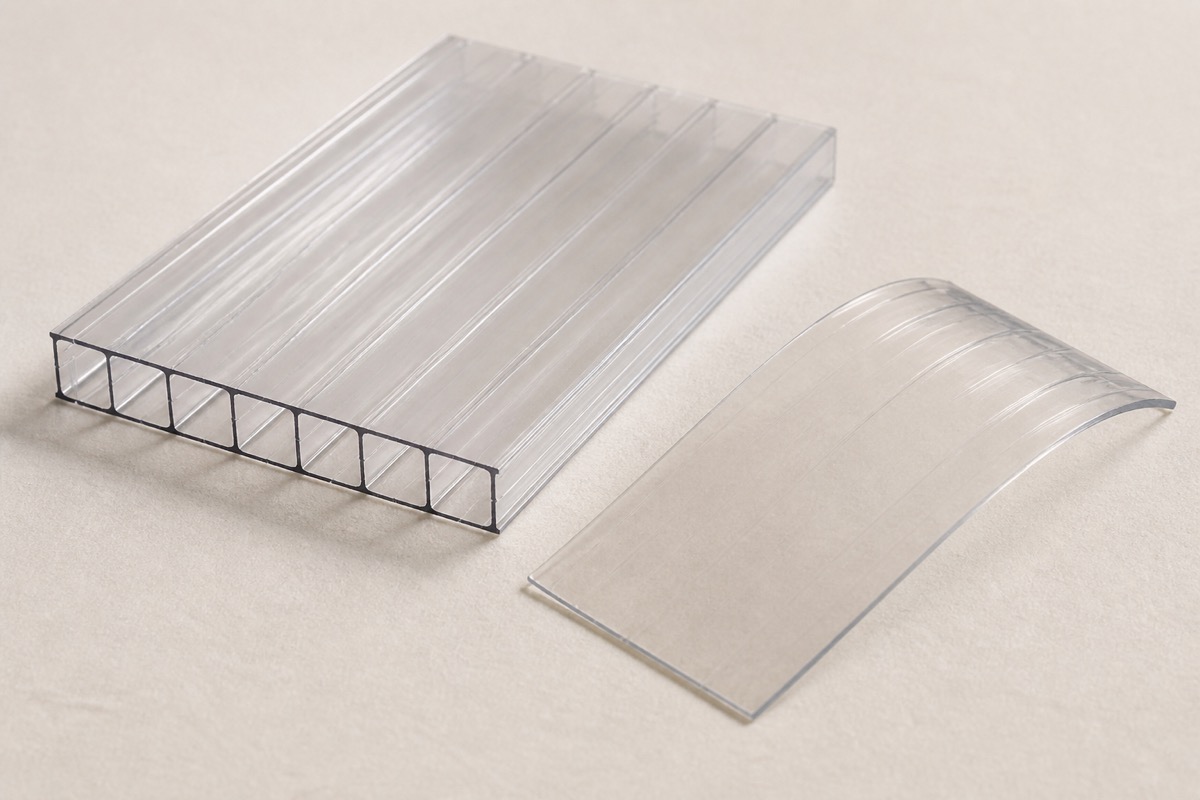
Clear or tinted sheet that bends instead of cracking — the twin-wall version has hollow ribs running through it. Panels usually carry a printed film marking the UV-protected face, and that face has to stay outward.
Character
What it’s like to glue
Tough enough to take a hammer blow, and yet the material most likely to fail from what you glue it with. Solvents and even some adhesive vapours cause stress cracking: fine cracks that open days later around a screw hole, a clamped edge, or a forced fit. It also expands and contracts far more than the frame holding it, so on any panel a flexible bead outlives a rigid glue line.
Properties
Why it glues the way it does
Why this answer
- Tough enough to take a hammer blow, and yet the material most likely to fail from what you glue it with. Solvents and even some adhesive vapours cause stress cracking: fine cracks that open days later around a screw hole, a clamped edge, or a forced fit. It also expands and contracts far more than the frame holding it, so on any panel a flexible bead outlives a rigid glue line.
- A neutral-cure bead sticks without attacking the sheet and stretches as the panel moves against its frame, which is why glazing a polycarbonate panel is a sealant job rather than a glue job.
- Use a silicone the label clears for polycarbonate; an acid-cure bathroom sealant can craze the sheet as it cures.
- PorosityNon-porous
- How much adhesive can soak in.
- Surface energyMedium
- Low surface energy sheds ordinary glue.
- StiffnessSemi-rigid
- Whether the joint has to bend with the part.
- Heat sensitivityMedium
- How the material itself handles heat.
- Solvent sensitivityHigh
- Whether solvent-based glues attack it.
Compatibility
Every glue family on polycarbonate
- Neutral-cure siliconeWorks well
A neutral-cure bead sticks without attacking the sheet and stretches as the panel moves against its frame, which is why glazing a polycarbonate panel is a sealant job rather than a glue job.
Extra prep: Use a silicone the label clears for polycarbonate; an acid-cure bathroom sealant can craze the sheet as it cures.
- 2-part plastic epoxyDepends on conditions
The strongest option on a small rigid part, but it cures hard while polycarbonate keeps moving, so a long or clamped joint concentrates stress and the sheet cracks beside the glue rather than in it.
- Super glue (CA)Depends on conditions
Fast on a small hidden fixing, but the vapour fogs the surface and the hard joint invites stress cracks in a part that flexes for a living.
- Contact cementDoesn’t hold
Contact cement — the solvent leaves polycarbonate crazed, and the cracks keep spreading after the panel goes back into service.
The strongest joint available on a plastic the label actually names — PVC, CPVC, ABS, acrylic, polystyrene — because it welds the two faces into one piece. On any other plastic it does nothing at all.
Extra prep: Read the can: it must name your plastic. Then check the joint closes tight, because solvent cement welds a seam and cannot fill one.
For large panels like PVC trim, where a bead along the back is the point.
Waterproof and tough on scuffed rigid plastic, but it needs real clamping and the foam squeeze-out has to be trimmed.
Only when the other side is cloth: flexible enough for a fabric-to-plastic seam, far too weak for a structural one.
Spray adhesive — a repositionable film, not a bond; it slides off smooth plastic under any load.
Wood glue — plastic has no pores for it to soak into, so it peels off in a sheet.
Conditions
When the answer changes
Same joint, different circumstances. These are the conditions that change the pick.
Alternatives
Other glues that work on polycarbonate
The strongest option on a small rigid part, but it cures hard while polycarbonate keeps moving, so a long or clamped joint concentrates stress and the sheet cracks beside the glue rather than in it.
Better when: Load-bearing / shear
Fast on a small hidden fixing, but the vapour fogs the surface and the hard joint invites stress cracks in a part that flexes for a living.
The strongest joint available on a plastic the label actually names — PVC, CPVC, ABS, acrylic, polystyrene — because it welds the two faces into one piece. On any other plastic it does nothing at all.
Extra prep: Read the can: it must name your plastic. Then check the joint closes tight, because solvent cement welds a seam and cannot fill one.
For large panels like PVC trim, where a bead along the back is the point.
Waterproof and tough on scuffed rigid plastic, but it needs real clamping and the foam squeeze-out has to be trimmed.
Better when: Outdoor exposure, Water immersion
Only when the other side is cloth: flexible enough for a fabric-to-plastic seam, far too weak for a structural one.
Avoid
What not to use
Avoid
Contact cement
Contact cement — the solvent leaves polycarbonate crazed, and the cracks keep spreading after the panel goes back into service.
Avoid
Spray adhesive
Spray adhesive — a repositionable film, not a bond; it slides off smooth plastic under any load.
Avoid
Wood glue (PVA)
Wood glue — plastic has no pores for it to soak into, so it peels off in a sheet.
Questions
Common questions
- Why did my polycarbonate crack days after I glued it?
- That is stress cracking: a solvent weakens the surface while the part is held under tension, and the cracks open later. Over-tightened fixings, a panel forced into an undersized opening, and solvent-based adhesives are the usual causes. Relieve the stress first, then pick an adhesive cleared for polycarbonate.
- What should I use on greenhouse or shed roof panels?
- A neutral-cure silicone rated for polycarbonate, together with the profiles and tape the panel system supplies. The sheet expands and contracts noticeably with the sun, so the joint has to stretch — a rigid glue line simply tears one side or the other.
- Can I use ordinary bathroom silicone on polycarbonate?
- Check the label. Acid-cure silicones, the ones that smell of vinegar, can craze polycarbonate as they cure. Neutral-cure products that name plastics or glazing are the safe choice.
- Should I seal the open edges of twin-wall polycarbonate?
- Yes, but with the tapes and profiles made for it rather than with adhesive. The top edge takes a sealed tape and the bottom edge a vented one, so condensation can drain out. Filling the flutes with silicone traps water inside and the panel goes cloudy.
- Can I glue polycarbonate the same way as acrylic?
- No. Acrylic welds cleanly with acrylic cement, while the same class of solvent leaves polycarbonate prone to stress cracking, so the two materials call for different answers. Identify which sheet you have before choosing: acrylic cracks under a sharp blow, polycarbonate flexes.