Material
Plywood
Subfloors, cabinet carcasses, shelving, sheathing
Default glue
On a face or a veneer it cures stronger than the plies themselves. On a sawn edge it soaks into the end grain and starves the joint, which is why an edge-glued butt joint in plywood needs help.
Extra prep
- On a cut edge, brush on thinned glue first and let it soak in, then glue properly — or add a dowel, biscuit, or screwed cleat and stop relying on the edge.
Not for: Water immersion
Derived from our material compatibility data.
Identify
How to tell it’s plywood
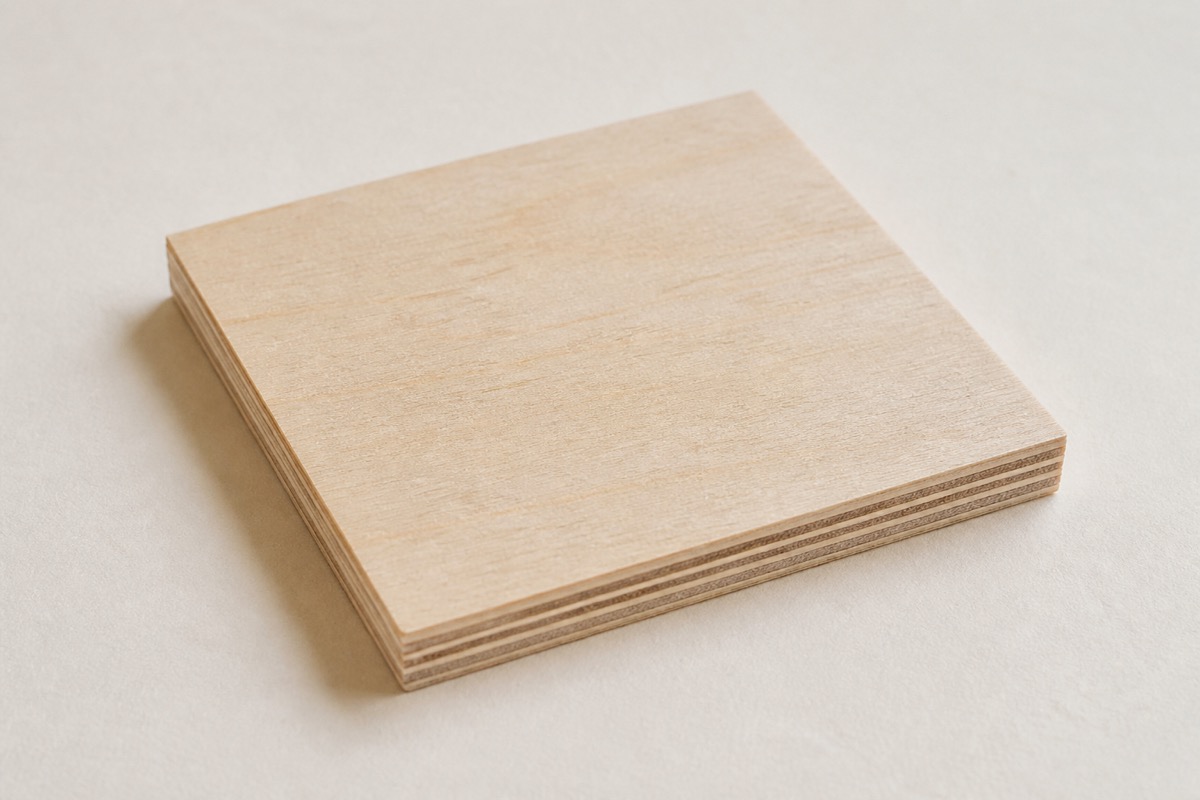
A flat sheet whose cut edge shows a stack of thin layers, each turned at right angles to the one below. The face may be a smooth veneer, the edge never is.
Character
What it’s like to glue
Two different materials in one sheet. A face glues exactly like solid wood, while an edge is a row of end grain and small voids that drinks glue and gives it little to hold. Glue faces to faces where you can, and treat any edge joint as the weak one unless you size it first. Interior-grade plywood also has its own glue lines to worry about: get it wet and the sheet delaminates no matter what you used.
Properties
Why it glues the way it does
Why this answer
- Two different materials in one sheet. A face glues exactly like solid wood, while an edge is a row of end grain and small voids that drinks glue and gives it little to hold. Glue faces to faces where you can, and treat any edge joint as the weak one unless you size it first. Interior-grade plywood also has its own glue lines to worry about: get it wet and the sheet delaminates no matter what you used.
- On a face or a veneer it cures stronger than the plies themselves. On a sawn edge it soaks into the end grain and starves the joint, which is why an edge-glued butt joint in plywood needs help.
- On a cut edge, brush on thinned glue first and let it soak in, then glue properly — or add a dowel, biscuit, or screwed cleat and stop relying on the edge.
- PorosityPorous
- How much adhesive can soak in.
- Surface energyMedium
- Low surface energy sheds ordinary glue.
- StiffnessSemi-rigid
- Whether the joint has to bend with the part.
- Heat sensitivityLow
- How the material itself handles heat.
- Solvent sensitivityLow
- Whether solvent-based glues attack it.
Compatibility
Every glue family on plywood
- Wood glue (PVA)Works well
On a face or a veneer it cures stronger than the plies themselves. On a sawn edge it soaks into the end grain and starves the joint, which is why an edge-glued butt joint in plywood needs help.
Extra prep: On a cut edge, brush on thinned glue first and let it soak in, then glue properly — or add a dowel, biscuit, or screwed cleat and stop relying on the edge.
- Construction adhesiveWorks well
The bead spans the gap between a sheet and joists that are never perfectly flat, which is exactly what stops a plywood subfloor from squeaking.
- EpoxyDepends on conditions
It soaks into an open edge or a delaminated corner and stays put where PVA would be sucked dry, and it survives damp — the reason boat repairs reach for it.
Waterproof, and it foams into the grain rather than just drying on it — but the expansion pushes the joint apart unless it is properly clamped.
The answer for gluing a laminate or veneer sheet down flat with no clamps — never for a joint that carries load.
Bonds fine to bare wood and stays flexible, but it seals rather than joins — use it where the wood meets glass, tile, or a wet surface.
Only when the other side is cloth: it grips bare wood well enough for upholstery but has no strength as a wood joint.
Spray adhesive — it tacks paper and cloth to wood, but as a wood-to-wood joint it is a film that peels.
Super glue alone — it grabs wood, but cures brittle and bridges gaps poorly.
Solvent cement — it joins by dissolving plastic, and there is nothing in wood for it to dissolve, so it soaks in, evaporates, and leaves the joint dry.
Conditions
When the answer changes
Same joint, different circumstances. These are the conditions that change the pick.
Use Epoxy
Alternatives
Other glues that work on plywood
The bead spans the gap between a sheet and joists that are never perfectly flat, which is exactly what stops a plywood subfloor from squeaking.
Better when: Gap or poor fit
It soaks into an open edge or a delaminated corner and stays put where PVA would be sucked dry, and it survives damp — the reason boat repairs reach for it.
Better when: Gap or poor fit, Outdoor exposure, Water immersion
Waterproof, and it foams into the grain rather than just drying on it — but the expansion pushes the joint apart unless it is properly clamped.
Better when: Outdoor exposure
The answer for gluing a laminate or veneer sheet down flat with no clamps — never for a joint that carries load.
Bonds fine to bare wood and stays flexible, but it seals rather than joins — use it where the wood meets glass, tile, or a wet surface.
Better when: Water immersion, Flexing or movement
Only when the other side is cloth: it grips bare wood well enough for upholstery but has no strength as a wood joint.
Avoid
What not to use
Avoid
Spray adhesive
Spray adhesive — it tacks paper and cloth to wood, but as a wood-to-wood joint it is a film that peels.
Avoid
Super glue (CA)
Super glue alone — it grabs wood, but cures brittle and bridges gaps poorly.
Avoid
Solvent cement
Solvent cement — it joins by dissolving plastic, and there is nothing in wood for it to dissolve, so it soaks in, evaporates, and leaves the joint dry.
Questions
Common questions
- Why is a glued plywood edge joint so weak?
- A sawn edge is mostly end grain plus the small voids between plies, so it absorbs glue instead of holding a film of it. Size the edge with thinned glue before the real coat, and back the joint with a dowel, biscuit, or cleat rather than trusting glue alone.
- What glue holds plywood subfloor down?
- A construction adhesive rated for subfloor, run as a bead along each joist and then screwed or nailed off. The bead fills the small gaps between the sheet and joists that are never perfectly flat, and those gaps are what makes a floor squeak.
- Can I re-glue plywood that has delaminated?
- Sometimes. If the layers are intact and you can open the gap, work thin glue or epoxy into it and clamp the area flat until it cures. If the plies are swollen, crumbly, or wet, the sheet has failed as a material and gluing it will not bring it back.
- Does waterproof glue make interior plywood safe outdoors?
- No. Interior-grade plywood is held together by its own glue lines, and those come apart in the weather regardless of what you joined the sheets with. Use exterior or marine-grade plywood when the panel will get wet, and pick the glue after that.
- How do I glue a lifted plywood veneer back down?
- Slide glue under the loose area with a thin blade or a syringe, press the veneer flat, and clamp it over a caul so the pressure spreads. Wipe out squeeze-out before it dries, since dried glue on the face will show under any finish.