Material
Natural stone
Granite countertops, marble vanity tops, slate hearths, limestone sills, travertine tiles
Default glue
High-strength 2-part epoxy bonds broken stone slabs, anchors undermount sink brackets, and cures rigid with zero oil migration.
Derived from our material compatibility data.
Identify
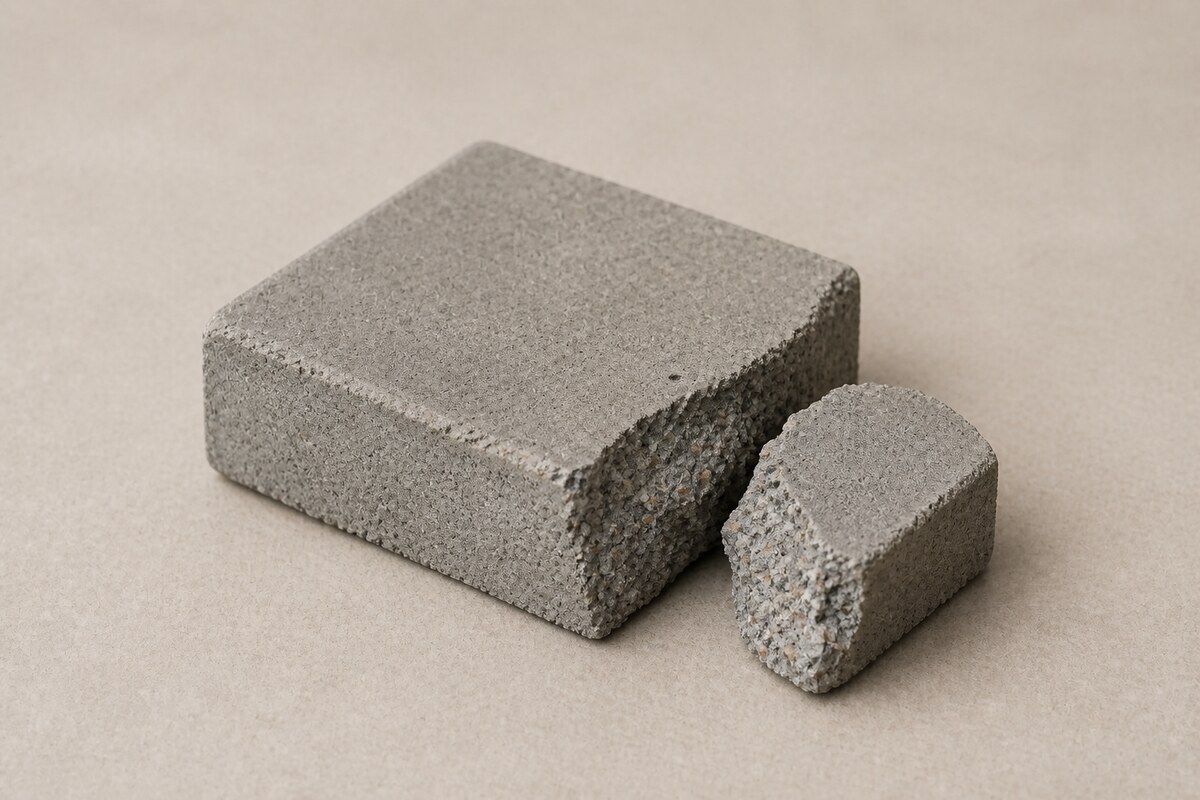
How to tell it’s natural stone
Dense, cold, rigid mineral slab with natural veining, crystalline grain, or fossil patterns. Steel scratches soft marble and limestone easily but slides off dense granite and quartzite.
Character
What it’s like to glue
Dense, heavy, and brittle in tension. While cement mortar is used to bed large paving slabs, household repairs and countertop seam fabrication rely on 2-part epoxy. Crucially, natural stone is sensitive to chemical staining: standard acetic-cure silicone releases acid that bleeds dark oily halos into porous marble and limestone, requiring dedicated 100 % neutral-cure or non-staining silicone.
Properties
Why it glues the way it does
Why this answer
- Dense, heavy, and brittle in tension. While cement mortar is used to bed large paving slabs, household repairs and countertop seam fabrication rely on 2-part epoxy. Crucially, natural stone is sensitive to chemical staining: standard acetic-cure silicone releases acid that bleeds dark oily halos into porous marble and limestone, requiring dedicated 100 % neutral-cure or non-staining silicone.
- High-strength 2-part epoxy bonds broken stone slabs, anchors undermount sink brackets, and cures rigid with zero oil migration.
- PorositySemi-porous
- How much adhesive can soak in.
- Surface energyHigh
- Low surface energy sheds ordinary glue.
- StiffnessRigid
- Whether the joint has to bend with the part.
- Heat sensitivityLow
- How the material itself handles heat.
- Solvent sensitivityLow
- Whether solvent-based glues attack it.
Compatibility
Every glue family on natural stone
- 2-part stone epoxyWorks well
High-strength 2-part epoxy bonds broken stone slabs, anchors undermount sink brackets, and cures rigid with zero oil migration.
- 100% Neutral-cure siliconeDepends on conditions
Use 100 % neutral-cure non-staining silicone for perimeter sealing; standard acetic-cure silicone leaches acid and causes dark permanent stains around stone joints.
Extra prep: Check that the silicone cartridge specifies neutral-cure and non-staining for natural granite or marble.
- Construction adhesiveDepends on conditions
Solvent-free polyurethane construction adhesive sets stone backsplashes and thresholds firmly against wood or drywall studs.
It foams into the pores and locks in mechanically, which suits a rough face — the expansion means the part has to be weighted or braced while it cures.
Contact cement — dusty, alkaline concrete gives the film nothing solid to hold, and it lifts with the surface.
Spray adhesive — the mist soaks into the pores and leaves nothing behind to bond with.
Fabric adhesive — too thin to bridge a rough surface, and it has no water resistance on masonry.
Wood glue — it cannot cope with dust, alkalinity, or the damp that concrete always carries.
Super glue — it wicks into the pores before it can bond anything.
Solvent cement — masonry has nothing a solvent can dissolve, so it disappears into the pores and leaves the joint empty.
Alternatives
Other glues that work on natural stone
Use 100 % neutral-cure non-staining silicone for perimeter sealing; standard acetic-cure silicone leaches acid and causes dark permanent stains around stone joints.
Extra prep: Check that the silicone cartridge specifies neutral-cure and non-staining for natural granite or marble.
Solvent-free polyurethane construction adhesive sets stone backsplashes and thresholds firmly against wood or drywall studs.
Better when: Gap or poor fit
It foams into the pores and locks in mechanically, which suits a rough face — the expansion means the part has to be weighted or braced while it cures.
Avoid
What not to use
Avoid
Contact cement
Contact cement — dusty, alkaline concrete gives the film nothing solid to hold, and it lifts with the surface.
Avoid
Spray adhesive
Spray adhesive — the mist soaks into the pores and leaves nothing behind to bond with.
Avoid
Flexible fabric adhesive
Fabric adhesive — too thin to bridge a rough surface, and it has no water resistance on masonry.
Avoid
Wood glue (PVA)
Wood glue — it cannot cope with dust, alkalinity, or the damp that concrete always carries.
Avoid
Super glue (CA)
Super glue — it wicks into the pores before it can bond anything.
Avoid
Solvent cement
Solvent cement — masonry has nothing a solvent can dissolve, so it disappears into the pores and leaves the joint empty.
Questions
Common questions
- What is the best glue to fix a cracked granite countertop?
- Clear or pigment-tinted 2-part epoxy is the industry standard. It wicks deep into the fracture line, locks the broken crystal structure together with high tensile strength, and can be scraped flush with a razor blade and polished.
- Why does standard silicone cause dark stains on marble and granite?
- Acetic-cure silicone releases acidic byproducts and oils during cure. Porous stones like marble and limestone absorb these plasticizers, creating permanent dark oily halos around the bead. Always use dedicated 100 % neutral-cure silicone.
- How are undermount sink clips attached to stone countertops?
- Epoxy threaded anchor studs directly into shallow slots on the stone's underside using 2-part epoxy paste. The sink is clamped mechanically by the clip brackets, while neutral-cure silicone provides the watertight perimeter seal.
- What glue handles outdoor stone steps and wall coping?
- Polyurethane construction adhesive or exterior 2-part structural epoxy provides flexible, waterproof bonding that accommodates seasonal freeze-thaw expansion without cracking loose from masonry.