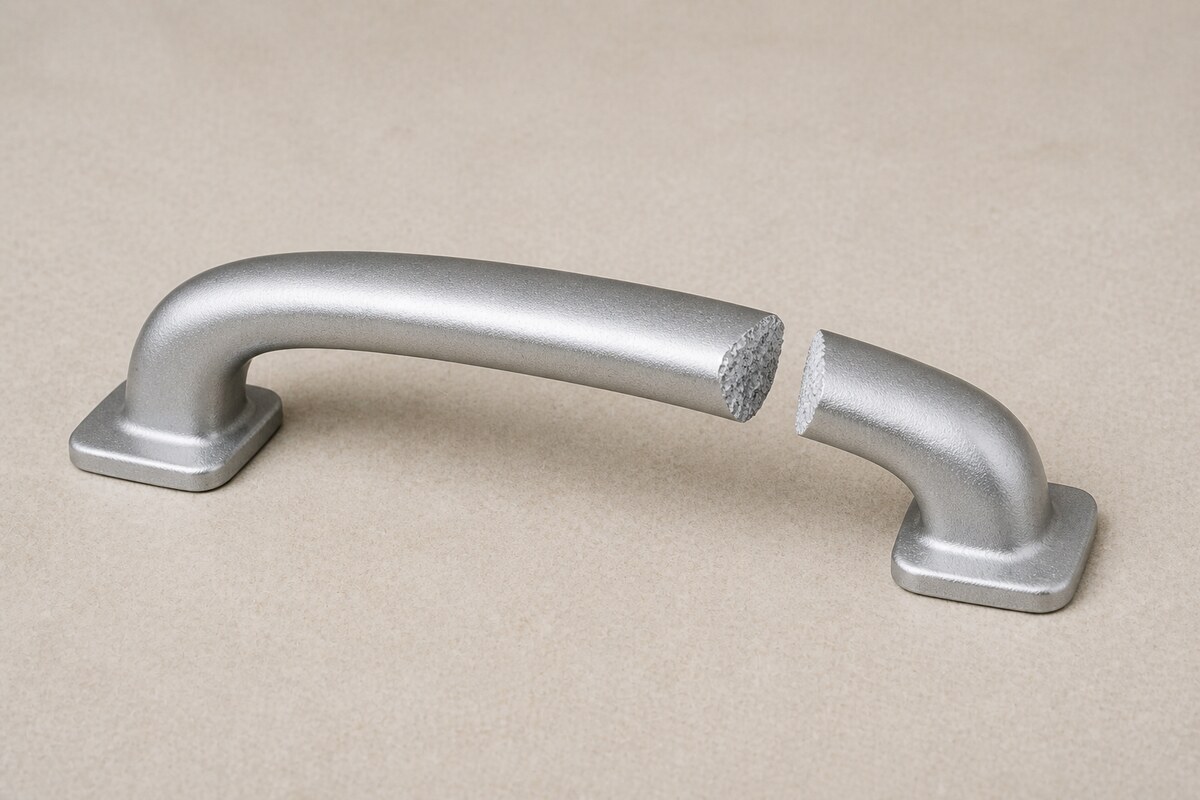
Material pair
Metal to Metal
Best bet
Fills gaps, tolerates high shear and tensile stress, resists oils and heat, and cures into machinable material.
Reviewed and adjusted by an editor.
Why this answer
- Smooth, dense, and non-porous — the glue sits entirely on the surface, so scuffing and degreasing matter more than which glue you pick.
- The strongest rigid bond on a scuffed, grease-free surface.
Preparation
Prep both faces the same way
Grind or scuff with 80-to-120-grit sandpaper to bare, bright metal. Degrease thoroughly with acetone or alcohol to remove cutting oils and grease.
Conditions
When the answer changes
Steel-reinforced 2-part epoxy is the standard for high-strength metal repairs, tool fixes, and load-bearing joints. Cyanoacrylate (super glue) is limited to small, tight-fitting decorative parts with no impact or shear stress.
Alternatives
What else works
Quick fix for small, perfectly flat metal parts with tight contact and minimal shock or shear stress.
Waterproof and more forgiving of movement than epoxy, but it has no pores to foam into on this side — scuff the metal and clamp the joint.
For fixing a metal panel or trim across a wide area where a thick bead spans the hollows — not for a joint carrying its load through a small footprint.
Sticks well to clean metal and stays flexible and waterproof — a sealant around metal, not a joint that carries weight.
Better when: Water immersion, Flexing or movement
For facing metal with laminate, rubber, or leather over a wide area; degrease first, and expect it to soften if the metal gets hot.
Only when the other side is cloth, and only on degreased metal — it holds a lining, not a load.
Avoid
What not to use
Avoid
Spray adhesive
Spray adhesive — the tacky film never hardens, so it creeps and slides on a smooth metal face.
Avoid
Wood glue (PVA)
Wood glue — it needs pores to soak into and peels straight off metal.
Avoid
Solvent cement
Solvent cement — it welds plastic by softening it, and metal never softens; the solvent flashes off and the parts come apart in your hands.
Products
Products for this joint
- Devcon 5 Minute EpoxyRapid, crystal-clear bonding on metal, glass, ceramic, wood, and rigid plastics — the benchmark fast-curing 2-part epoxy for jewelry, fine craft, and clean household break repairs.
- Gorilla 2-Part EpoxyGeneral household rigid repairs where a clear, gap-tolerant bond matters.
- J-B Weld OriginalRigid metal repairs — a cracked bracket, a stripped hole, a broken tool handle.
- J-B Weld SteelStik Epoxy PuttyHand-kneadable, non-rusting steel-reinforced epoxy putty for emergency plumbing repairs, auto components, stripped metal threads, and rebuilding missing metal/machinery sections — sets in 5 minutes and fully cures in 1 hour with 4,000 psi tensile strength.
Questions
Common questions
- Can metal epoxy replace welding or brazing?
- For brackets, machine housings, engine accessories, and non-structural tool repairs, high-strength steel-filled epoxy easily handles thousands of PSI of stress. However, for vehicle suspension, structural frames, and life-safety components, welding or mechanical bolts remain essential.
- Why is degreasing with acetone or alcohol essential on metal?
- Metals almost always carry invisible milling oils, rust inhibitors, or skin oils. Applying adhesive over oil bonds the glue to the oil film rather than the metal, causing sudden peeling under load. A quick solvent wipe restores true metal-to-adhesive contact.
- Why does super glue snap off metal so easily?
- Standard cyanoacrylate cures into a rigid glass-like film. Because metal conducts shock and vibration directly through the thin glue line, any twisting torque or sudden tap will shatter the brittle bond. Thick 2-part epoxy absorbs shock and distributes shear load.
- What sandpaper grit should I use before bonding metal?
- Use coarse 80-to-120-grit sandpaper or a wire brush. Polished or mirror-smooth metal provides minimal mechanical keying; coarse sanding scratches create micro-grooves that dramatically increase the bonding surface area.