Article
Which glues are food-safe?
Food-safe is a product claim, not a glue family. Read the manufacturer's own line — and keep repairs off the rim of a mug.
The short version
There is no food-safe kind of glue. Food-safe is a line on a specific product's own documentation, for a specific use: a cutting-board glue line is not the same job as the rim of a mug.
If the manufacturer does not say food contact for the way you will use it, repair the piece and keep it off food. You cannot read that answer from the chemistry.
What "food-safe" actually means
Food contact is a documented use, not a vibe.
- Nontoxic is not food-safe. That word usually describes ordinary handling. It does not mean the cured glue is meant to sit against food or drink.
- Indirect is not direct. A cutting board's glue line is inside the joint. Food is not supposed to touch it. A seam across the lip of a mug is direct contact.
- Kitchen & bath is not food-grade. A silicone that seals a sink is made to stay rubbery and resist mildew. Several kitchen silicones on this site, including GE Advanced Silicone 2, explicitly rule out food contact.
- Drinking-water certification is not food-safe. A plumbing epoxy rated for potable water systems answers a different question.
Only the manufacturer's own statement counts: food contact, and whether that statement is direct or indirect. Coatings do not fix an unapproved glue. They wear, they crack, and the combined repair has no approval of its own.
Glue families, not a shopping list
Each family below can contain a food-contact product. Most products in the family do not.
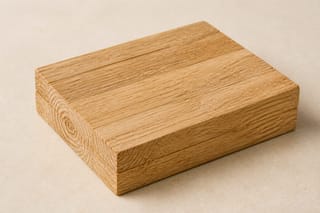
Wood glue (PVA). The usual home case is a wood-to-wood cutting board. Titebond III is documented by its maker for indirect food contact — the glue sits in the joint, not on the cutting face. Ordinary interior PVA does not inherit that claim.
Silicone. The family that actually gets used against food, when the product says so: a labeled food-safe / food-grade silicone, for a seal, not a load. Kitchen-and-bath tubes are the usual miss. Silicone stays rubbery; it is the wrong tool for a handle that has to carry a full mug.
Epoxy. Strong on ceramic and glass, and the default for a clean break. Ordinary two-part epoxy is a repair, not a food-contact endorsement. Some specialty products are documented for food contact; the bottle in the hardware aisle usually is not. A glued mug that still goes in the dishwasher or microwave is a stopgap either way — heat and hot water eventually win.
Super glue (CA). Fast, brittle, and a common "not for food contact" on the label. Fine for a display piece. Not a drinking rim.
Other families on this site — polyurethane, construction adhesive, contact cement, solvent cement — are not how you repair something that still touches dinner.
The jobs this actually comes up on
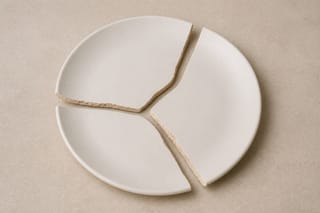
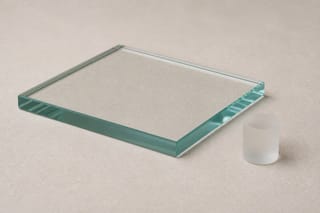
A broken mug or plate. Keep the glue line off the rim and off the eating surface. The ceramic mug guide is the procedure; this page is why the answer changes when the piece still has to hold coffee. Same rule on glass: if the label is silent, repair it for display.
A cutting board. This is the one household job where a documented wood glue is the ordinary answer — indirect contact, glue in the joint. See wood to wood.
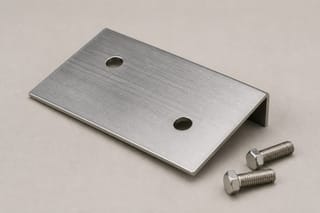
A kitchen sink bead. Resealing a sink is a waterproof silicone job around stainless steel or ceramic. That is a kitchen seal, not a food-contact surface, unless the product you pick says otherwise.
When to stop using it for food
Retire the piece from food and drink when any of these is true:
- The adhesive has no food-contact statement for this use.
- The seam crosses a rim, a lip, or a cutting / eating face.
- You cannot name the product you used.
- The repair will live in the dishwasher or the microwave and you need it to stay food-safe anyway.
A retired mug still holds pencils. That is an honest repair.