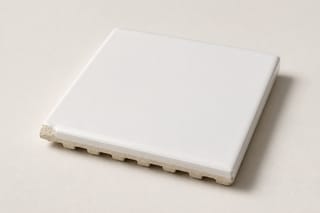
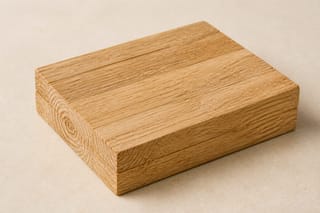
Material pair
How to Glue Tile to Wood
Use Polyurethane construction adhesive for most tile-to-wood joints. Thick bead bridges uneven gaps and flexes with seasonal wood expansion without cracking.
Best Adhesive for Tile to Wood
Polyurethane construction adhesive
Thick bead bridges uneven gaps and flexes with seasonal wood expansion without cracking.
Extra prep
- Scrape old mastic off the tile back and the wall until both are sound, dry, and free of dust. A crumbling wall is a masonry repair first.
Reviewed and adjusted by an editor.
Why Polyurethane construction adhesive Works
- Two jobs that look the same and are not. Setting a tile back onto a wall wants a thick construction adhesive on the biscuit; mending a broken tile is the same clean-break problem as any other ceramic and still wants epoxy. Floor tile and wet areas are laid in thinset mortar, which is not a household adhesive — do not treat a cartridge as a substitute for a bed of mortar underfoot. Silicone seals grout and wet edges; it does not set a tile that has to stay put.
- Porous and slightly forgiving — glue soaks in, and a well-glued joint ends up stronger than the wood around it. Oily hardwoods like teak need a solvent wipe first.
- A thick bead on the ridged back spans the gap between biscuit and wall, which is how a loose wall tile goes back on. It is a repair, not a mortar bed — floor tile and wet areas still want thinset.
- A bead thick enough to span the gap between a board and an uneven wall — right for trim and panels, far too coarse for a furniture joint.
- Scrape old mastic off the tile back and the wall until both are sound, dry, and free of dust. A crumbling wall is a masonry repair first.
Conditions
When to Use 100% silicone sealant & adhesive Instead
Standard cement thinset cracks as wood swells and contracts across seasons. Polyurethane construction adhesive absorbs movement while bridging uneven gaps. For tile in wet zones, seal all perimeter joints with flexible silicone.
Alternatives
Other Adhesives That Work
100% silicone sealant & adhesive
Waterproof and highly flexible option for decorative tile accents or areas exposed to frequent moisture and slight movement.
Better when: Water immersion, Flexing or movement
High-strength rigid bond for small mosaic inserts or tight repairs where excess glue can be wiped clean before curing.
Better when: Gap or poor fit, Outdoor exposure
Products
Products for Bonding Tile to Wood
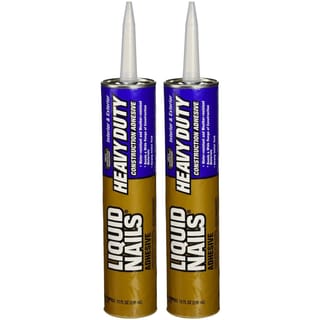
- Liquid Nails Heavy DutyTrim, paneling, and small masonry jobs — anything you'd run a bead along.
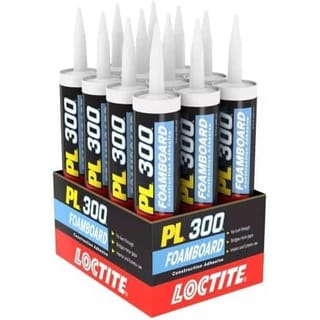
- Loctite PL 300 Foamboard AdhesiveBonding unfaced foam insulation to porous wood, drywall, concrete, or brick without burning through the foam.
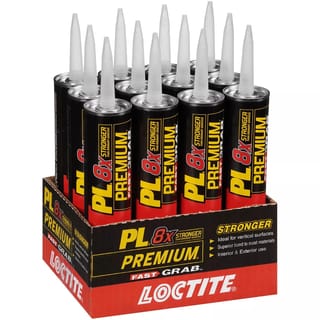
- Loctite PL Premium Polyurethane Construction AdhesiveHeavy-duty structural bonding on subfloors, framing, stairs, concrete, brick, stone, and metal — the 100 % polyurethane formula provides 3x the strength of traditional adhesives and cures in all weather conditions.
Guides
Repairs that involve this pair
Questions
Common Questions About Gluing Tile to Wood
- Can you glue tile to wood?
- Yes, on a sound, dry wooden surface — the same advice covers wood under tile. A flexible construction adhesive can bridge small gaps and move with the wood; ordinary tile mortar on bare wood usually cracks as the board changes dimension.
- Can I use thinset mortar to set tile on wood?
- Not on bare wood. Cement mortar is rigid, and wood keeps moving with indoor humidity, so the bed cracks and tiles pop. Use a flexible adhesive meant for wood, or a proper uncoupling system if you are tiling a floor.
- Does wood glue hold tile on wood?
- No. PVA wants two porous wood faces that can be clamped. The back of a tile is ceramic biscuit, not grain, and the joint is too uneven for a thin wood-glue line.
- Can I glue tile to wood outdoors or in a wet area?
- Use a water-resistant flexible adhesive such as exterior polyurethane or 100% silicone, and keep the wood itself sealed so it does not rot under the tile. Standing water still wants drainage, not a thicker bead.