All guides
Best bet
Polyurethane construction adhesive
Thick gap-filling bead accommodates uneven wood recesses and flexes with seasonal humidity shifts.
Extra prep
- Scrape old mastic off the tile back and the wall until both are sound, dry, and free of dust. A crumbling wall is a masonry repair first.
Not for: Water immersion
Reviewed and adjusted by an editor.
Why this answer
- Two jobs that look the same and are not. Setting a tile back onto a wall wants a thick construction adhesive on the biscuit; mending a broken tile is the same clean-break problem as any other ceramic and still wants epoxy. Floor tile and wet areas are laid in thinset mortar, which is not a household adhesive — do not treat a cartridge as a substitute for a bed of mortar underfoot. Silicone seals grout and wet edges; it does not set a tile that has to stay put.
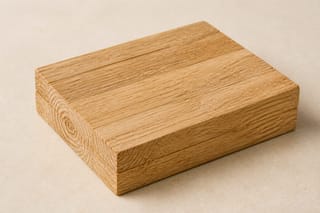
- Porous and slightly forgiving — glue soaks in, and a well-glued joint ends up stronger than the wood around it. Oily hardwoods like teak need a solvent wipe first.
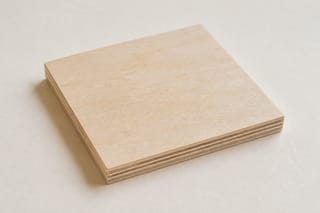
- Two different materials in one sheet. A face glues exactly like solid wood, while an edge is a row of end grain and small voids that drinks glue and gives it little to hold. Glue faces to faces where you can, and treat any edge joint as the weak one unless you size it first. Interior-grade plywood also has its own glue lines to worry about: get it wet and the sheet delaminates no matter what you used.
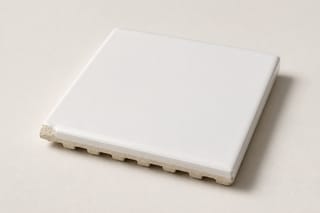
- A thick bead on the ridged back spans the gap between biscuit and wall, which is how a loose wall tile goes back on. It is a repair, not a mortar bed — floor tile and wet areas still want thinset.
- A bead thick enough to span the gap between a board and an uneven wall — right for trim and panels, far too coarse for a furniture joint.
- The bead spans the gap between a sheet and joists that are never perfectly flat, which is exactly what stops a plywood subfloor from squeaking.
- Scrape old mastic off the tile back and the wall until both are sound, dry, and free of dust. A crumbling wall is a masonry repair first.
How to do it
Step by step
- Carefully pry the loose tile out of its recess using a stiff putty knife and chip away dried mortar or old adhesive from the wood base.
- Vacuum all loose grit and brush off the back of the tile so both surfaces are dry, sound, and free of dust.
- Apply several generous pea-sized dabs or a zigzag bead of polyurethane construction adhesive across the back of the tile.
- Press the tile firmly into position, sliding slightly back and forth to bed the adhesive until the tile sits flush with neighboring pieces.
- Place a flat board and heavy weight over the tile for 24 hours to cure, then regrout or seal the surrounding perimeter joints.
Conditions
When the answer changes
Standard cement thinset cracks as wood swells and shrinks with changing humidity. Polyurethane construction adhesive absorbs movement while bridging uneven gaps. For outdoor patio tables, use exterior-grade waterproof adhesive.
Alternatives
What else works
Flexible waterproof alternative for accent tiles near sinks or damp areas requiring vibration dampening.
Better when: Water immersion, Flexing or movement
Questions
Common questions
- Why use polyurethane construction adhesive instead of tile mortar for this repair?
- Tile mortar requires mixing, has no shear flexibility on expanding wood, and shrinks as it dries. A polyurethane construction adhesive cartridge is fast, bridges gaps, and remains elastomeric so seasonal wood movement does not pop the tile loose again.
- How do I make sure the reattached tile ends up completely level with adjacent tiles?
- Dry-fit the tile first to check the depth. If the recess is deep, apply thicker dabs of adhesive; if shallow, scrape more old mortar out. Place a flat board across multiple tiles while weighting it down to ensure an even surface.
- Can I put hot pots or pans on a tile table repaired with construction adhesive?
- Direct extreme heat can soften construction adhesive or thermal-shock the ceramic. Always use trivets or hot pads on tiled furniture.
- When should I regrout around the repaired tile?
- Wait at least 24 hours until the construction adhesive is fully cured before applying grout. Grouting too early can dislodge the tile while the adhesive is still soft.