Material pair
How to Glue Stainless steel to Wood
Use polyurethane construction adhesive for bonding stainless steel backsplashes, kickplates, and countertop edging to wood cabinetry. For small metal brackets or structural hardware under heavy shear, use 2-part epoxy.
Best Adhesive for Stainless steel to Wood
Polyurethane construction adhesive
Provides broad gap-filling grab for large stainless sheets, kickplates, and backsplashes while flexing under thermal expansion.
Reviewed and adjusted by an editor.
Why Polyurethane construction adhesive Works
- The passive chromium-oxide film is stable enough to bond, but fingerprints, polish, and a mirror finish leave little for adhesive to grip. Degrease, abrade to an even satin scratch, clean again, and keep fingers off the prepared face.
- Porous and slightly forgiving — glue soaks in, and a well-glued joint ends up stronger than the wood around it. Oily hardwoods like teak need a solvent wipe first.
- For fixing a metal panel or trim across a wide area where a thick bead spans the hollows — not for a joint carrying its load through a small footprint.
- A bead thick enough to span the gap between a board and an uneven wall — right for trim and panels, far too coarse for a furniture joint.
Preparation
How to Prepare Stainless steel and Wood for Gluing
Scuff the bonding face aggressively with 80–120 grit sandpaper to break the smooth chromium oxide passivated layer, then degrease thoroughly with acetone or isopropyl alcohol.
Ensure bare wood is clean, smooth, dry, and free of dust or oils.
Conditions
When to Use 100% silicone sealant & adhesive Instead
Large stainless sheets expand significantly with temperature changes; a flexible polyurethane construction adhesive absorbs thermal shear without buckling. Small hardware uses rigid 2-part epoxy.
Alternatives
Other Adhesives That Work
High shear strength for attaching heavy stainless steel brackets, handles, or localized hardware to solid wood.
Better when: Load-bearing / shear
Extra prep: Remove oil and polish, abrade to an even satin scratch, then clean again without touching the bond face.
100% silicone sealant & adhesive
Seals perimeter water joints around stainless sinks and wooden countertops, preventing rot.
Better when: Water immersion, Flexing or movement
For laminating thin stainless steel foil or veneer sheets flat against wood backing.
Avoid
What not to use
Avoid
Wood glue (PVA)
PVA wood glue cannot bond to non-porous stainless steel and peels off when dry.
Products
Products for Bonding Stainless steel to Wood
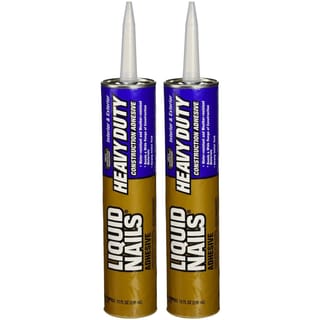
- Liquid Nails Heavy DutyTrim, paneling, and small masonry jobs — anything you'd run a bead along.
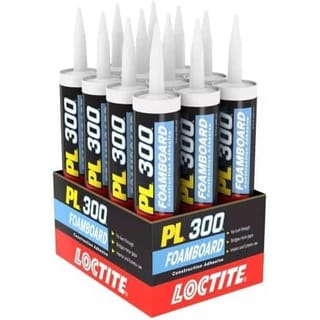
- Loctite PL 300 Foamboard AdhesiveBonding unfaced foam insulation to porous wood, drywall, concrete, or brick without burning through the foam.
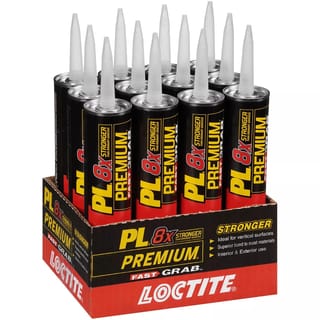
- Loctite PL Premium Polyurethane Construction AdhesiveHeavy-duty structural bonding on subfloors, framing, stairs, concrete, brick, stone, and metal — the 100 % polyurethane formula provides 3x the strength of traditional adhesives and cures in all weather conditions.
Questions
Common Questions About Gluing Stainless steel to Wood
- What glue should I use for a stainless steel kitchen backsplash on wood backing?
- Use a polyurethane or advanced hybrid polymer construction adhesive applied in vertical beads spaced 4 to 6 inches apart. This allows air to escape and handles kitchen heat cycles from stoves without letting the metal sheet buckle.
- Why does stainless steel need aggressive sanding before gluing?
- Stainless steel contains chromium, which naturally forms an ultra-thin, chemically passive oxide film that repels adhesives. Coarse sanding (80–120 grit) physically scratches through this barrier to give adhesives mechanical teeth.
- What adhesive should I use between a stainless sink and a wooden countertop?
- Use 100% silicone sealant as a waterproof perimeter bedding seal combined with mechanical undermount sink brackets screwed into the wood underside. Never rely solely on adhesive to support the weight of a filled sink.
- When should I choose epoxy over construction adhesive for stainless steel and wood?
- Choose epoxy for small, precisely fitted joints under heavy mechanical leverage (such as table leg flanges or bracket mounts). Choose construction adhesive for large panels, kickplates, or where the adhesive must span uneven surface gaps.