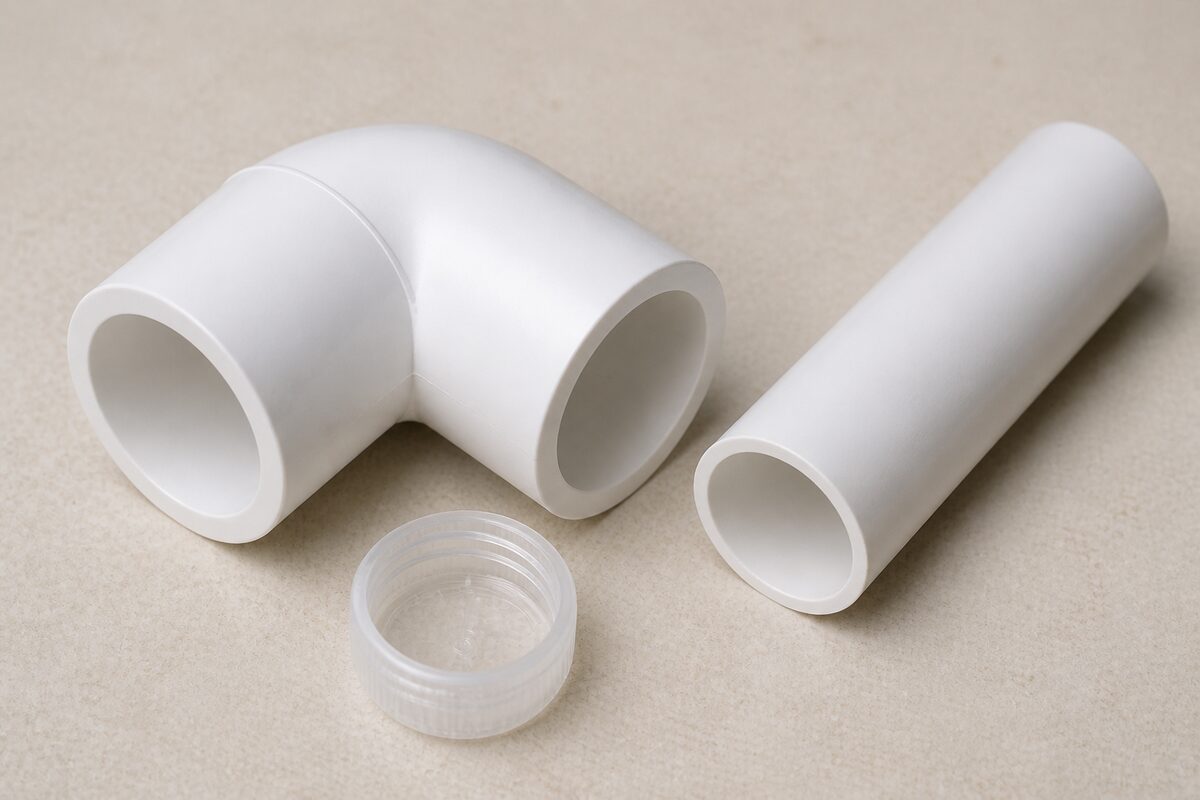
Material pair
Plastic to Plastic
Best bet
Bonds the widest variety of rigid plastics, bridges rough jagged fractures, and cures into durable structural plastic material.
Not for: Flexing or movement
Reviewed and adjusted by an editor.
Why this answer
- Two very different families hide under one word. Rigid PVC, ABS, and acrylic bond well; waxy PP and PE shrug off ordinary adhesives.
- Wets out hard plastics that ordinary glues bead off.
Preparation
Prep both faces the same way
Identify the plastic type (check resin recycling codes 1–7). Scuff glossy bonding faces with 180-to-220-grit sandpaper and degrease thoroughly with isopropyl alcohol.
Conditions
When the answer changes
Use Silicone
Standard rigid plastics (PVC, ABS, polystyrene, acrylic) bond well with 2-part plastic epoxy or super glue. For low-surface-energy plastics like polyethylene (PE #2/#4) or polypropylene (PP #5), use a dedicated plastics bonding system with a surface activator primer.
Alternatives
What else works
All-plastics cyanoacrylate system (with primer)
The mandatory primer pen chemically activates slippery polyethylene (PE) and polypropylene (PP) surfaces before instant bonding.
Plastic-compatible super glue gel
Fast, neat bonding on tight-fitting rigid plastics with snug face-to-face contact.
The strongest joint available on a plastic the label actually names — PVC, CPVC, ABS, acrylic, polystyrene — because it welds the two faces into one piece. On any other plastic it does nothing at all.
Extra prep: Read the can: it must name your plastic. Then check the joint closes tight, because solvent cement welds a seam and cannot fill one.
The fallback when the part flexes or gets wet; it seals rather than carries load.
Better when: Flexing or movement, Water immersion
For large panels like PVC trim, where a bead along the back is the point.
Waterproof and tough on scuffed rigid plastic, but it needs real clamping and the foam squeeze-out has to be trimmed.
Better when: Outdoor exposure, Water immersion
Right for laminating a flexible plastic sheet down flat — but its solvent attacks polystyrene and ABS, so test a corner first.
Only when the other side is cloth: flexible enough for a fabric-to-plastic seam, far too weak for a structural one.
Avoid
What not to use
Avoid
Spray adhesive
Spray adhesive — a repositionable film, not a bond; it slides off smooth plastic under any load.
Avoid
Wood glue (PVA)
Wood glue — plastic has no pores for it to soak into, so it peels off in a sheet.
Products
Products for this joint
- Devcon 5 Minute EpoxyRapid, crystal-clear bonding on metal, glass, ceramic, wood, and rigid plastics — the benchmark fast-curing 2-part epoxy for jewelry, fine craft, and clean household break repairs.
- Gorilla 2-Part EpoxyGeneral household rigid repairs where a clear, gap-tolerant bond matters.
- J-B Weld OriginalRigid metal repairs — a cracked bracket, a stripped hole, a broken tool handle.
- J-B Weld SteelStik Epoxy PuttyHand-kneadable, non-rusting steel-reinforced epoxy putty for emergency plumbing repairs, auto components, stripped metal threads, and rebuilding missing metal/machinery sections — sets in 5 minutes and fully cures in 1 hour with 4,000 psi tensile strength.
Guides
Repairs that involve this pair
Questions
Common questions
- How can I tell which type of plastic I am trying to glue?
- Check the underside for a triangular resin recycling code: #1 (PET), #2 (HDPE), #3 (PVC), #4 (LDPE), #5 (PP), #6 (PS), or #7 (Other/ABS/Polycarbonate). If no stamp exists, test with a drop of acetone: PVC, ABS, and polystyrene soften or get sticky, whereas PE and PP remain completely unaffected and feel waxy to the touch.
- Why does standard super glue or epoxy peel right off plastic containers and toy parts?
- Polyethylene (PE) and Polypropylene (PP) are non-polar polyolefins with extremely low surface energy. Adhesives cannot wet out or form molecular bonds with the slick polymer chains, curing into a hard plastic sheet that pops off under zero stress unless treated with a specialized heptane-based activator primer.
- When should I use solvent cement instead of epoxy or super glue on plastics?
- Use solvent cement only when joining identical solvent-sensitive thermoplastics (e.g. PVC to PVC, ABS to ABS, or Acrylic to Acrylic) with flush, tight contact. Solvent cement softens and fuses the plastic into one seamless piece. For dissimilar plastics or gaps over 0.5 mm, 2-part epoxy is required.
- Why must plastic surfaces be lightly sanded and cleaned with alcohol before gluing?
- Factory plastic parts contain mold release wax and silicone lubricants from manufacturing. Light sanding with 180-to-220-grit paper creates microscopic mechanical anchor grooves, while rubbing alcohol strips greasy surface films without attacking the plastic base.