Guide
Reglue loose cabinet edge banding on plywood and particle board
Use solvent-based contact cement or reactivate existing hot-melt adhesive with a household clothes iron to bond peeling wood veneer or PVC edge banding. Standard water-based wood glue cannot grip non-porous plastic edge tape.
This task involves: Gap or poor fit, Flexing or movement
Best Glue for This Repair
Creates an instant, high-tack bond on both raw particle board edges and non-porous PVC or real wood veneer banding without clamping.
Not for: Load-bearing / shear, Water immersion, Heat exposure
Reviewed and adjusted by an editor.
Why Solvent-based contact cement Works Here
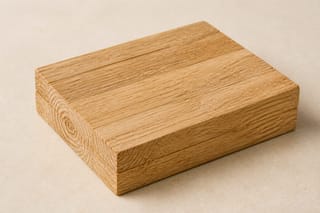
- Porous and slightly forgiving — glue soaks in, and a well-glued joint ends up stronger than the wood around it. Oily hardwoods like teak need a solvent wipe first.
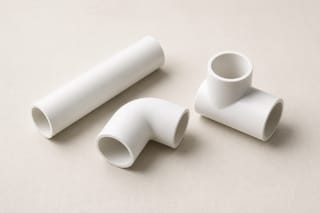
- The one common household plastic with a purpose-made welding solvent, and that changes the whole answer: for pipe, fittings, and any joint that has to hold pressure, PVC cement is not one option among several, it is the joint. Ordinary adhesives are for the cases cement cannot cover — bonding PVC to something that is not PVC, or closing a gap where the two faces do not meet.
- The staple material of flat-pack furniture. Because it is pressed from large wood chips rather than continuous grain, it has very low internal tensile strength and is extremely prone to screw tear-out and water swelling. Liquid PVA glue is quickly absorbed into the porous edge voids, so rebuilding blown-out holes requires 2-part epoxy putty or expanding polyurethane rather than thin PVA.
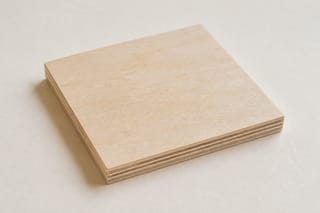
- Two different materials in one sheet. A face glues exactly like solid wood, while an edge is a row of end grain and small voids that drinks glue and gives it little to hold. Glue faces to faces where you can, and treat any edge joint as the weak one unless you size it first. Interior-grade plywood also has its own glue lines to worry about: get it wet and the sheet delaminates no matter what you used.
- The answer for gluing a laminate or veneer sheet down flat with no clamps — never for a joint that carries load.
- Right for laminating a flexible plastic sheet down flat — but its solvent attacks polystyrene and ABS, so test a corner first.
- The standard adhesive for bonding decorative laminate or veneer sheets across large particle board panels without clamping.
- The answer for gluing a laminate or veneer sheet down flat with no clamps — never for a joint that carries load.
How to do it
Reglue loose cabinet edge banding on plywood and particle board: Step by Step
- Gently pull the peeling edge banding back just enough to expose the substrate edge without snapping or creasing the strip.
- Scrape away loose sawdust and crumbled old adhesive from behind the banding using a utility knife blade, then vacuum clean.
- Apply a thin coat of solvent contact cement to both the substrate edge and the backside of the banding using a small brush or toothpick.
- Let both surfaces air dry for 10–15 minutes until the adhesive is glossy and tacky to the touch without transferring wet glue to your finger.
- Press the banding firmly against the edge from the intact end outward, burnish down hard with a solid wooden block, and trim any excess edge flush.
Conditions
When to Use Super glue gel Instead
Use Super glue gel
Use PVA wood glue
Use Super glue gel
Edge banding on cabinet doors and shelves frequently snags on clothing and kitchen items. Applying water-based glue swells particle board cores and fails completely on plastic PVC banding without hours of impossible horizontal clamping.
Alternatives
Other Adhesives That Work
Works effectively on real raw wood veneer banding when clamped, but cannot bond to smooth plastic PVC or melamine edge tape.
Extra prep: On a cut edge, brush on thinned glue first and let it soak in, then glue properly — or add a dowel, biscuit, or screwed cleat and stop relying on the edge.
Ideal for fast spot repairs on small lifting corners under 2 inches; sets in seconds with firm finger pressure.
Questions
Common Questions About This Repair
- Can I fix peeling edge banding using a household clothes iron?
- Yes, if the original edge banding was pre-glued hot-melt tape. Place a clean sheet of aluminum foil or cotton cloth over the banding and iron on medium-high heat. The heat remelts the adhesive, which re-bonds as you rub it down with a wood block.
- Why does regular wood glue fail on PVC edge banding?
- PVA wood glue requires at least one porous surface to evaporate water and mechanically lock into fibers. Plastic PVC is completely non-porous, causing PVA glue to dry into a slippery film that peels off effortlessly.
- How do I clamp edge banding if I use wood glue on real veneer?
- Wrap high-tack blue painter tape tightly around the cabinet edge in overlapping vertical loops to exert continuous pressure until dry.
- How do I trim edge banding flush with the cabinet surface without gouging the finish?
- Use a single-edge razor blade held nearly flat against the cabinet face, slicing along the edge with a forward shearing motion, followed by light 220-grit sanding.