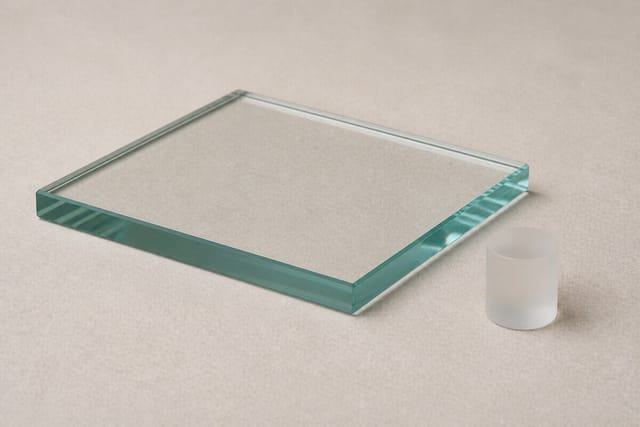
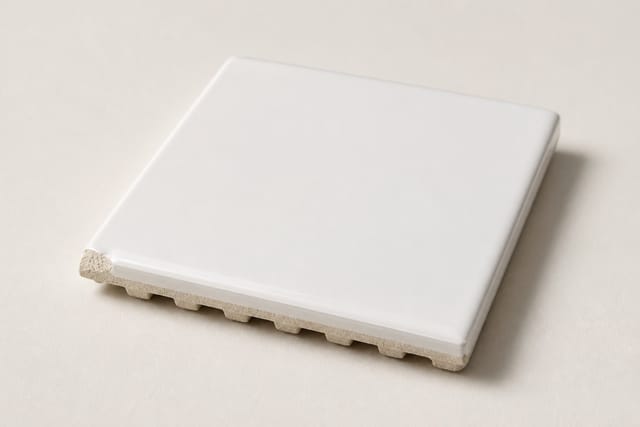
Material pair
How to Glue Glass to Tile
Use bathroom silicone for most glass-to-tile jobs in a wet room — a mirror, a glass shelf, a glass mosaic on ceramic. 2-part epoxy is the clearer, rigid line on a dry display piece. The same pair if tile is going onto glass.
Best Adhesive for Glass to Tile
Stays rubbery on glaze and glass, and it is the joint that survives a wet wall. It seals; it does not hang a heavy pane by itself.
Not for: Load-bearing / shear
Reviewed and adjusted by an editor.
Why Bathroom silicone Works
- Non-porous and unforgiving — any grease film or fingerprint weakens the joint and stays visible through the glass forever.
- Two jobs that look the same and are not. Setting a tile back onto a wall wants a thick construction adhesive on the biscuit; mending a broken tile is the same clean-break problem as any other ceramic and still wants epoxy. Floor tile and wet areas are laid in thinset mortar, which is not a household adhesive — do not treat a cartridge as a substitute for a bed of mortar underfoot. Silicone seals grout and wet edges; it does not set a tile that has to stay put.
- The right answer when the joint gets wet or has to move — it stays flexible for decades.
- It seals grout lines and wet edges. It does not set a tile that has to stay put underfoot or under a fixture.
Preparation
How to Prepare Glass and Tile for Gluing
Conditions
When to Use Mirror-rated construction adhesive Instead
A shower, tub surround, or backsplash that sees water wants silicone and a mechanical clip or shelf pin if the glass can fall. Epoxy is for a dry, still joint. A large mirror on tile can take a mirror-rated construction-adhesive bead plus bottom support — ordinary solvent formulas eat silver backing.
Alternatives
Other Adhesives That Work
Cures clear and rigid on a small, dry, still contact — a glass accent on a dry tile, not a shower.
Mirror-rated construction adhesive
For hanging a large mirror on tile, with a bottom rest. Only a mirror-rated tube — ordinary solvent formulas eat the silver.
Better when: Gap or poor fit
Extra prep: Scrape old mastic off the tile back and the wall until both are sound, dry, and free of dust. A crumbling wall is a masonry repair first.
Avoid
What not to use
Avoid
Wood glue (PVA)
PVA needs pores. Glass and glaze have none, so it dries and peels.
Products
Products for Bonding Glass to Tile
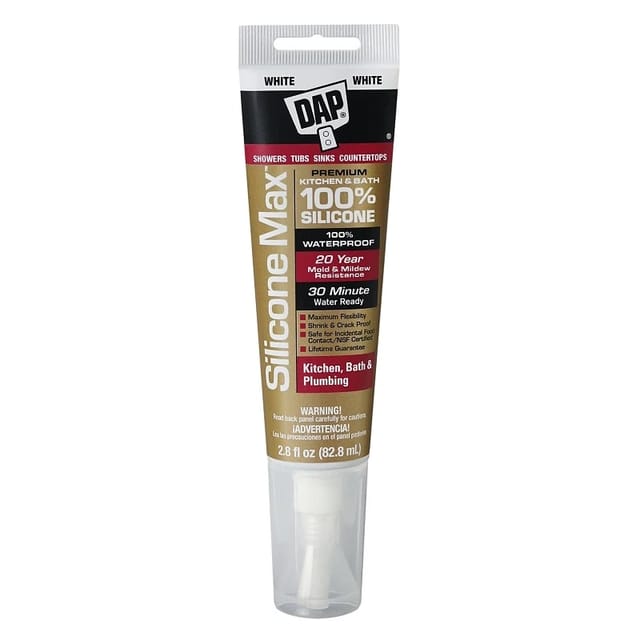
- DAP Silicone Max 100% Silicone SealantKitchen, bath, window, door, and siding perimeter sealing — features maximum flexibility (ASTM C920 Class 50), 30-minute water-ready time, and a 20-year mold and mildew resistance guarantee.
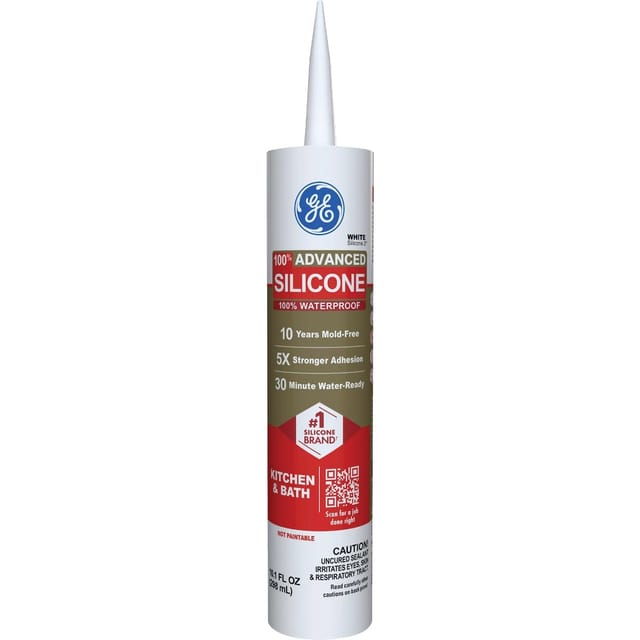
- GE Advanced Silicone 2 Kitchen & BathSealing around tubs, showers, sinks, tile, and countertops — flexible, waterproof, and long-lived.
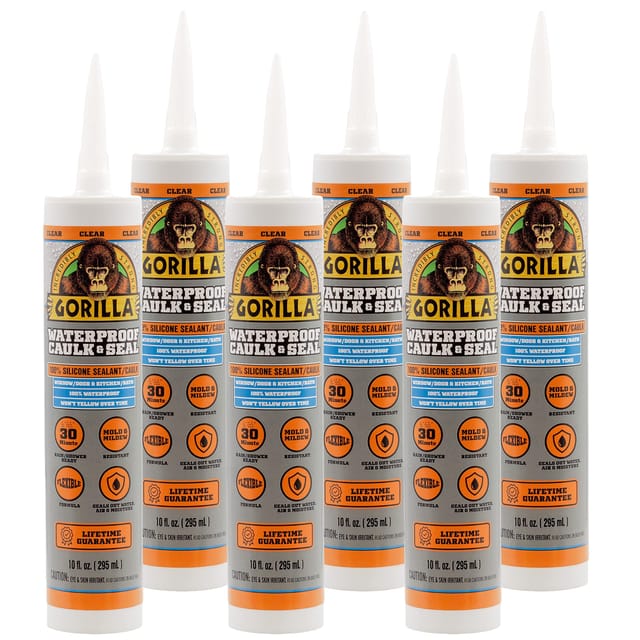
- Gorilla 100% Silicone SealantIndoor and outdoor waterproof sealing for kitchen, bath, window, door, auto, and marine applications — 30-minute water ready and mold/mildew resistant.
Questions
Common Questions About Gluing Glass to Tile
- Can you glue glass to tile?
- Yes on a clean, dry glaze — and the same pair if tile is going onto glass. Bathroom silicone is the usual joint in a wet room. Clear epoxy is for a small, still, dry piece.
- Should I use epoxy to glue glass in a shower?
- No. Epoxy is rigid. A wet wall moves a little and stays wet. Bathroom silicone stays rubbery. Add a clip or shelf pin if the glass can fall.
- Will silicone hold a glass shelf on tile?
- As a bed and a seal, yes. As the only thing hanging the shelf, no. Use pins, a bracket, or a manufactured shelf kit. Silicone keeps water out; it does not carry a stack of bottles.
- Can I glue a mirror to a tiled wall?
- Yes with a mirror-rated construction adhesive and a rest at the bottom. Ordinary solvent construction adhesive can eat the silver backing. Clean the tile and the glass, and brace the mirror until the bead cures.