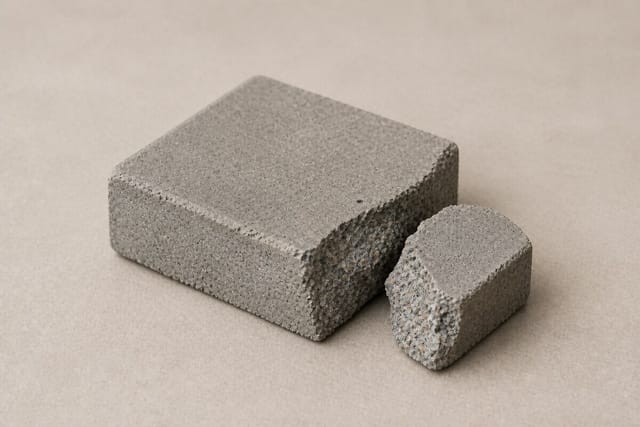
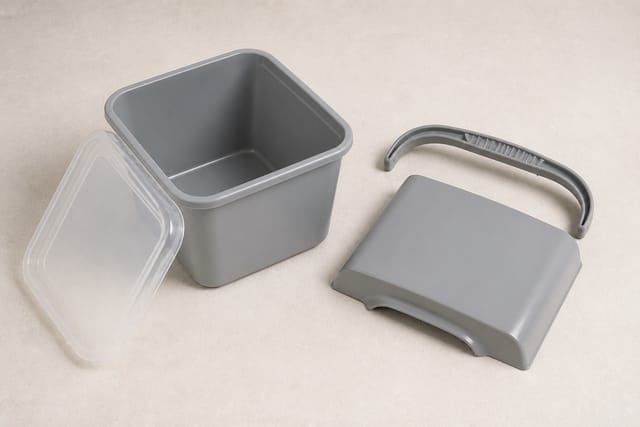
Material pair
How to Glue Concrete & stone to Plastic
Use 2-part plastic epoxy for most concrete & stone-to-plastic joints. The strongest thing you can put on masonry, and how a bolt or a bracket gets anchored — but it demands the dust-free, dry surface concrete rarely gives you without work.
Best Adhesive for Concrete & stone to Plastic
The strongest thing you can put on masonry, and how a bolt or a bracket gets anchored — but it demands the dust-free, dry surface concrete rarely gives you without work.
Not for: Flexing or movement
Derived from our material compatibility data.
Why 2-part plastic epoxy Works
- Very porous with an uneven face — it drinks thin glues, so you want a thick, gap-filling adhesive. Dust is the enemy: brush and vacuum first.
- Two very different families hide under one word. Rigid PVC, ABS, and acrylic bond well; waxy PP and PE shrug off ordinary adhesives.
- The strongest thing you can put on masonry, and how a bolt or a bracket gets anchored — but it demands the dust-free, dry surface concrete rarely gives you without work.
- Wets out hard plastics that ordinary glues bead off.
Preparation
How to Prepare Concrete & stone and Plastic for Gluing
Wire-brush away all loose masonry dust, vacuum the surface thoroughly, and let any standing moisture dry off.
Scuff thoroughly with 120-grit sandpaper to strip factory mold sheen, and degrease with isopropyl alcohol.
Conditions
When to Use Silicone Instead
Alternatives
Other Adhesives That Work
For large panels like PVC trim, where a bead along the back is the point.
The answer for a joint that has to move — an expansion gap, a sill, a wet edge — rather than one that has to hold.
Better when: Flexing or movement, Water immersion, Outdoor exposure
It foams into the pores and locks in mechanically, which suits a rough face — the expansion means the part has to be weighted or braced while it cures.
Better when: Outdoor exposure, Water immersion
Products
Products for Bonding Concrete & stone to Plastic
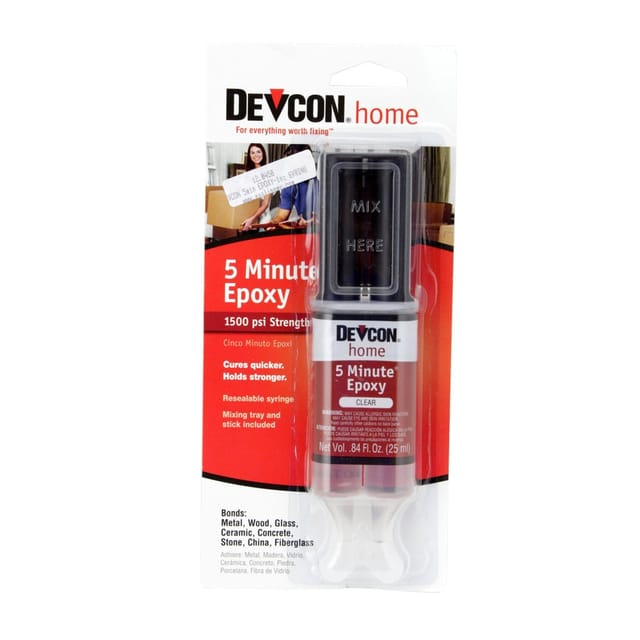
- Devcon 5 Minute EpoxyRapid, crystal-clear bonding on metal, glass, ceramic, wood, and rigid plastics — the benchmark fast-curing 2-part epoxy for jewelry, fine craft, and clean household break repairs.
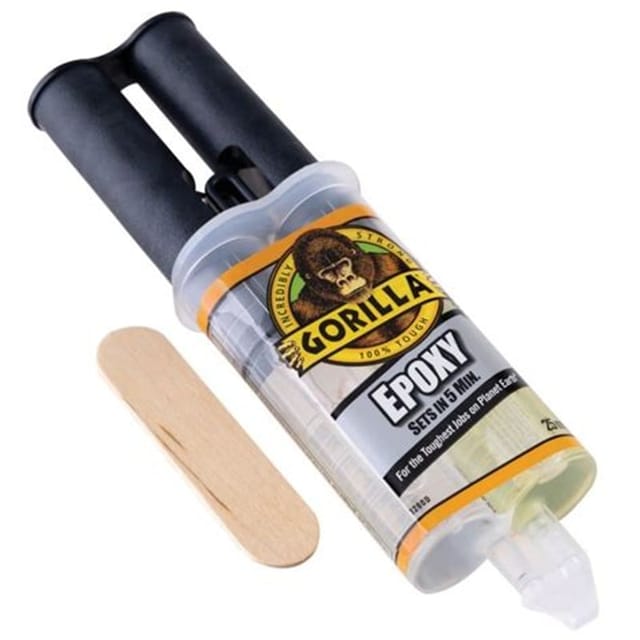
- Gorilla 2-Part EpoxyGeneral household rigid repairs where a clear, gap-tolerant bond matters.
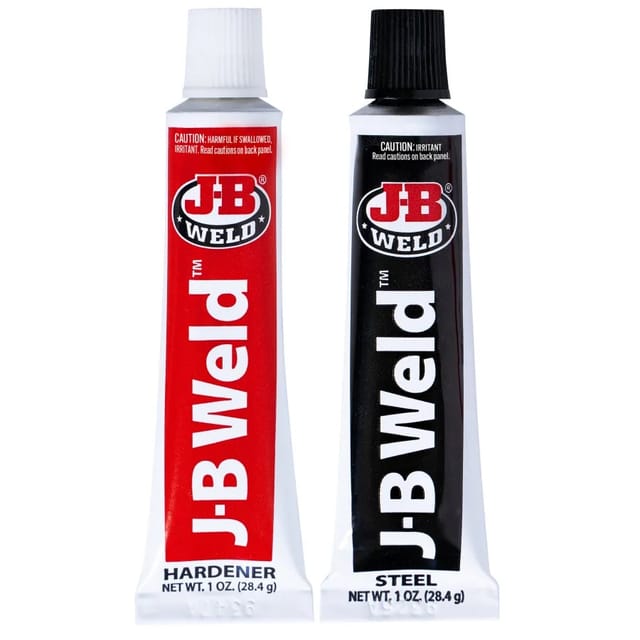
- J-B Weld OriginalRigid metal repairs — a cracked bracket, a stripped hole, a broken tool handle.
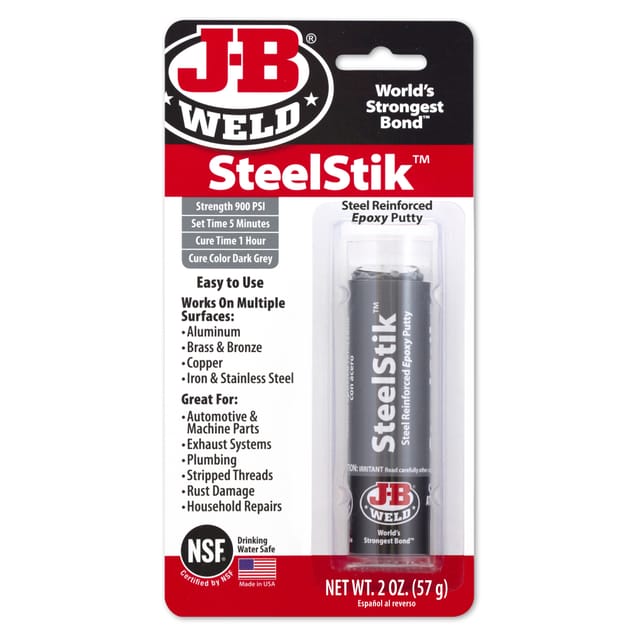
- J-B Weld SteelStik Epoxy PuttyHand-kneadable, non-rusting steel-reinforced epoxy putty for emergency plumbing repairs, auto components, stripped metal threads, and rebuilding missing metal/machinery sections — sets in 5 minutes and fully cures in 1 hour with 4,000 psi tensile strength.
Questions
Common Questions About Gluing Concrete & stone to Plastic
- Can you glue plastic to concrete?
- Yes. Heavy-duty polyurethane construction adhesive (like Loctite PL Premium) or 2-part plastic epoxy bridges concrete surface porosity and bonds tenaciously to scuffed plastic.
- Can I glue PVC conduit clips to concrete walls without drilling?
- Yes for lightweight electrical conduits and cable clips. Apply a bead of polyurethane construction adhesive and tape in place for 24 hours. For heavy plumbing drain pipes, mechanical masonry anchors are required.
- Will adhesive cure on slightly damp concrete surfaces?
- Polyurethane adhesives are moisture-curing and actually utilize ambient moisture from damp concrete to complete polymerization. Avoid solvent-based adhesives on damp masonry.
- Does winter freeze-thaw loosen plastic glued to outdoor concrete?
- Polyurethane construction adhesive remains rubbery and flexible below freezing, absorbing thermal contraction without cracking away from the concrete surface.