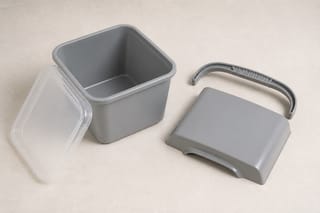
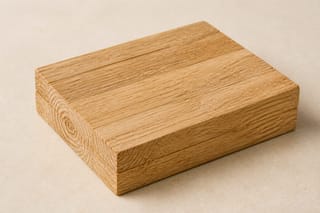
Material pair
How to Glue Plastic to Wood
Use 2-part plastic epoxy for most plastic-to-wood joints. It bonds to surfaces wood glue cannot, and fills a gap instead of shrinking into one — the reason to reach past PVA on a loose joint or a mixed-material one.
Best Adhesive for Plastic to Wood
It bonds to surfaces wood glue cannot, and fills a gap instead of shrinking into one — the reason to reach past PVA on a loose joint or a mixed-material one.
Not for: Flexing or movement
Derived from our material compatibility data.
Why 2-part plastic epoxy Works
- Two very different families hide under one word. Rigid PVC, ABS, and acrylic bond well; waxy PP and PE shrug off ordinary adhesives.
- Porous and slightly forgiving — glue soaks in, and a well-glued joint ends up stronger than the wood around it. Oily hardwoods like teak need a solvent wipe first.
- Wets out hard plastics that ordinary glues bead off.
- It bonds to surfaces wood glue cannot, and fills a gap instead of shrinking into one — the reason to reach past PVA on a loose joint or a mixed-material one.
Conditions
When to Use Polyurethane Instead
Use Polyurethane
Use Silicone
Identify the plastic before anything else: on PP or PE nothing on this page works without a primer system. For everything else the wood side is the easy one, and the joint stands or falls on how well the plastic was scuffed.
Alternatives
Other Adhesives That Work
For large panels like PVC trim, where a bead along the back is the point.
Better when: Gap or poor fit
Waterproof and tough on scuffed rigid plastic, but it needs real clamping and the foam squeeze-out has to be trimmed.
Better when: Outdoor exposure, Water immersion
The fallback when the part flexes or gets wet; it seals rather than carries load.
Better when: Flexing or movement, Water immersion
Right for laminating a flexible plastic sheet down flat — but its solvent attacks polystyrene and ABS, so test a corner first.
Only when the other side is cloth: flexible enough for a fabric-to-plastic seam, far too weak for a structural one.
Products
Products for Bonding Plastic to Wood
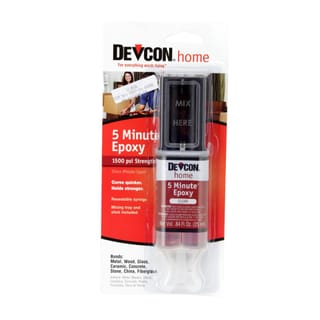
- Devcon 5 Minute EpoxyRapid, crystal-clear bonding on metal, glass, ceramic, wood, and rigid plastics — the benchmark fast-curing 2-part epoxy for jewelry, fine craft, and clean household break repairs.
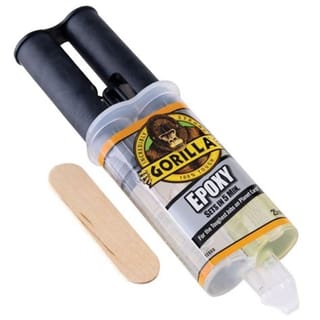
- Gorilla 2-Part EpoxyGeneral household rigid repairs where a clear, gap-tolerant bond matters.
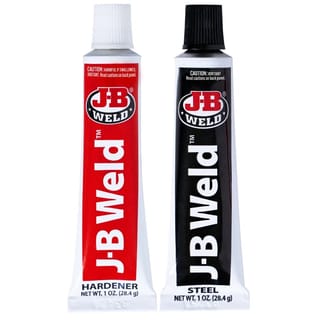
- J-B Weld OriginalRigid metal repairs — a cracked bracket, a stripped hole, a broken tool handle.
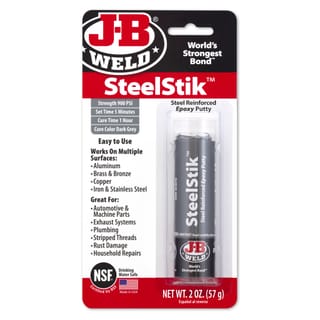
- J-B Weld SteelStik Epoxy PuttyHand-kneadable, non-rusting steel-reinforced epoxy putty for emergency plumbing repairs, auto components, stripped metal threads, and rebuilding missing metal/machinery sections — sets in 5 minutes and fully cures in 1 hour with 4,000 psi tensile strength.
Questions
Common Questions About Gluing Plastic to Wood
- Can you glue plastic to wood?
- Yes if you know which plastic you have — wood to plastic is the same pair. Rigid plastics such as ABS, PVC, and acrylic take 2-part plastic epoxy after a scuff; polypropylene and polyethylene need a primer system.
- Does wood glue work on plastic?
- It can soak into the wood and still peel off the plastic. PVA needs fibers on both faces. Choose a system that actually wets the identified plastic.
- Should I use epoxy to glue plastic to wood?
- Yes for most rigid, identified plastics on a scuffed, close fit. Skip ordinary epoxy on PP and PE — it beads off. A joint that flexes or stays wet switches toward silicone or polyurethane.
- What if the plastic-to-wood joint flexes or gets wet?
- A rigid epoxy line peels when plastic bends or wood moves with moisture. Use the more flexible or water-resistant option on this page, and keep the joint out of standing water.