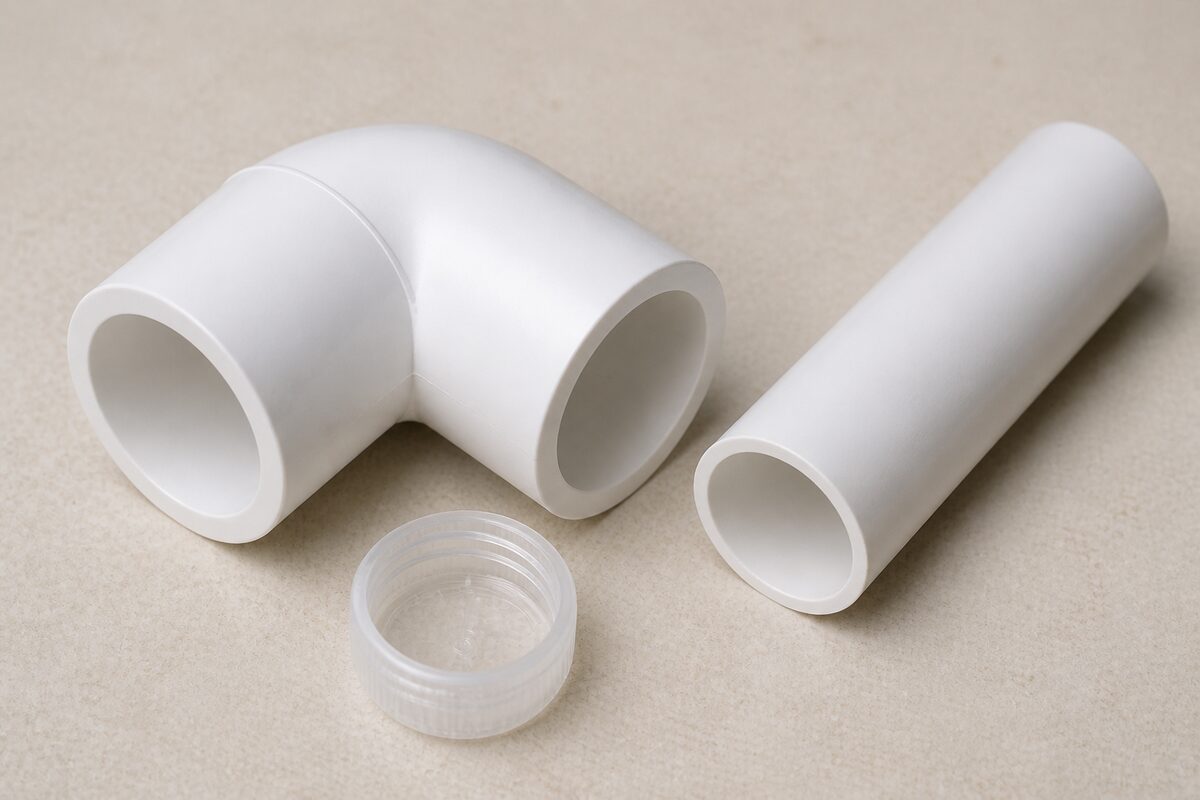
Best bet
Formulated to wet out hard plastics that ordinary glues bead off.
Not for: Flexing or movement
Reviewed and adjusted by an editor.
Why this answer
- Two very different families hide under one word. Rigid PVC, ABS, and acrylic bond well; waxy PP and PE shrug off ordinary adhesives.
- Wets out hard plastics that ordinary glues bead off.
How to do it
Step by step
- Identify the plastic if you can — waxy PP/PE bins resist most glues.
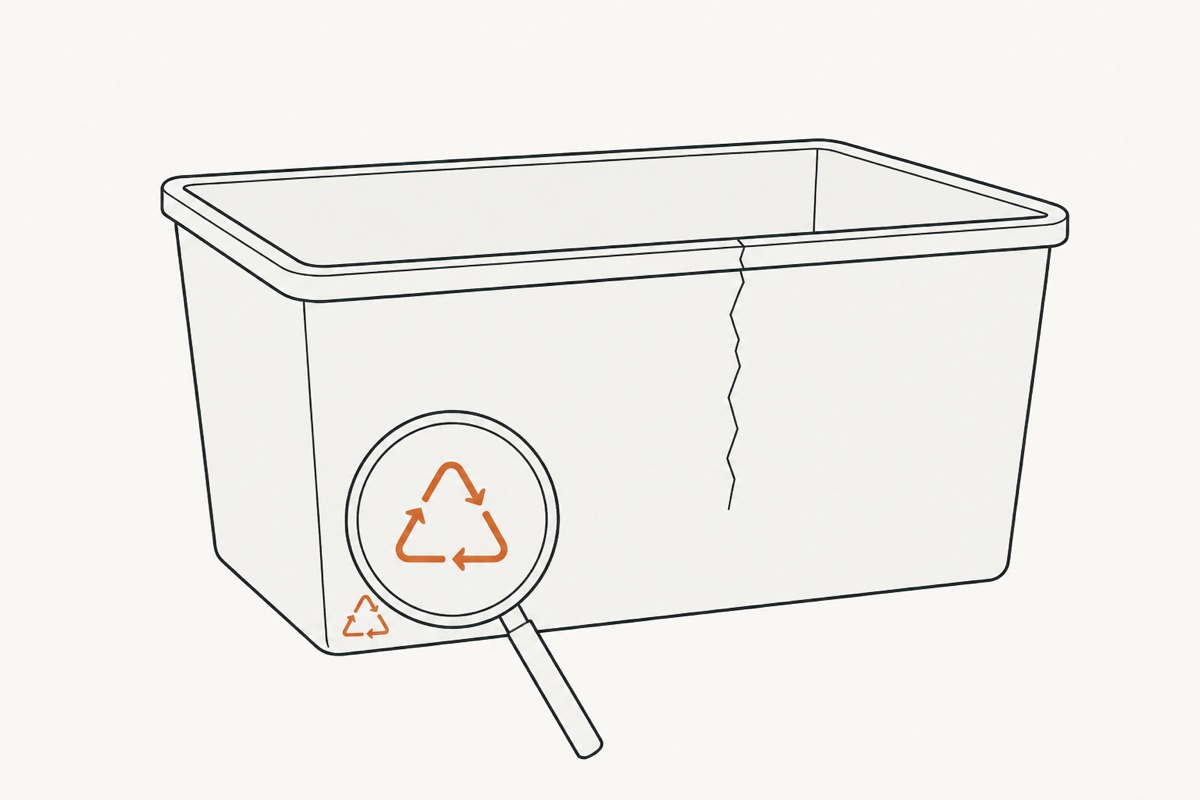
- Wash, dry, and scuff the crack area with sandpaper.
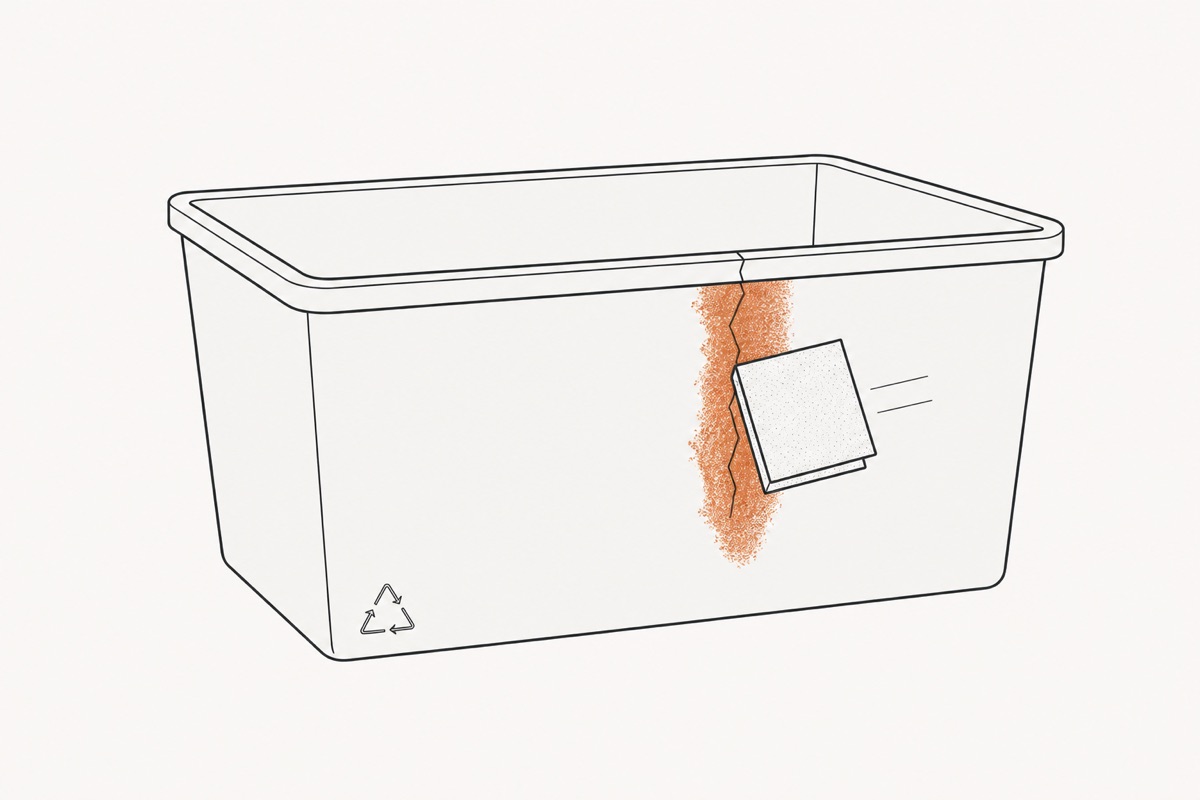
- Mix 2-part plastic epoxy and work it into and across the crack.
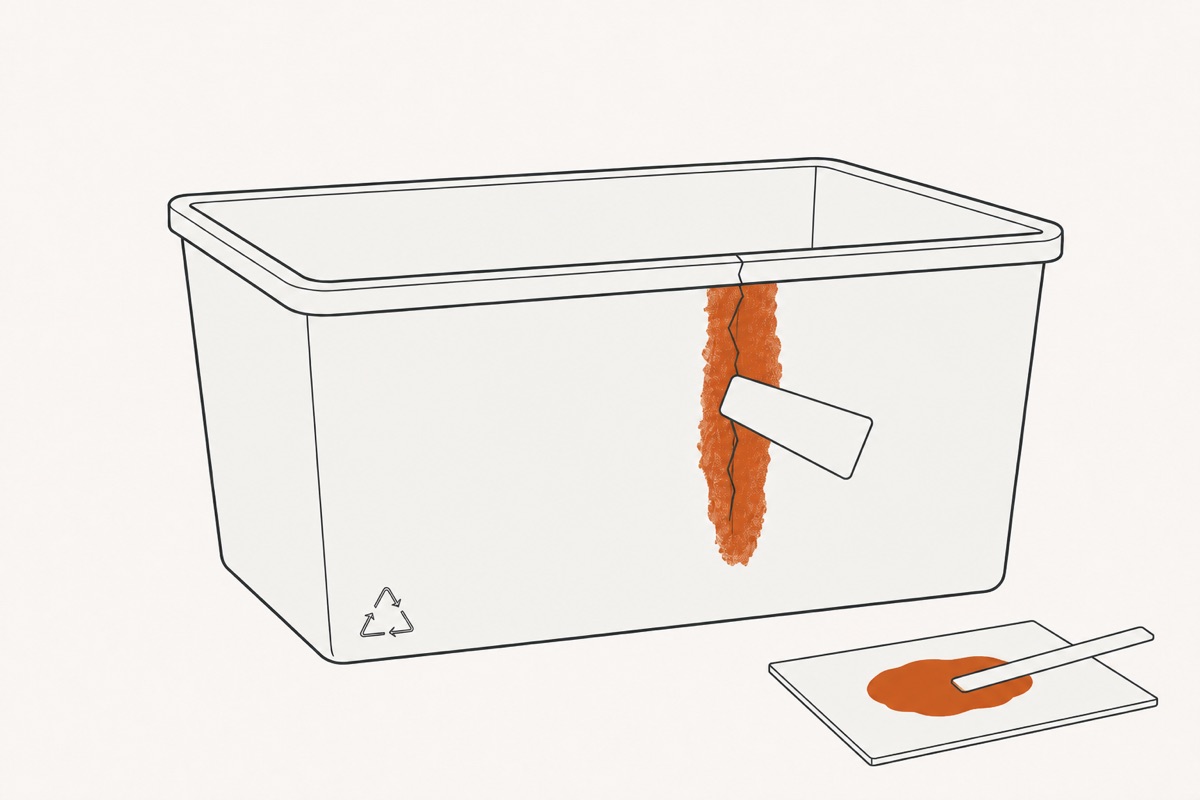
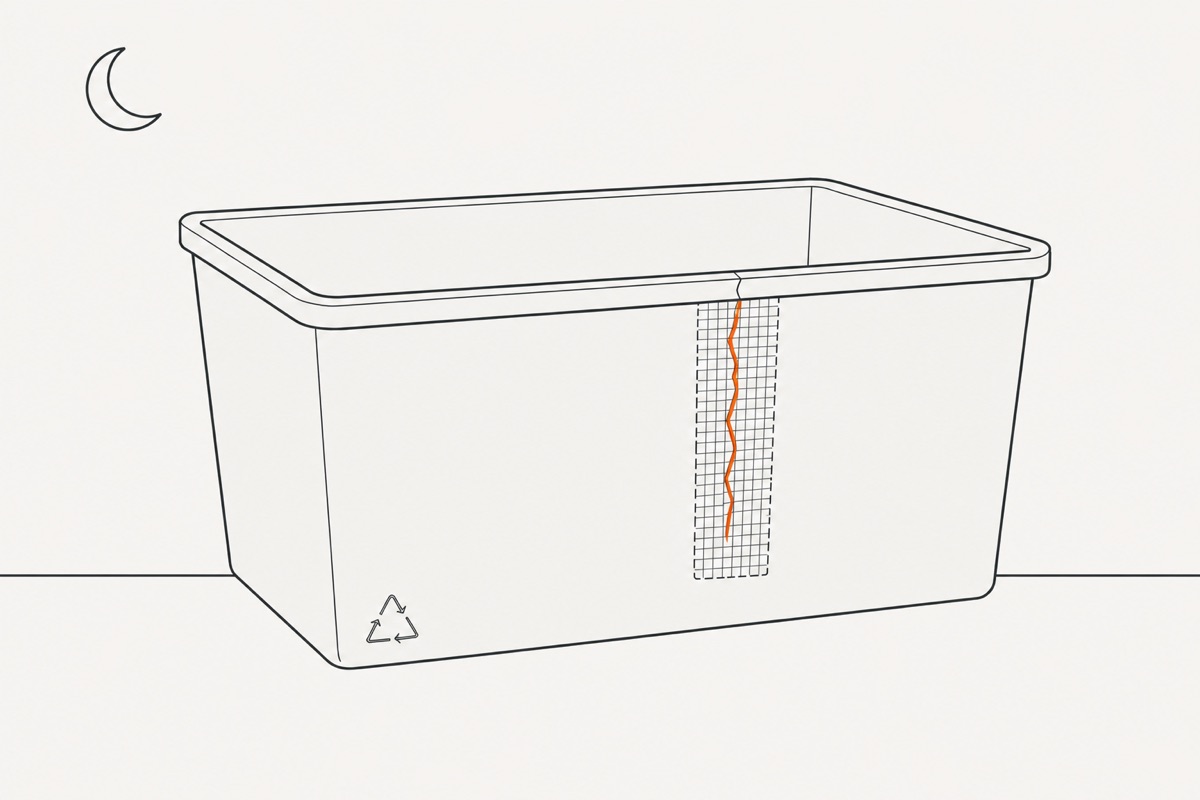
- Back the inside with mesh or a strip of plastic for strength.
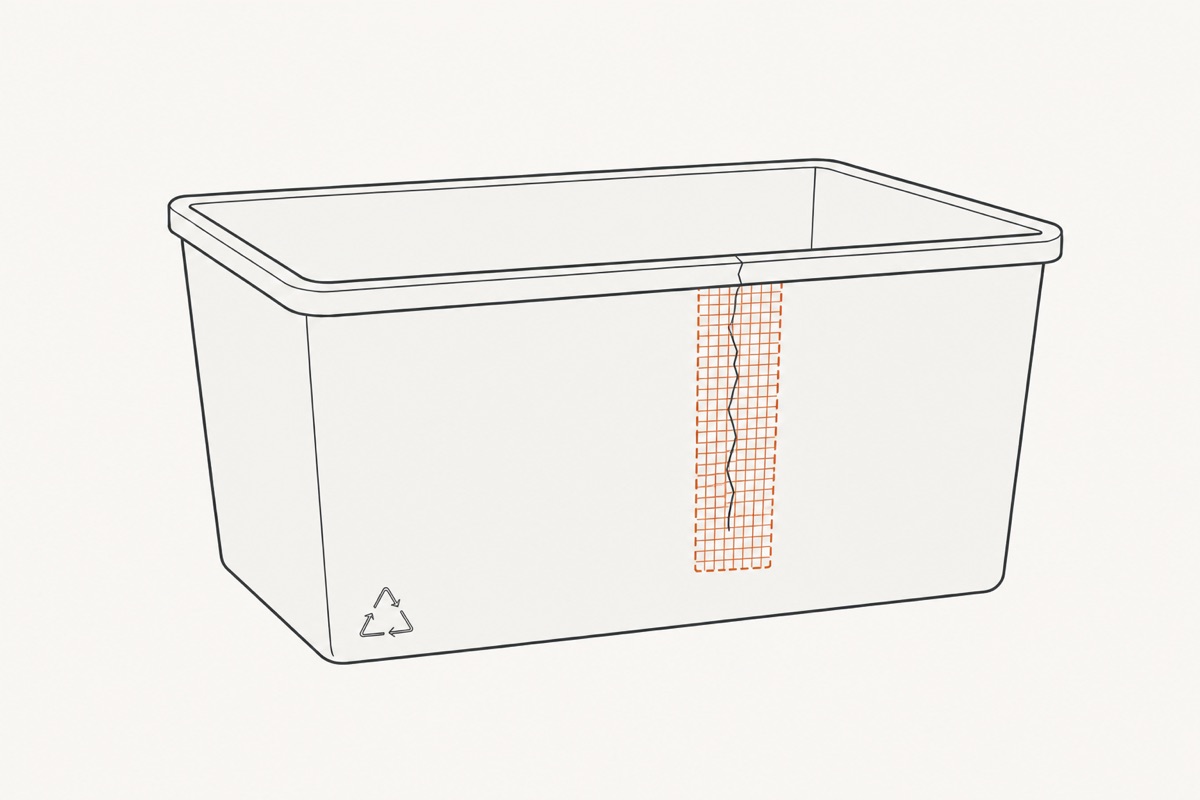
- Cure fully before filling the bin with anything heavy.
Conditions
When the answer changes
If the bin is polypropylene (recycling code 5), even plastic epoxy is a maybe — a specialty primer or a soldering-iron weld works better. A bin that flexes in use wants a flexible repair, not rigid epoxy.
Alternatives
What else works
The fallback when the part flexes or gets wet; it seals rather than carries load.
Better when: Flexing or movement, Water immersion
The strongest joint available on a plastic the label actually names — PVC, CPVC, ABS, acrylic, polystyrene — because it welds the two faces into one piece. On any other plastic it does nothing at all.
Extra prep: Read the can: it must name your plastic. Then check the joint closes tight, because solvent cement welds a seam and cannot fill one.
For large panels like PVC trim, where a bead along the back is the point.
Waterproof and tough on scuffed rigid plastic, but it needs real clamping and the foam squeeze-out has to be trimmed.
Better when: Outdoor exposure, Water immersion
Right for laminating a flexible plastic sheet down flat — but its solvent attacks polystyrene and ABS, so test a corner first.
Only when the other side is cloth: flexible enough for a fabric-to-plastic seam, far too weak for a structural one.
Avoid
What not to use
Avoid
Super glue (CA)
Ruled out here by Flexing or movement
Instant on small, rigid, tight-fitting breaks — but it cures brittle and cracks loose on anything that flexes.
Avoid
Spray adhesive
Spray adhesive — a repositionable film, not a bond; it slides off smooth plastic under any load.
Avoid
Wood glue (PVA)
Wood glue — plastic has no pores for it to soak into, so it peels off in a sheet.
Questions
Common questions
- Why identify the bin's plastic before choosing an adhesive?
- Plastics that look alike can bond very differently. Check the molded recycling or material mark when available; polypropylene and polyethylene often need a purpose-made system or plastic welding rather than a general plastic epoxy.
- What does a backing strip add to a crack repair?
- A compatible strip or mesh spreads stress beyond the narrow crack line and gives the adhesive more area to grip. Place it where it will not interfere with the bin's fit, lid, or contents.
- Will rigid epoxy hold on a bin that flexes?
- It may release or crack when the plastic repeatedly bends. A flexible repair system, a plastic-specific adhesive, or plastic welding is a better match when flexing is part of normal use.
- Can a repaired plastic bin still store food?
- Only when the complete repair system is explicitly documented for that food-contact use after cure. Otherwise, use the repaired bin for non-food storage, especially when adhesive or backing material is exposed inside.