Guide
Repair a cracked refrigerator shelf or bin
Use 2-part clear plastic epoxy to repair cracked refrigerator door bins and crisper drawers. It bridges fracture gaps, resists refrigerator chilling temperatures, and supports heavy liquid bottles without snapping.
This task involves: Food contact, Load-bearing / shear
Best Glue for This Repair
Bridges cracked plastic seams with high shear strength and will not crack or become excessively brittle in 35°F (2°C) refrigerator cold.
Not for: Flexing or movement, Visible glue line
Reviewed and adjusted by an editor.
Why Clear 2-part plastic epoxy Works Here
- Two very different families hide under one word. Rigid PVC, ABS, and acrylic bond well; waxy PP and PE shrug off ordinary adhesives.
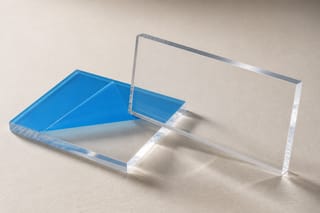
- The only material here where how the joint looks is part of whether it works, because you can see straight through it. Acrylic dissolves in the right solvent, so two clean edges can be welded into a seam that is nearly invisible. The same sensitivity is the hazard: super glue vapour, solvent-based adhesives, and household cleaners all fog or craze the surface with a web of tiny cracks, often nowhere near where you applied them.
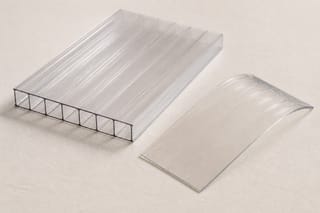
- Tough enough to take a hammer blow, and yet the material most likely to fail from what you glue it with. Solvents and even some adhesive vapours cause stress cracking: fine cracks that open days later around a screw hole, a clamped edge, or a forced fit. It also expands and contracts far more than the frame holding it, so on any panel a flexible bead outlives a rigid glue line.
- Wets out hard plastics that ordinary glues bead off.
- The choice when the fit is bad or the other side is not acrylic. It fills what a weld cannot close, but the glue line stays visible and a general-purpose epoxy can yellow in sunlight.
- The strongest option on a small rigid part, but it cures hard while polycarbonate keeps moving, so a long or clamped joint concentrates stress and the sheet cracks beside the glue rather than in it.
How to do it
Repair a cracked refrigerator shelf or bin: Step by Step
- Remove the cracked plastic shelf or bin from the refrigerator and let it sit on a counter for 1 hour until it reaches room temperature.
- Wash the entire bin thoroughly with warm water and dish soap to remove grease and food residue, then dry completely.
- Lightly scuff along the underside or back face of the crack with 220-grit sandpaper to give the adhesive mechanical bite.
- Mix 2-part clear plastic epoxy and apply a generous bead along both sides of the fracture, creating a slight reinforcing ridge on the non-visible side.
- Hold the crack tightly together with painter's tape and let the epoxy cure undisturbed at room temperature for a full 24 hours before returning it to the fridge.
Conditions
When to Use Toughened super glue gel Instead
Always remove the bin from the fridge and let it reach room temperature before gluing — adhesives cannot cure properly below 40°F (4°C). Allow a full 24 hours of curing before loading heavy food items.
Alternatives
Other Adhesives That Work
Good for small hairline cracks or broken retention tabs that meet tightly.
Avoid
Glues to Avoid for This Repair
Avoid
Wood glue (PVA)
Wood glue cannot bond to smooth, non-porous refrigerator plastics and washes away under condensation.
Questions
Common Questions About This Repair
- Can I glue a cracked shelf inside the refrigerator without taking it out?
- No. Nearly all epoxies and super glues require temperatures above 50°F to 65°F (10°C to 18°C) to undergo proper chemical polymerization. Cold refrigerator temperatures will stop the cure, leaving the glue tacky, weak, and permanently compromised.
- Is cured plastic epoxy safe around food in a refrigerator?
- Fully cured 2-part epoxy is chemically inert and safe for indirect food contact (holding jars, cartons, and packaged produce). It is best to avoid direct raw food contact (such as chopping meat directly on the repair). Wash the repaired bin with soap and water after full cure.
- How can I reinforce a cracked door shelf holding heavy gallon milk jugs?
- For heavily loaded bins, bridge the crack on the outside/underside with a small reinforcing strip of rigid clear acrylic, clear plastic cut from a blister pack, or fiberglass mesh embedded directly into the wet epoxy bed.
- What plastic are refrigerator bins made of and does standard glue stick?
- Most clear refrigerator bins are molded from clear polystyrene (PS), SAN, acrylic (PMMA), or polycarbonate (PC). These are high-to-medium surface energy plastics that bond exceptionally well with 2-part epoxy and cyanoacrylate once lightly scuffed.