Guide
Reglue a peeling laminate countertop
Use contact cement on both the laminate back and the particle-board core. Wood glue and foaming polyurethane will not hold a sheet that has to stay flat. If the core is swollen or crumbly, stop — glue will not rebuild a water-damaged top.
Best Glue for This Repair
The factory adhesive for laminate on particle board: coat both faces, let it flash, then roll. It grabs over a wide sheet without clamps.
Not for: Load-bearing / shear, Water immersion
Reviewed and adjusted by an editor.
Why Contact cement Works Here
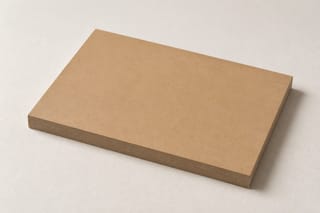
- The staple material of flat-pack furniture. Because it is pressed from large wood chips rather than continuous grain, it has very low internal tensile strength and is extremely prone to screw tear-out and water swelling. Liquid PVA glue is quickly absorbed into the porous edge voids, so rebuilding blown-out holes requires 2-part epoxy putty or expanding polyurethane rather than thin PVA.
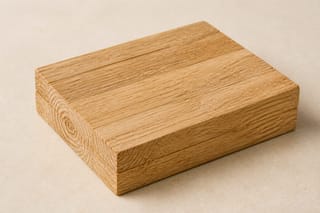
- Wood fibre and glue pressed into a board, so it takes wood glue — but the two surfaces behave nothing alike. The compressed face is smooth and takes a thin, even glue line, while a cut edge is a sponge of loose fibre that drinks the glue and swells if you flood it. There is also no grain to interlock, so a plain butt joint has nothing but surface to hold, and water is the material's real enemy: once MDF swells it never goes back.
- The standard adhesive for bonding decorative laminate or veneer sheets across large particle board panels without clamping.
- MDF's dead-flat face is the ideal substrate for laminate or veneer, and contact cement lays a sheet down over the whole area without a single clamp.
How to do it
Reglue a peeling laminate countertop: Step by Step
Contact-cement fumes
- Lift the loose flap and press the core with a thumb. Soft, swollen, or crumbling particle board means replace the top — do not glue over a rotten core.
- Scrape old brittle cement and crumbs off both the laminate back and the core. Vacuum, then wipe both faces with the solvent the cement can names and let them dry.
- Brush a thin, even coat of contact cement on both faces. Keep them apart with dowels or stir sticks so they cannot touch while the cement flashes to a dry tack.
- Pull the spacers and set the laminate down in one motion — contact cement grabs and will not slide. Roll from the stuck side toward the free edge, then weight the repair.
- Wipe squeeze-out immediately. Leave the weight on until the cement has fully set, then seal the sink and backsplash edges so water cannot reach the core again.
Conditions
When to Use a Different Glue
A lifted edge with a sound, dry core is a contact-cement job. Heat can revive old cement on a short edge. A soft, swollen, or delaminated core means the top is finished; replace it.
Avoid
Glues to Avoid for This Repair
Avoid
Wood glue (PVA)
PVA needs clamp pressure and two porous wood faces. The back of laminate is a sealed sheet; PVA dries and the flap lifts again.
Avoid
Foaming polyurethane glue
The foam lifts the sheet into lumps and stains the edge. It is the wrong chemistry for a flat laminate skin.
Questions
Common Questions About This Repair
- Can I use wood glue on peeling laminate?
- No. PVA needs clamp pressure and two porous wood faces. The back of laminate is a sealed sheet, so the glue dries and the flap lifts again. Contact cement is the adhesive that laminate is made with.
- What if the particle board under the laminate is swollen?
- Replace the top. Glue cannot rebuild a water-damaged core. A soft or crumbling substrate will keep shedding, and the new bond will lift with it.
- Can I iron peeling laminate back down?
- A short edge with old contact cement still in place can sometimes be revived with a dry iron over a cloth, then weighted. If the cement is gone or the flap is large, recement both faces. Do not iron a swollen core.
- Does Gorilla Glue work on a laminate countertop?
- Not the original foaming polyurethane. The foam lifts the sheet into lumps and stains the edge. Use contact cement, the same class of adhesive the factory used.