Material pair
How to Glue Brick & Masonry to Wood
Use exterior construction adhesive for most wood-to-brick jobs — plaques, furring, and trim. Anything that can fall or carry weight still wants masonry anchors. Wood glue does not stick to brick.
Best Adhesive for Brick & Masonry to Wood
Exterior construction adhesive
Thick enough to bridge rough, porous brick and a sawn board, and it holds through outdoor weather that starves wood glue.
Reviewed and adjusted by an editor.
Why Exterior construction adhesive Works
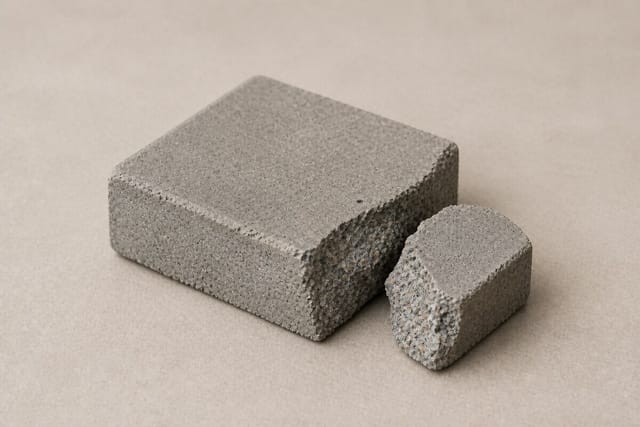
- A heavy, kiln-fired clay or compressed aggregate masonry material. Highly porous, alkaline, and rough. Polyurethane construction adhesive is the standard for landscape caps and veneer repairs, bridging uneven textures and resisting freeze-thaw cycles. 2-part structural anchoring epoxy is required for anchoring heavy metal brackets. Thin adhesives (super glue, PVA) fail due to porous capillary starvation and weather degradation.
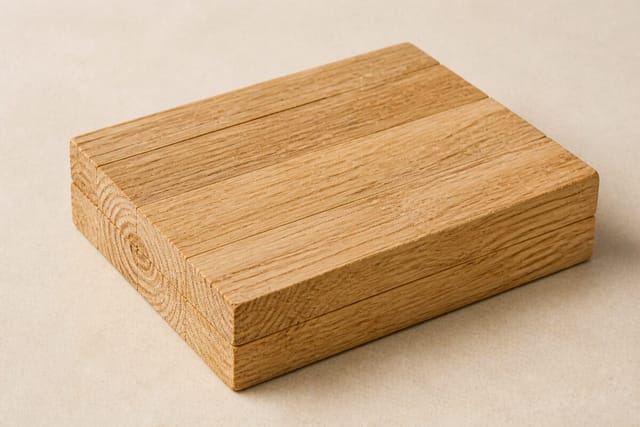
- Porous and slightly forgiving — glue soaks in, and a well-glued joint ends up stronger than the wood around it. Oily hardwoods like teak need a solvent wipe first.
- Heavy-duty exterior construction adhesive bridges rough, porous brick surfaces and withstands freeze-thaw cycles on landscape walls.
- A bead thick enough to span the gap between a board and an uneven wall — right for trim and panels, far too coarse for a furniture joint.
Preparation
How to Prepare Brick & Masonry and Wood for Gluing
Wire-brush dust and loose grit out of the face, vacuum, and let the brick dry. Do not glue over damp or crumbling masonry.
Sand to fresh fibers and brush off the dust. Keep painted or sealed faces out of the joint unless you scuff them dull.
Conditions
When to Use 2-part epoxy Instead
Adhesive alone is for light wood on sound, dry brick. A mailbox, ledger, or handrail is still bolted into the mortar or the brick — the bead beds the piece and keeps water out. Freeze-thaw on wet brick lifts a glue-only joint.
Alternatives
Other Adhesives That Work
The better answer on a small, flat, dry contact — a plaque backer or a fitted block — not a long uneven brick face.
Better when: Load-bearing / shear
Avoid
What not to use
Avoid
Wood glue (PVA)
PVA needs two porous wood faces. Brick dust and alkalinity starve it, and it cannot bridge a rough masonry face.
Products
Products for Bonding Brick & Masonry to Wood
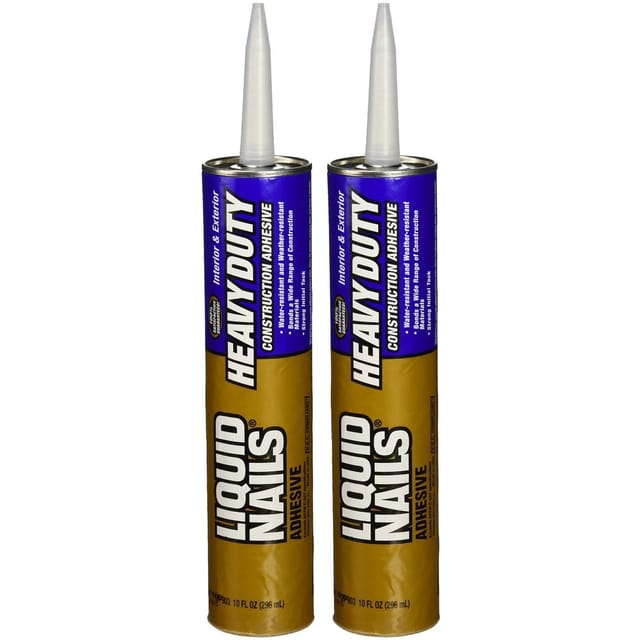
- Liquid Nails Heavy DutyTrim, paneling, and small masonry jobs — anything you'd run a bead along.
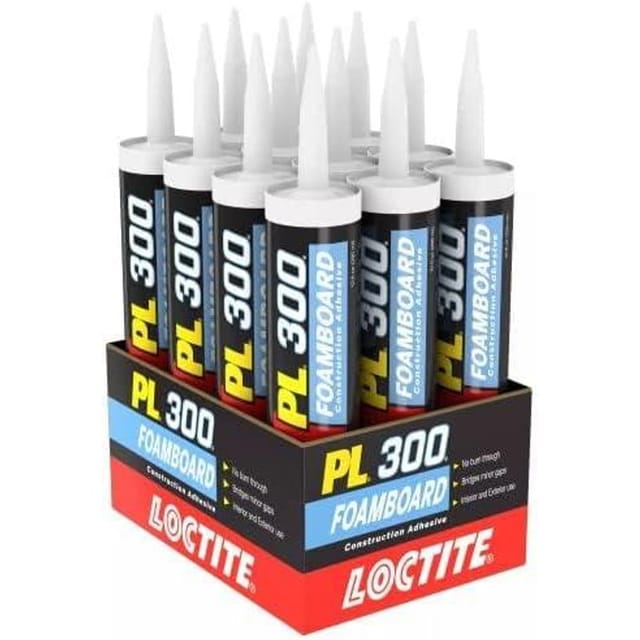
- Loctite PL 300 Foamboard AdhesiveBonding unfaced foam insulation to porous wood, drywall, concrete, or brick without burning through the foam.
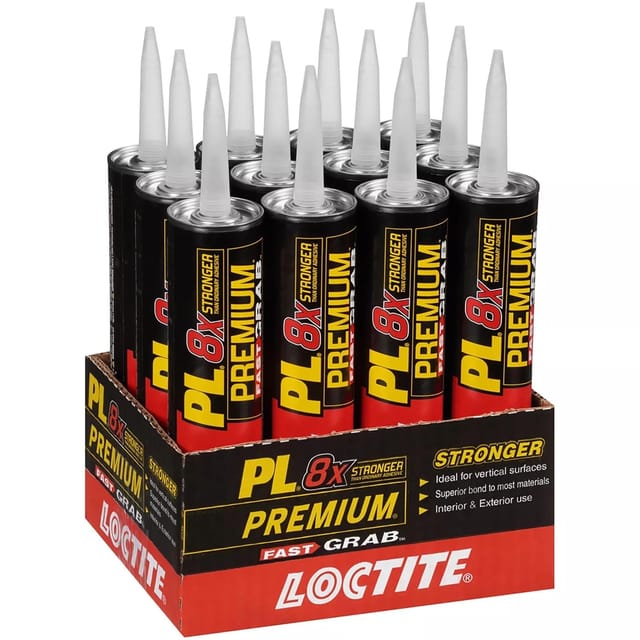
- Loctite PL Premium Polyurethane Construction AdhesiveHeavy-duty structural bonding on subfloors, framing, stairs, concrete, brick, stone, and metal — the 100 % polyurethane formula provides 3x the strength of traditional adhesives and cures in all weather conditions.
Questions
Common Questions About Gluing Brick & Masonry to Wood
- Can you glue wood to brick?
- Yes for a plaque, furring strip, or trim on sound, dry brick — and the same pair if a brick veneer piece is going onto wood. Exterior construction adhesive bridges the rough face. A ledger, handrail, or anything that can fall still wants masonry anchors.
- Does wood glue work on brick?
- No. PVA needs two porous wood faces and a clamp. Brick dust and alkalinity starve it, and it cannot bridge a rough masonry face.
- Can adhesive replace masonry anchors for wood on brick?
- Not for a structural or safety-critical load. The bead beds the timber and keeps water out; the anchors still carry the weight.
- Will glued wood stay on an outdoor brick wall?
- On dry, sound brick, exterior construction adhesive holds light trim through rain. Wet or crumbling brick, or a freeze-thaw wall that stays soaked, lifts a glue-only joint. Keep the wood off any spot where water sits.