More material pairs
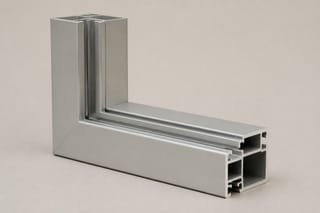
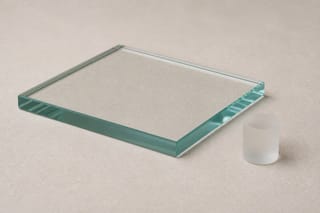
Material pair
How to Glue Aluminum to Glass
Use 2-part epoxy (clear) for most aluminum-to-glass joints. Forms a rigid clear bond when bright aluminum and clean glass meet closely.
Best Adhesive for Aluminum to Glass
Forms a rigid clear bond when bright aluminum and clean glass meet closely.
Reviewed and adjusted by an editor.
Why 2-part epoxy (clear) Works
- The dull oxide layer on the surface is what glue bonds to — and it flakes off under load. Scuff to bright metal and degrease right before gluing for a bond that lasts.
- Non-porous and unforgiving — any grease film or fingerprint weakens the joint and stays visible through the glass forever.
- The strongest rigid bond — but only on aluminum scuffed to bright metal and degreased.
- Cures clear and rigid, and stays waterproof.
Conditions
When to Use Silicone Instead
Alternatives
Other Adhesives That Work
Lets aluminum and glass move by different amounts without concentrating stress in the glass.
Better when: Heat exposure, Flexing or movement, Water immersion
Products
Products for Bonding Aluminum to Glass
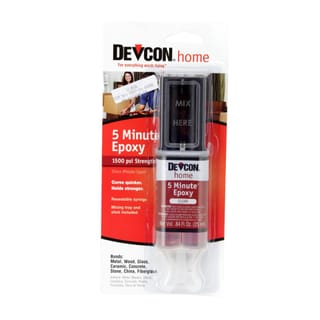
- Devcon 5 Minute EpoxyRapid, crystal-clear bonding on metal, glass, ceramic, wood, and rigid plastics — the benchmark fast-curing 2-part epoxy for jewelry, fine craft, and clean household break repairs.
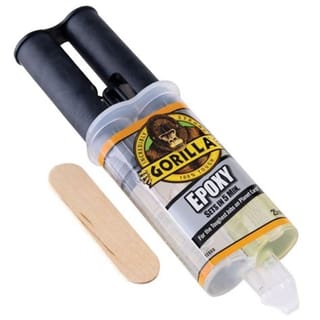
- Gorilla 2-Part EpoxyGeneral household rigid repairs where a clear, gap-tolerant bond matters.
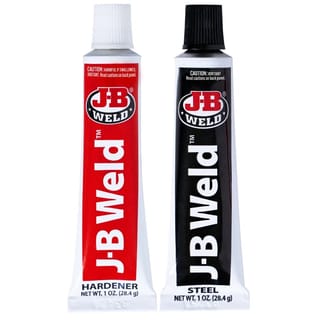
- J-B Weld OriginalRigid metal repairs — a cracked bracket, a stripped hole, a broken tool handle.
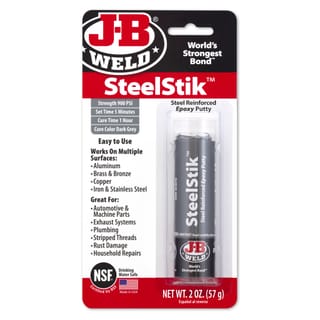
- J-B Weld SteelStik Epoxy PuttyHand-kneadable, non-rusting steel-reinforced epoxy putty for emergency plumbing repairs, auto components, stripped metal threads, and rebuilding missing metal/machinery sections — sets in 5 minutes and fully cures in 1 hour with 4,000 psi tensile strength.
Questions
Common Questions About Gluing Aluminum to Glass
- Can you glue aluminum to glass?
- Yes, after the aluminum is scuffed bright and degreased and the glass is clean — the same prep if you are gluing glass to aluminum. Clear 2-part epoxy is the usual rigid joint; heat or movement favors silicone.
- Should I use silicone instead of epoxy on aluminum and glass?
- Use silicone when the joint sees heat, water, or flex. Epoxy is the clearer, stiffer line for a close-fitting indoor piece that stays still.
- Does super glue hold glass to aluminum?
- Only a tiny, tight, unloaded contact. It has no gap fill and turns brittle. A shelf, pane, or anything that could fall needs epoxy or silicone plus a mechanical ledge.
- Do temperature changes crack an aluminum-to-glass glue joint?
- They can. Aluminum and glass expand by different amounts, which loads a long rigid glue line and can stress the glass. Silicone is the switch when those cycles are expected.