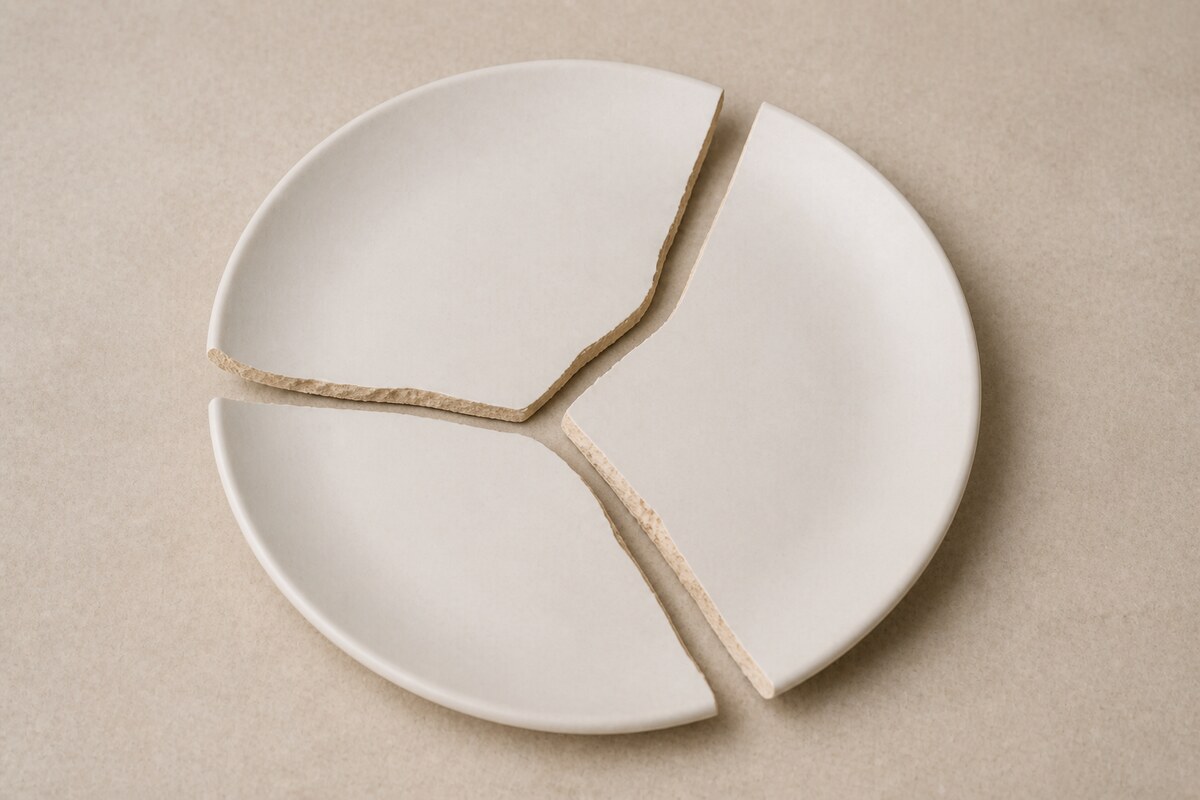
Best bet
Waterproof once cured and fills the small gaps in a clean break.
Not for: Heat exposure, Water immersion
Reviewed and adjusted by an editor.
Why this answer
- A clean break fits back like a puzzle with almost no gap — ideal for thin glue lines. Unglazed faces are porous; glazed faces are not.
- Fills the tiny gaps in a clean break and survives hot water.
How to do it
Step by step
- Wash both broken edges and let them dry completely.
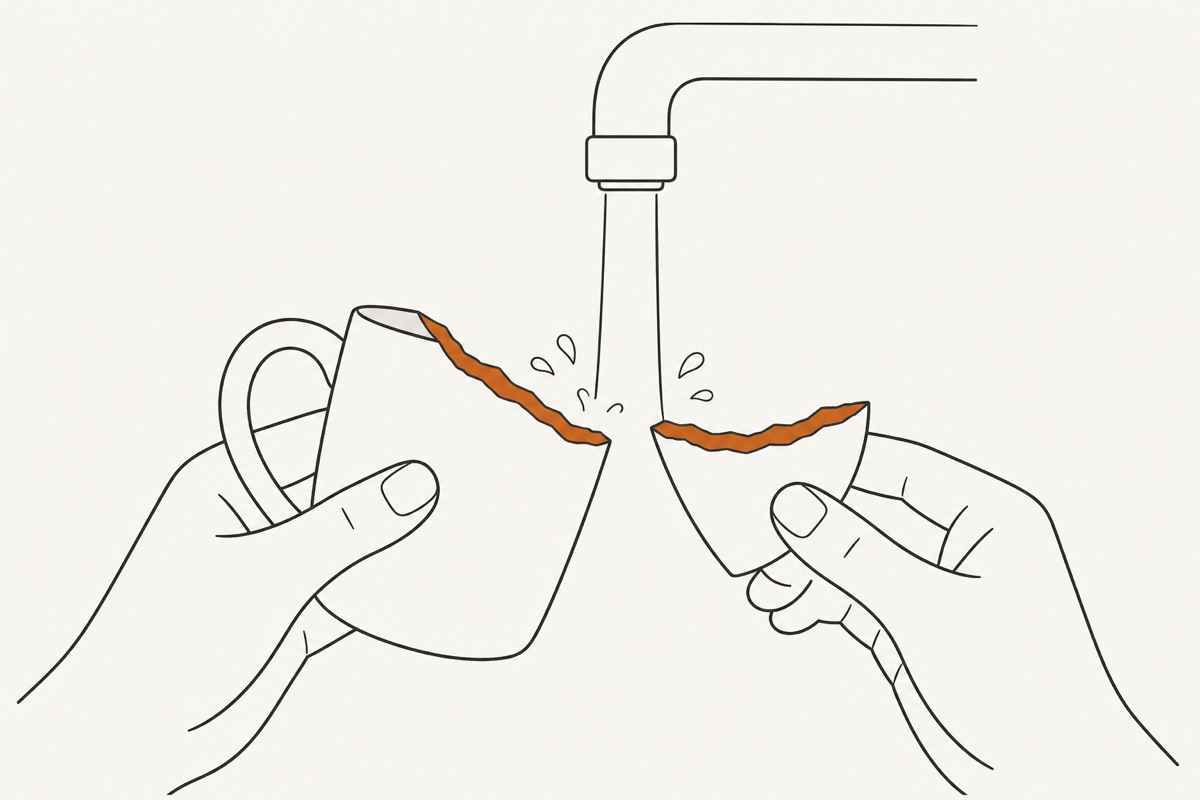
- Dry-fit the pieces so you know the order they go together.

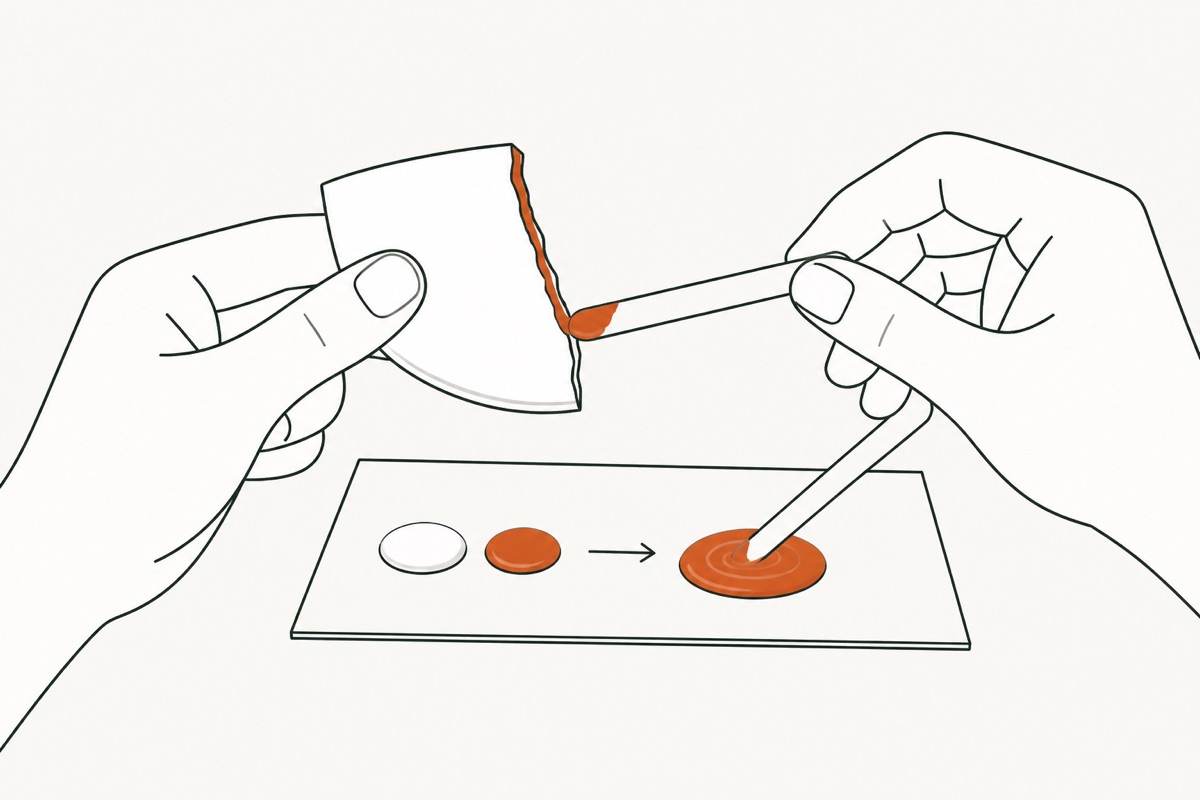
- Mix a small amount of 2-part epoxy and coat one edge thinly.
- Press together, wipe the squeeze-out, and hold with tape or a rubber band.
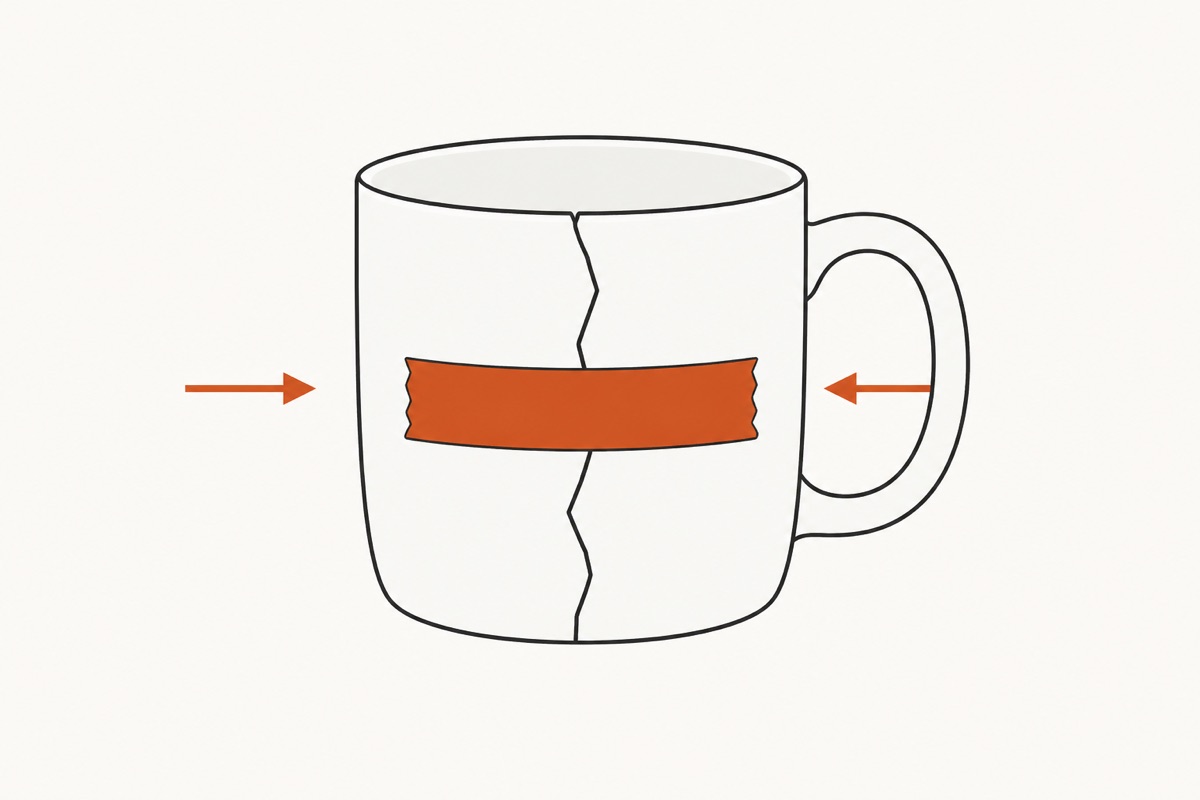
- Let it cure fully — overnight, not minutes — before washing.

Conditions
When the answer changes
If the mug lives in the dishwasher or microwave, treat the repair as a stopgap — heat and detergent eventually win. A hairline crack (not a clean break) seals better with food-safe silicone.
Alternatives
What else works
It seals rather than joins: right where a ceramic fixture meets a wet surface, wrong for a break that has to hold together.
Better when: Food contact, Heat exposure
Near-invisible on a clean, tight break and set before you can fumble the piece — but brittle, and it softens in hot water.
Avoid
What not to use
Avoid
Construction adhesive
Ruled out here by Food contact
For sticking a tile or a ceramic fixture to a wall, where a thick bead spans an uneven surface — not for mending a broken piece.
Avoid
Polyurethane
Ruled out here by Food contact
Waterproof and strong on unglazed ceramic, but it foams out of the crack and leaves a ridge to trim.
Avoid
Contact cement
Contact cement — the glaze gives its solvent nowhere to go, so the film stays soft and peels.
Avoid
Spray adhesive
Spray adhesive — far too weak for a rigid part that gets handled and washed.
Avoid
Flexible fabric adhesive
Fabric adhesive — it is made to stay soft inside a weave, and has no grip on glaze.
Avoid
Wood glue (PVA)
Wood glue — it shrinks as it dries and won't survive a sink of hot water.
Avoid
Solvent cement
Solvent cement — glaze and fired clay cannot be dissolved, so the solvent simply evaporates off the break.
Questions
Common questions
- Can a repaired mug safely return to drinking use?
- Only when the exact adhesive is documented by its manufacturer for the mug's food-contact, temperature, washing, and microwave conditions after full cure. If any part of that use is unsupported or uncertain, keep the mug decorative.
- Why should I dry-fit every ceramic piece before mixing the epoxy?
- A dry fit confirms the assembly order and shows whether every fragment is present. It also lets you plan tape or supports before the adhesive starts curing, reducing gaps and excess glue at the seams.
- Will epoxy hide missing chips in a broken mug?
- It can bridge a small defect, but it does not recreate the original ceramic surface or make a visible repair disappear. Large missing areas need a separate rebuild and make returning the mug to functional use less sensible.
- What if adhesive squeezes onto the inside of the mug?
- Remove squeeze-out while the product instructions still allow safe cleanup. If cured adhesive remains on a drinking surface, or its food-contact suitability is unclear, retire the mug from food and drink use.