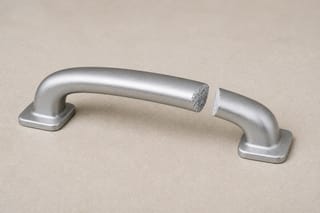
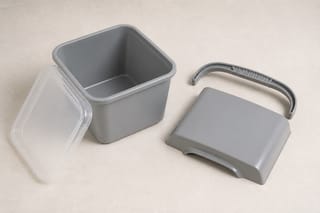
Material pair
How to Glue Metal to Plastic
Use 2-part epoxy for most metal-to-plastic joints after scuffing both faces. If the plastic flexes in use, a flexible adhesive lasts longer; polypropylene and polyethylene need a primer system, not ordinary epoxy.
Best Adhesive for Metal to Plastic
Wets out both surfaces. Scuff smooth plastic first so the glue can grab.
Not for: Flexing or movement
Reviewed and adjusted by an editor.
Why 2-part epoxy Works
- Smooth, dense, and non-porous — the glue sits entirely on the surface, so scuffing and degreasing matter more than which glue you pick.
- Two very different families hide under one word. Rigid PVC, ABS, and acrylic bond well; waxy PP and PE shrug off ordinary adhesives.
- The strongest rigid bond on a scuffed, grease-free surface.
- Wets out hard plastics that ordinary glues bead off.
Conditions
When to Use Flexible adhesive (silicone) Instead
If the plastic flexes in use, a flexible adhesive beats rigid epoxy. Small, tight-fitting parts can use super glue gel instead.
Alternatives
Other Adhesives That Work
Instant grip on a small, closely fitted part; it cures brittle, so anything that flexes or takes a knock cracks it straight off.
When the plastic flexes in use, a flexible bond outlasts a stronger rigid one.
Better when: Flexing or movement
Products
Products for Bonding Metal to Plastic
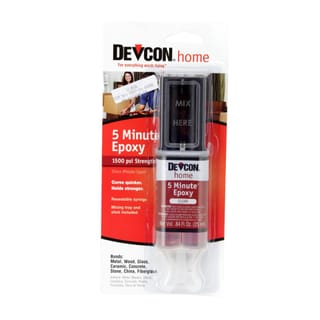
- Devcon 5 Minute EpoxyRapid, crystal-clear bonding on metal, glass, ceramic, wood, and rigid plastics — the benchmark fast-curing 2-part epoxy for jewelry, fine craft, and clean household break repairs.
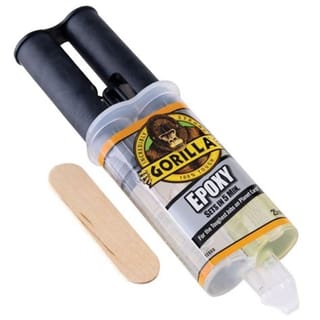
- Gorilla 2-Part EpoxyGeneral household rigid repairs where a clear, gap-tolerant bond matters.
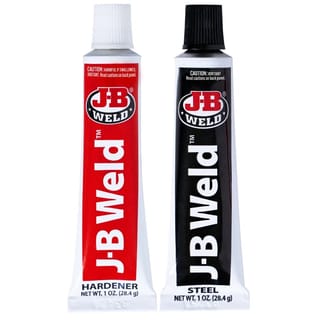
- J-B Weld OriginalRigid metal repairs — a cracked bracket, a stripped hole, a broken tool handle.
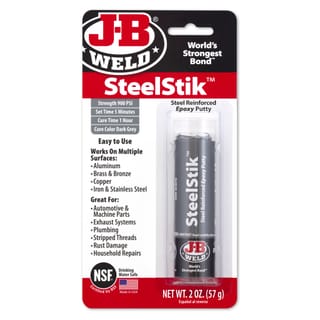
- J-B Weld SteelStik Epoxy PuttyHand-kneadable, non-rusting steel-reinforced epoxy putty for emergency plumbing repairs, auto components, stripped metal threads, and rebuilding missing metal/machinery sections — sets in 5 minutes and fully cures in 1 hour with 4,000 psi tensile strength.
Questions
Common Questions About Gluing Metal to Plastic
- Can you glue metal to plastic?
- Yes, after you scuff and degrease both faces. Epoxy covers most rigid plastics; polypropylene and polyethylene need a primer system, and a part that flexes wants a flexible adhesive.
- Does epoxy work on all plastics?
- No. It wets many rigid plastics once they are scuffed, but polypropylene and polyethylene shed it. Check a molded mark when you can, and use a compatible primer kit on those two.
- Should I use super glue to attach plastic to metal?
- Only for small, rigid parts whose faces already meet closely. It is a poor choice for gaps, flexing plastic, or unidentified low-surface-energy plastic.
- What if the plastic flexes and the metal does not?
- Movement concentrates peel at the edge of a rigid bond. Switch to a flexible adhesive so the glue line can deform with the plastic instead of cracking loose.