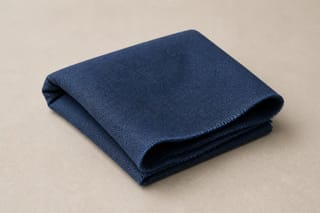
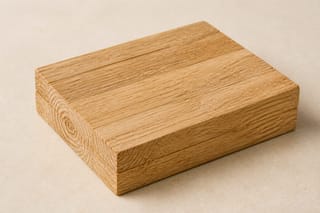
Material pair
How to Glue Fabric to Wood
Use Flexible fabric adhesive for most fabric-to-wood joints. Grips bare wood while keeping a wrapped fabric edge soft enough to bend.
Best Adhesive for Fabric to Wood
Grips bare wood while keeping a wrapped fabric edge soft enough to bend.
Not for: Load-bearing / shear
Reviewed and adjusted by an editor.
Why Flexible fabric adhesive Works
- Soft, porous, and constantly flexing — the adhesive has to stay flexible too, or the seam becomes a stiff ridge that cracks.
- Porous and slightly forgiving — glue soaks in, and a well-glued joint ends up stronger than the wood around it. Oily hardwoods like teak need a solvent wipe first.
- Stays soft so the seam can still bend and fold.
- Only when the other side is cloth: it grips bare wood well enough for upholstery but has no strength as a wood joint.
Preparation
How to Prepare Fabric and Wood for Gluing
Conditions
When to Use Polyurethane Instead
Use Polyurethane
Use Polyurethane
Flexible fabric adhesive suits a wrapped edge or small upholstery repair that still has to bend. A broad decorative lamination can use a compatible spray system, but any seam that carries real pull needs staples, tacks, or stitching as its load path.
Alternatives
Other Adhesives That Work
Spreads an even film under a broad decorative facing, but does not carry a pulling load.
Useful on heavy upholstery that can accept a stiffer glue line; test for bleed-through first.
A weather-resistant option that can foam through fabric, so keep it away from visible light cloth.
Better when: Outdoor exposure, Water immersion
Products
Products for Bonding Fabric to Wood
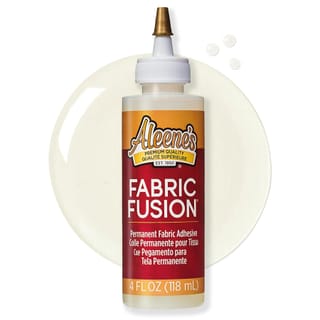
- Aleene's Fabric FusionBonding cotton, denim, flannel, trim, and other embellishments to fabric — it dries clear and stays flexible after washing.
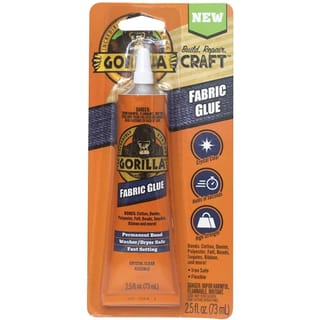
- Gorilla Fabric GlueHemming, badges, clothing patches, rhinestones, trims, and fabric crafts — sets fast in 5 minutes with a crystal clear, flexible bond that withstands machine washing.
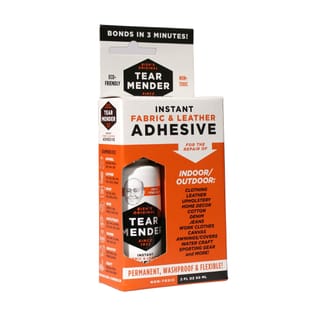
- Tear Mender Instant Fabric & Leather AdhesiveInstant, permanent repairs on clothing, canvas tarps, leather boots, outdoor gear, and upholstery — forms a flexible, breathable waterproof bond in 3 minutes without heat or ironing.
Questions
Common Questions About Gluing Fabric to Wood
- Can you glue fabric to wood?
- Yes, on bare or sound wood. Flexible fabric adhesive grips the grain and keeps a wrapped edge soft; a light upholstery spray is for a broad panel, not a pulled seam. Wood onto fabric is the same pair in reverse.
- Does wood glue work on fabric?
- It soaks through the weave, dries hard, and shows on the face. Use it only if you want a stiff, stained patch. Fabric adhesive or a foam-safe spray is the usual wrap.
- Can I glue fabric to painted wood?
- Only if the paint is sound and the adhesive accepts it. A weak finish lets go of the wood with the cloth still attached. Test, or expose bare wood in the hidden bond area.
- Should an upholstery edge rely only on glue?
- No. Staples, tacks, or stitching should carry the tension. Adhesive keeps the layers flat and controls a loose edge; it is not the load path.