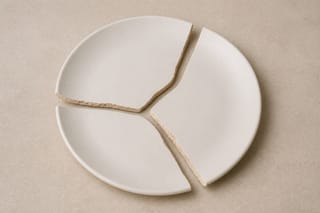
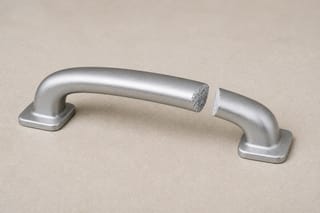
Material pair
How to Glue Ceramic to Metal
Use 2-part structural epoxy for most ceramic-to-metal (or metal-to-ceramic) joints that carry load, such as a hook on tile. For light, wet-area trim, kitchen-and-bath silicone is the better seal.
Best Adhesive for Ceramic to Metal
Bridges the gap between rigid metal plates and slightly uneven ceramic bodies, curing rock-hard to resist heavy downward shear loads without creeping.
Reviewed and adjusted by an editor.
Why 2-part structural epoxy Works
- A clean break fits back like a puzzle with almost no gap — ideal for thin glue lines. Unglazed faces are porous; glazed faces are not.
- Smooth, dense, and non-porous — the glue sits entirely on the surface, so scuffing and degreasing matter more than which glue you pick.
- Fills the tiny gaps in a clean break and survives hot water.
- The strongest rigid bond on a scuffed, grease-free surface.
Preparation
How to Prepare Ceramic and Metal for Gluing
Clean raw ceramic biscuit or scuff glazed tile surfaces with 80-to-120-grit sandpaper to remove surface gloss and create mechanical tooth. Wipe clean with rubbing alcohol.
Scuff metal bonding pad with 80-to-120-grit sandpaper to expose bare, bright metal and eliminate oxidation. Degrease thoroughly with acetone or isopropyl alcohol.
Conditions
When to Use 100% Kitchen & bath silicone Instead
For bathroom hooks, towel bars, cabinet hardware, and heavy decorative plaques, 2-part structural epoxy provides the necessary gap-filling mass and shear holding power. In wet shower areas with light non-load trims, 100 % mold-resistant silicone provides a waterproof flexible seal.
Alternatives
Other Adhesives That Work
Flexible watertight bond for lightweight metal trim pieces and soap dishes in humid bathrooms exposed to direct water spray.
Better when: Water immersion, Flexing or movement
Fast tack for small, perfectly flat decorative ceramic-to-metal items (e.g. jewelry clasps, small figurines) without shear stress.
Products
Products for Bonding Ceramic to Metal
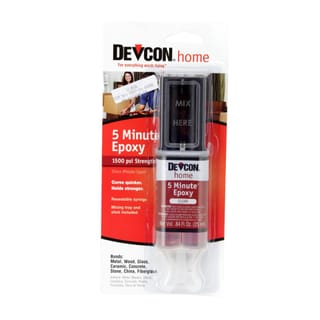
- Devcon 5 Minute EpoxyRapid, crystal-clear bonding on metal, glass, ceramic, wood, and rigid plastics — the benchmark fast-curing 2-part epoxy for jewelry, fine craft, and clean household break repairs.
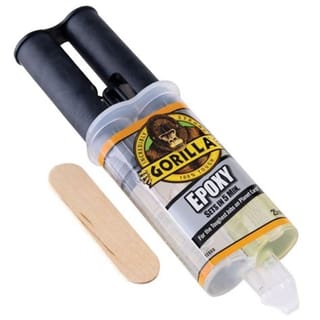
- Gorilla 2-Part EpoxyGeneral household rigid repairs where a clear, gap-tolerant bond matters.
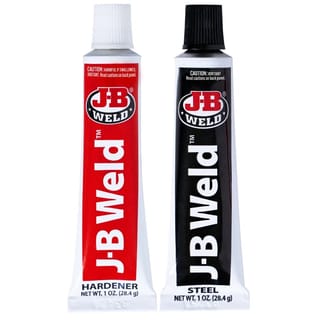
- J-B Weld OriginalRigid metal repairs — a cracked bracket, a stripped hole, a broken tool handle.
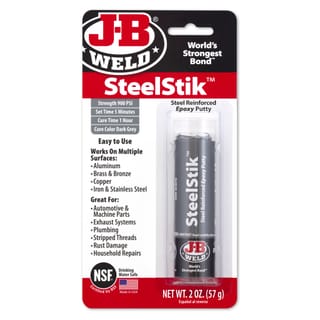
- J-B Weld SteelStik Epoxy PuttyHand-kneadable, non-rusting steel-reinforced epoxy putty for emergency plumbing repairs, auto components, stripped metal threads, and rebuilding missing metal/machinery sections — sets in 5 minutes and fully cures in 1 hour with 4,000 psi tensile strength.
Questions
Common Questions About Gluing Ceramic to Metal
- Can you glue metal to ceramic tile?
- Yes, after you scuff the glaze and the metal and degrease both. 2-part structural epoxy is the usual pick for anything that carries load.
- Can I glue a towel hook to tile without drilling?
- For a hook that will hold wet towels or coats, use structural epoxy on prepared faces and wait for a full cure before loading it. If failure could cause harm or the piece is heavy, add a mechanical fastener.
- Does wood glue work on tile and metal?
- No. Wood glue needs to soak into fibers and let water leave the joint. Glazed ceramic and metal are non-porous, so the glue stays wet and never sets.
- Should I use silicone to glue metal in a shower?
- Use kitchen-and-bath silicone for light, non-load trim in wet areas. A towel bar, hook, or anything in shear still wants structural epoxy — and often a fastener.