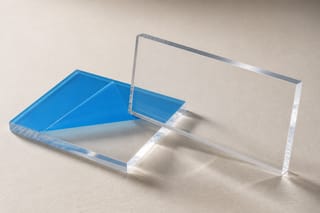
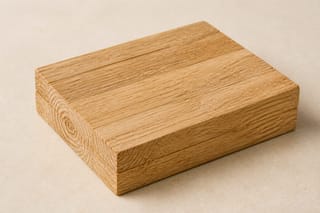
Material pair
How to Glue Acrylic to Wood
Use clear 2-part epoxy or neutral-cure silicone to bond acrylic (Plexiglas) to wood. Epoxy provides a rigid structural bond for frames and display boxes, while silicone accommodates differential thermal expansion.
Best Adhesive for Acrylic to Wood
Cures clear and creates a strong mechanical and chemical bond between porous wood and smooth acrylic without clouding the plastic.
Not for: Visible glue line
Reviewed and adjusted by an editor.
Why Clear 2-part epoxy Works
- The only material here where how the joint looks is part of whether it works, because you can see straight through it. Acrylic dissolves in the right solvent, so two clean edges can be welded into a seam that is nearly invisible. The same sensitivity is the hazard: super glue vapour, solvent-based adhesives, and household cleaners all fog or craze the surface with a web of tiny cracks, often nowhere near where you applied them.
- Porous and slightly forgiving — glue soaks in, and a well-glued joint ends up stronger than the wood around it. Oily hardwoods like teak need a solvent wipe first.
- The choice when the fit is bad or the other side is not acrylic. It fills what a weld cannot close, but the glue line stays visible and a general-purpose epoxy can yellow in sunlight.
- It bonds to surfaces wood glue cannot, and fills a gap instead of shrinking into one — the reason to reach past PVA on a loose joint or a mixed-material one.
Conditions
When to Use Neutral-cure clear silicone Instead
Never use plastic solvent cements on wood; solvent cements work by chemically melting plastic against plastic and will not adhere to cellulose fibers. Avoid cyanoacrylate (super glue) on clear acrylic, as vapors cause permanent white hazing.
Alternatives
Other Adhesives That Work
Accommodates large differences in thermal expansion between plastic sheet and wooden frames in outdoor signs.
Better when: Flexing or movement, Outdoor exposure
Avoid
What not to use
Avoid
Solvent cement (plastic weld)
Solvent cements fuse plastic by dissolving polymer chains; they cannot dissolve or bond to wood fibers.
Avoid
Cyanoacrylate (Super glue)
Cyanoacrylate fumes leave a chalky, permanent white fog (blooming) across clear acrylic, ruining optical clarity.
Products
Products for Bonding Acrylic to Wood
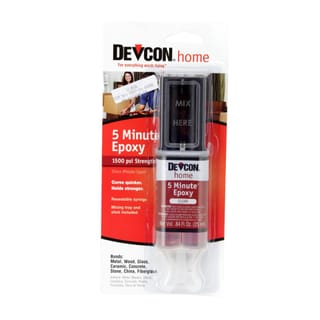
- Devcon 5 Minute EpoxyRapid, crystal-clear bonding on metal, glass, ceramic, wood, and rigid plastics — the benchmark fast-curing 2-part epoxy for jewelry, fine craft, and clean household break repairs.
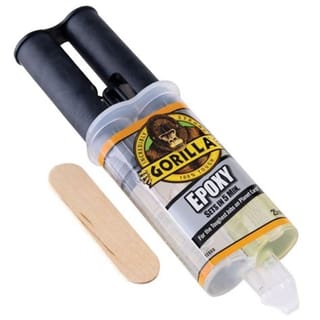
- Gorilla 2-Part EpoxyGeneral household rigid repairs where a clear, gap-tolerant bond matters.
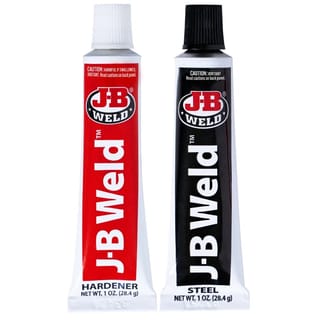
- J-B Weld OriginalRigid metal repairs — a cracked bracket, a stripped hole, a broken tool handle.
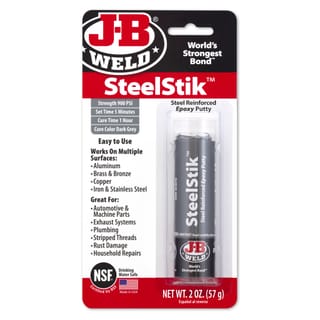
- J-B Weld SteelStik Epoxy PuttyHand-kneadable, non-rusting steel-reinforced epoxy putty for emergency plumbing repairs, auto components, stripped metal threads, and rebuilding missing metal/machinery sections — sets in 5 minutes and fully cures in 1 hour with 4,000 psi tensile strength.
Questions
Common Questions About Gluing Acrylic to Wood
- Can I use acrylic cement (like Weld-On) to glue acrylic to wood?
- No. Acrylic cement contains solvents that chemically dissolve acrylic so two pieces fuse together. Wood has no acrylic polymer chains to melt, so solvent cement simply evaporates away without creating any bond.
- Why does super glue ruin clear acrylic, and how do I prevent fogging?
- Cyanoacrylate fumes condense and polymerize on smooth surfaces, leaving a permanent white chalky residue called blooming or frosting. Use 2-part clear epoxy instead, which produces no airborne vapors and leaves the acrylic crystal clear.
- Should I scuff the acrylic before applying epoxy?
- Lightly sanding the hidden mating edge with 320-grit sandpaper creates microscopic teeth for mechanical epoxy grip. Keep painter's tape over visible viewing areas so you do not scratch clear sightlines.
- Why do large acrylic signs crack when glued solidly into wood frames?
- Acrylic sheet expands and contracts up to eight times more than wood with temperature changes. For large outdoor signs or window inserts, use flexible clear neutral silicone or oversized screw slots to allow sheet movement.