Best bet
Stays permanently rubbery, bridges thermal expansion between metal/stone/ceramic, and resists standing water without mold growth.
Not for: Load-bearing / shear
Reviewed and adjusted by an editor.
Why this answer
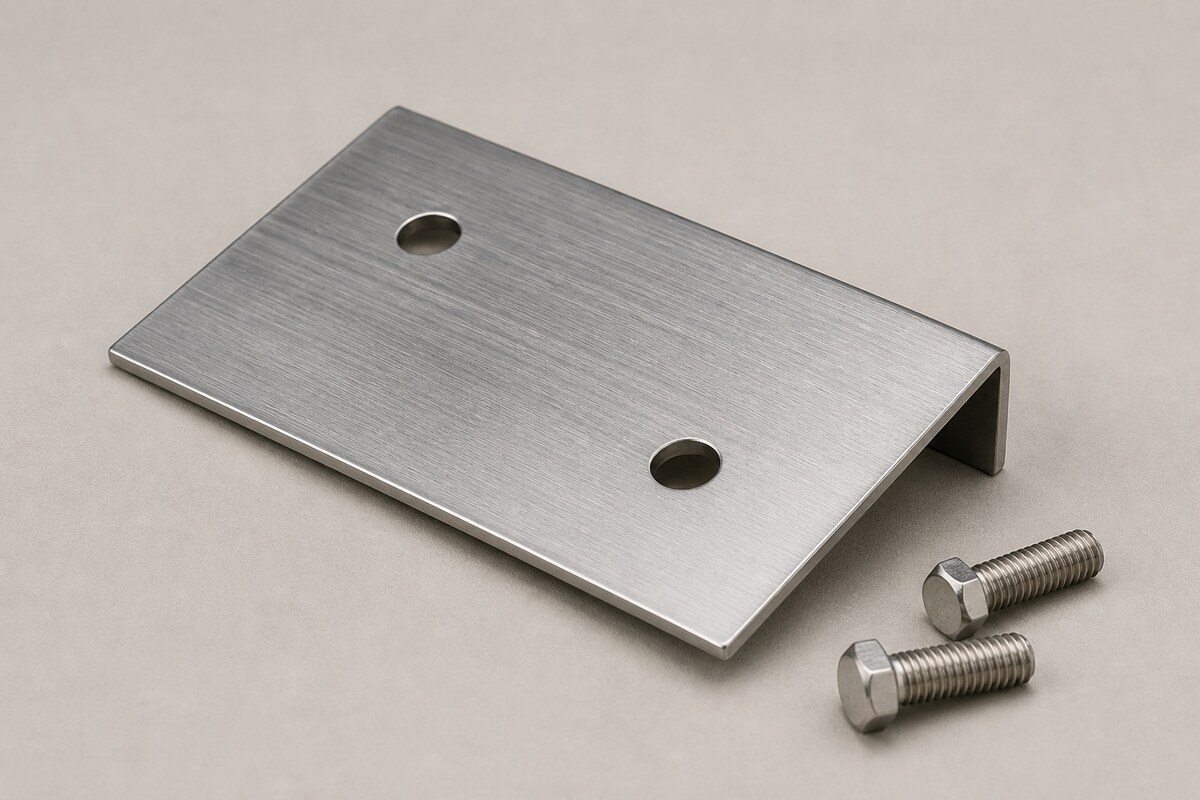
- The passive chromium-oxide film is stable enough to bond, but fingerprints, polish, and a mirror finish leave little for adhesive to grip. Degrease, abrade to an even satin scratch, clean again, and keep fingers off the prepared face.
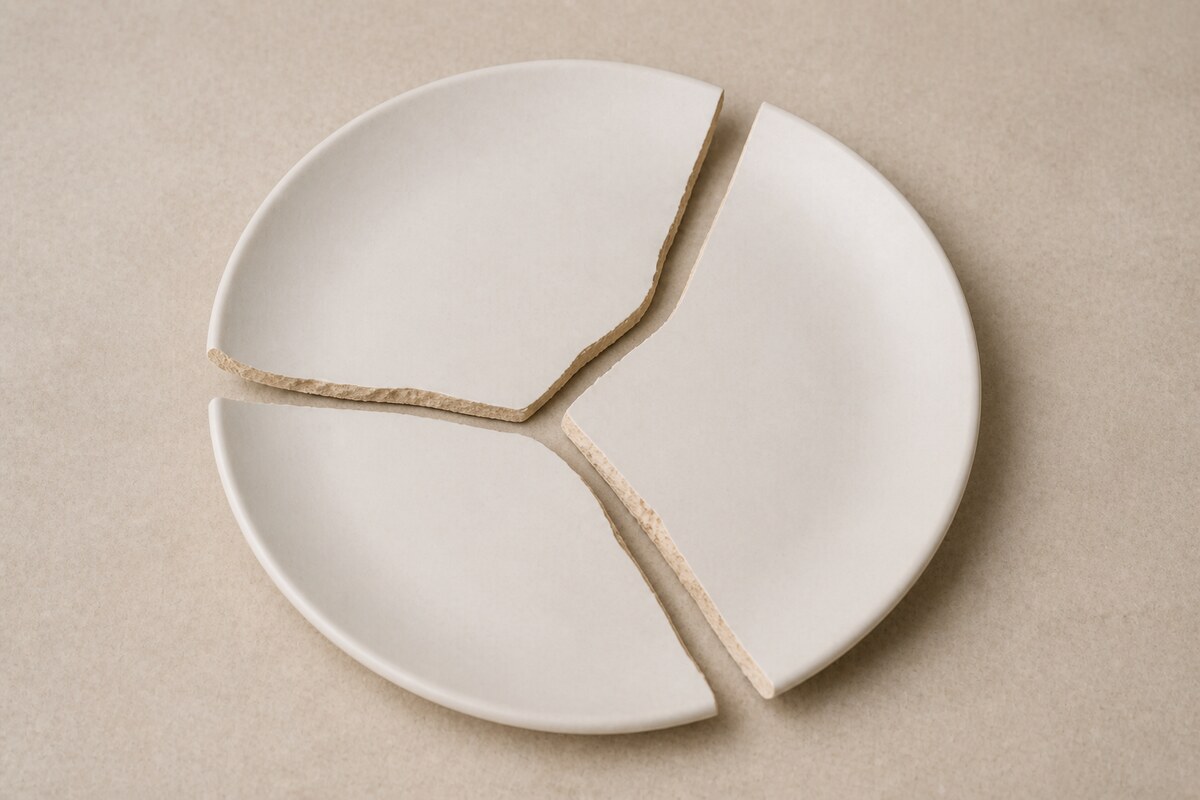
- A clean break fits back like a puzzle with almost no gap — ideal for thin glue lines. Unglazed faces are porous; glazed faces are not.
- Sticks well to clean metal and stays flexible and waterproof — a sealant around metal, not a joint that carries weight.
- It seals rather than joins: right where a ceramic fixture meets a wet surface, wrong for a break that has to hold together.
- Stays permanently rubbery, bridges thermal expansion between metal/stone/ceramic, and resists standing water without mold growth.
How to do it
Step by step
- Scrape away 100 % of the old, cracked, or blackened caulk using a razor scraper or caulk removal blade.
- Wipe the joint gap thoroughly with rubbing alcohol or mineral spirits to remove soap scum, and allow it to dry completely.
- Apply painter's masking tape along both the sink flange and the countertop surface, leaving a neat 1/4-inch gap for the bead.
- Cut the nozzle at a 45-degree angle and gun a continuous, uniform bead of 100 % kitchen and bath silicone into the joint.
- Smooth the bead immediately with a caulk profiling tool, peel the painter's tape while still wet, and allow 24 hours to cure before use.
Conditions
When the answer changes
Always choose 100 % neutral-cure kitchen & bath silicone with mold inhibitors. Acrylic latex or siliconized caulk shrinks, breaks down in standing water, and turns black with mildew.
Alternatives
What else works
A strong rigid bond on degreased, evenly abraded stainless; a mirror finish must be roughened before the epoxy has a reliable surface to grip.
Extra prep: Remove oil and polish, abrade to an even satin scratch, then clean again without touching the bond face.
Bonds a small, closely fitted stainless part quickly, but the cured joint is brittle and mirror-polished steel still needs abrasion.
Extra prep: Degrease the joint and break any mirror polish with a fine abrasive.
Avoid
What not to use
Avoid
Construction adhesive
Ruled out here by Food contact
For fixing a metal panel or trim across a wide area where a thick bead spans the hollows — not for a joint carrying its load through a small footprint.
Avoid
Polyurethane
Ruled out here by Food contact
Waterproof and more forgiving of movement than epoxy, but it has no pores to foam into on this side — scuff the metal and clamp the joint.
Avoid
Contact cement
Contact cement — the glaze gives its solvent nowhere to go, so the film stays soft and peels.
Avoid
Flexible fabric adhesive
Fabric adhesive — it is made to stay soft inside a weave, and has no grip on glaze.
Avoid
Spray adhesive
Spray adhesive — the tacky film never hardens, so it creeps and slides on a smooth metal face.
Avoid
Wood glue (PVA)
Wood glue — it needs pores to soak into and peels straight off metal.
Avoid
Solvent cement
Solvent cement — it welds plastic by softening it, and metal never softens; the solvent flashes off and the parts come apart in your hands.
Questions
Common questions
- Why must all old silicone be completely scraped away first?
- Nothing adheres to cured silicone, including fresh silicone. Applying new caulk over old residue creates a weak interface that peels off within weeks, letting water leak under the countertop to rot cabinet subfloors.
- Why avoid acrylic latex caulk around kitchen sinks?
- Acrylic latex is water-based and shrinks substantially as it dries, leaving thin gaps. Standing pool water dissolves the latex matrix and promotes aggressive black mold growth. Only 100 % RTV silicone stays flexible and completely waterproof.
- How long should I wait before running water in the sink?
- Even if a silicone label claims 'water-ready in 30 minutes,' waiting a full 24 hours is best practice. It ensures the deep core has cured completely before being subjected to hot water, grease, and dish soap.
- Can silicone hold an undermount sink without clips?
- No. Silicone functions strictly as a watertight gasket, not a structural anchor. The heavy weight of a filled sink must always be supported by mechanical undermount brackets, epoxy anchors, or timber cradle framing underneath.