More material pairs
Material pair
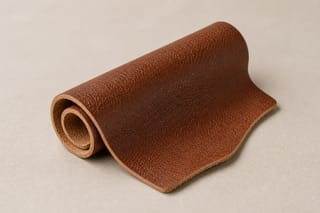
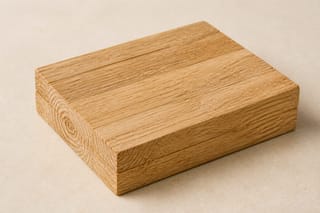
Leather to Wood
Best bet
Grips on contact without heavy clamping and flexes with the leather over curved contours.
Not for: Load-bearing / shear, Water immersion
Reviewed and adjusted by an editor.
Why this answer
- Porous and flexible like fabric but denser — the bond must bend without cracking, and load-bearing seams want stitching as backup.
- Porous and slightly forgiving — glue soaks in, and a well-glued joint ends up stronger than the wood around it. Oily hardwoods like teak need a solvent wipe first.
- Grips on contact and stays flexible for years — what a cobbler reaches for.
- The answer for gluing a laminate or veneer sheet down flat with no clamps — never for a joint that carries load.
Conditions
When the answer changes
Contact cement is the standard choice for leather upholstery wraps, desk inlays, and curved wooden armrests because it bonds on contact without slip. Heavy tension seams still need upholstery tacks or staples.
Alternatives
What else works
Flexible fabric & leather glue
Low-odor water-based hold for light decorative leather trim and flat indoor panels.
Waterproof and tough for outdoor or damp wood-leather joints, but requires firm clamping to contain foaming.
Better when: Outdoor exposure, Water immersion
Products
Products for this joint
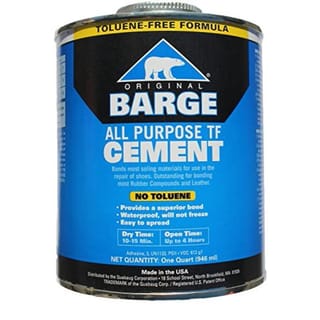
- Barge All-Purpose CementThe professional gold standard for shoe repair, leathercrafting, boot resoling, rubber soles, and heavy fabric laminations — waterproof, permanent, and stays flexible under repeated bending.
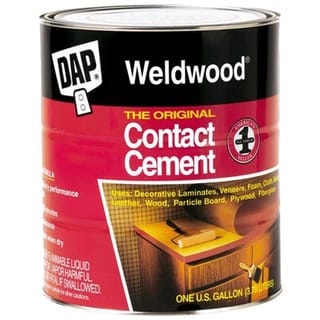
- DAP Weldwood Original Contact CementHigh-pressure laminate on countertops, tabletops, and cabinets; also veneer, leather, fabric, and rubber — a full-coverage bond that needs no clamps.
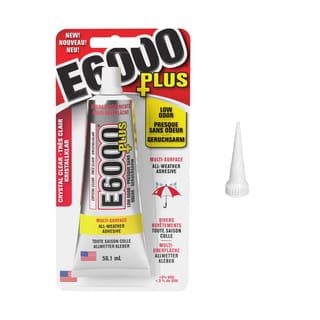
- E6000 Craft & Industrial AdhesiveHigh-strength, flexible bonding across mixed materials — the legendary craft and repair adhesive for jewelry, glass to metal, fabric to leather, and shoe repairs.
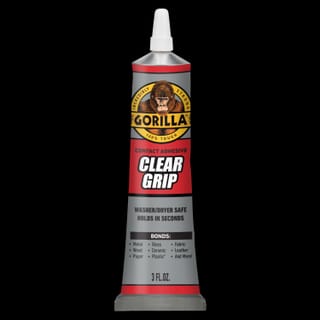
- Gorilla Clear Grip Contact AdhesiveCrystal-clear, flexible, waterproof contact bonding across crafts, home repairs, leather, fabric, wood, metal, glass, and ceramic.
Questions
Common questions
- Why is contact cement the top choice for bonding leather to wood?
- Contact cement coats both surfaces, dries tacky, and bonds instantly on contact. This eliminates the need for complex clamps over curves or edges and remains flexible enough to move with natural leather stretch.
- How should the backside of leather be prepared for gluing?
- If the leather has a smooth or finished backside, scuff it with medium sandpaper (100–150 grit) to raise the nap and wipe off dust. Unfinished suede or split leather only needs to be clean and free of oils.
- Can standard PVA wood glue be used to attach leather to wood?
- PVA wood glue dries rigid and can make leather brittle or crack when flexed. It works adequately only on completely flat, rigid panels clamped under continuous weight, but contact cement is far more dependable.
- Why should super glue be avoided on leather-to-wood joints?
- Cyanoacrylate wicks deep into leather fibers and cures into a hard, brittle crystalline mass that can stain, harden, and snap when the leather flexes.