All guides
Best bet
Instant contact bond holds curved leather securely around armrest contours without requiring clamps.
Not for: Load-bearing / shear, Water immersion
Reviewed and adjusted by an editor.
Why this answer
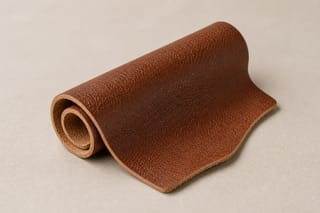
- Porous and flexible like fabric but denser — the bond must bend without cracking, and load-bearing seams want stitching as backup.
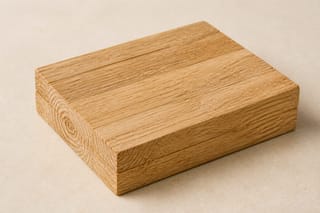
- Porous and slightly forgiving — glue soaks in, and a well-glued joint ends up stronger than the wood around it. Oily hardwoods like teak need a solvent wipe first.
- Grips on contact and stays flexible for years — what a cobbler reaches for.
- The answer for gluing a laminate or veneer sheet down flat with no clamps — never for a joint that carries load.
How to do it
Step by step
- Gently peel back the loose leather section and scrape away hardened old glue, crumbling foam, or debris from the wood underneath.
- Wipe the exposed wood clean and lightly scuff the underside of the leather with 120-grit sandpaper to give the adhesive mechanical grip.
- Apply a thin, even coat of contact cement to both the bare wood surface and the prepared underside of the leather.
- Wait 10 to 15 minutes for the adhesive solvent to flash off until the surfaces are tacky to the touch and no longer wet.
- Align the leather precisely and press firmly from the anchored section outward, using a smooth roller or clean wooden block to burnish and bond.
Conditions
When the answer changes
For flat decorative panels clamped under continuous weight, water-based leather glue is an easy-cleanup alternative. For curved armrests and edges under tension or repeated flex, contact cement is essential because it bonds on contact without slip.
Alternatives
What else works
Flexible fabric & leather adhesive
Low-odor and water-based option for flat, low-tension indoor decorative leather repairs.
Questions
Common questions
- Can I reposition leather once contact cement touches the wood?
- No. Contact cement bonds instantly on touch. Place a sheet of wax paper or parchment between the leather and wood to align the piece first, then slide the paper out progressively as you press.
- Will leather conditioners or oils interfere with the glue?
- Yes. Leather oils, conditioners, and wax residues will prevent adhesive from grabbing. Wipe the bonding area with a dry cloth or mild solvent wipe and lightly scuff before applying glue.
- What if the leather is peeling over foam padding rather than bare wood?
- If bonding directly to foam, avoid heavy solvent-based contact cements that melt foam; use a foam-safe spray adhesive or water-based contact adhesive on the foam side.
- Do I need to clamp the leather armrest overnight?
- No clamping is needed if contact cement is properly flashed off and burnished down firmly. However, avoid sitting on or flexing the armrest for 24 hours to allow full chemical cure.