Material pair
Ceramic to Metal
Best bet
Bridges the gap between rigid metal plates and slightly uneven ceramic bodies, curing rock-hard to resist heavy downward shear loads without creeping.
Reviewed and adjusted by an editor.
Why this answer
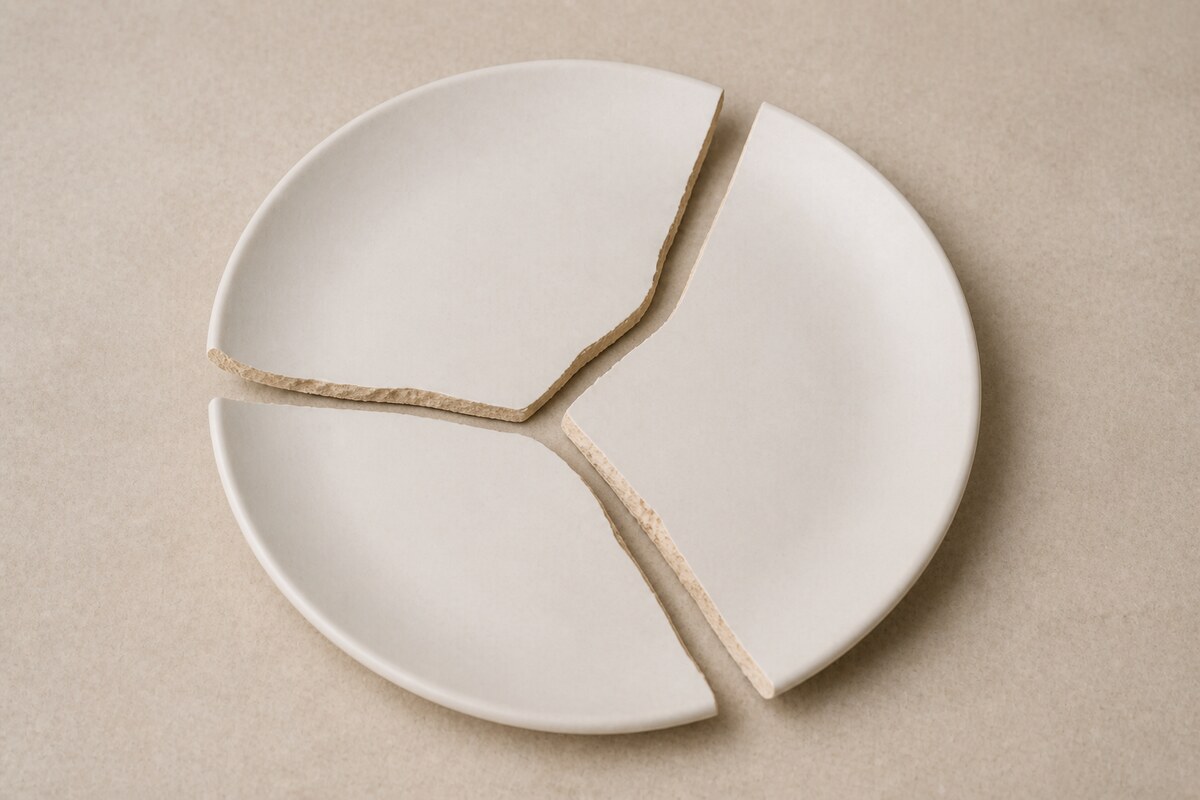
- A clean break fits back like a puzzle with almost no gap — ideal for thin glue lines. Unglazed faces are porous; glazed faces are not.
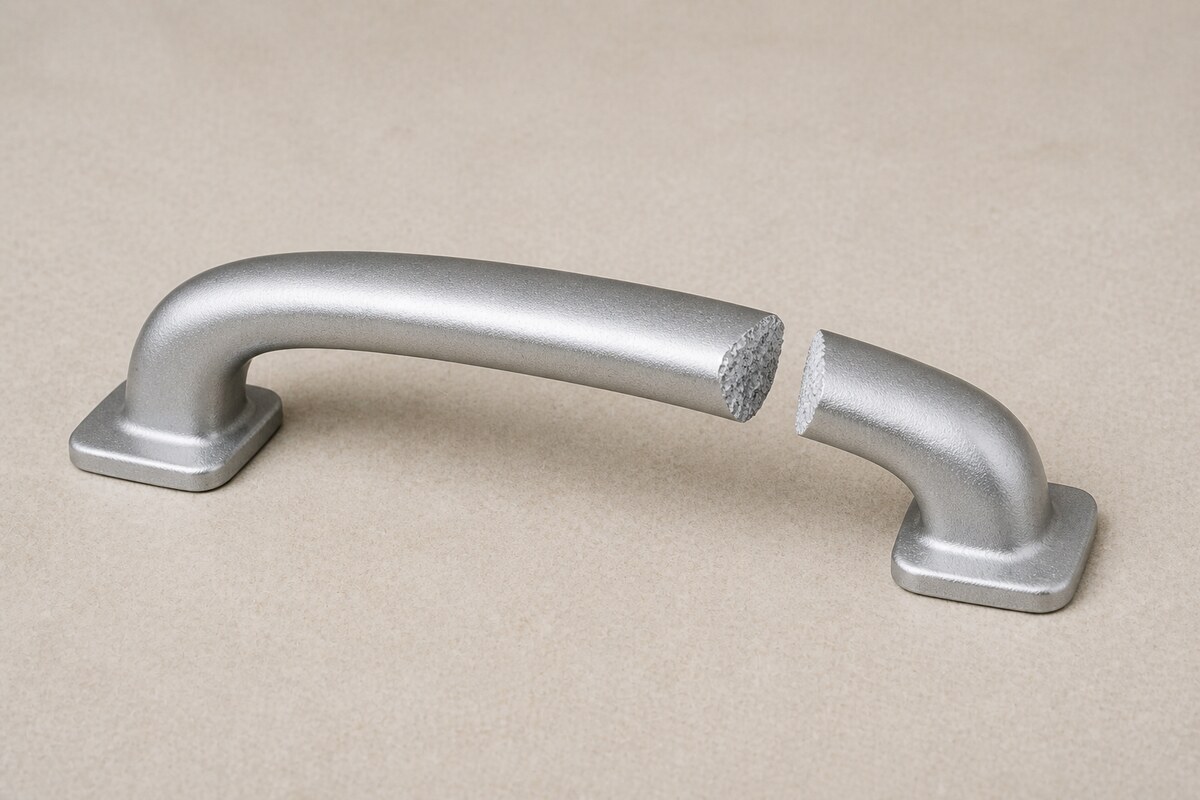
- Smooth, dense, and non-porous — the glue sits entirely on the surface, so scuffing and degreasing matter more than which glue you pick.
- Fills the tiny gaps in a clean break and survives hot water.
- The strongest rigid bond on a scuffed, grease-free surface.
Preparation
Prep each side differently
Clean raw ceramic biscuit or scuff glazed tile surfaces with 80-to-120-grit sandpaper to remove surface gloss and create mechanical tooth. Wipe clean with rubbing alcohol.
Scuff metal bonding pad with 80-to-120-grit sandpaper to expose bare, bright metal and eliminate oxidation. Degrease thoroughly with acetone or isopropyl alcohol.
Conditions
When the answer changes
For bathroom hooks, towel bars, cabinet hardware, and heavy decorative plaques, 2-part structural epoxy provides the necessary gap-filling mass and shear holding power. In wet shower areas with light non-load trims, 100 % mold-resistant silicone provides a waterproof flexible seal.
Alternatives
What else works
Flexible watertight bond for lightweight metal trim pieces and soap dishes in humid bathrooms exposed to direct water spray.
Better when: Water immersion, Flexing or movement
Fast tack for small, perfectly flat decorative ceramic-to-metal items (e.g. jewelry clasps, small figurines) without shear stress.
For sticking a ceramic fixture to a wall, where a thick bead spans an uneven surface — not for mending a broken piece.
Better when: Gap or poor fit
Waterproof and strong on unglazed ceramic, but it foams out of the crack and leaves a ridge to trim.
Better when: Outdoor exposure
Avoid
What not to use
Avoid
Contact cement
Contact cement — the glaze gives its solvent nowhere to go, so the film stays soft and peels.
Avoid
Flexible fabric adhesive
Fabric adhesive — it is made to stay soft inside a weave, and has no grip on glaze.
Avoid
Spray adhesive
Spray adhesive — far too weak for a rigid part that gets handled and washed.
Avoid
Wood glue (PVA)
Wood glue — it shrinks as it dries and won't survive a sink of hot water.
Avoid
Solvent cement
Solvent cement — glaze and fired clay cannot be dissolved, so the solvent simply evaporates off the break.
Products
Products for this joint
- Devcon 5 Minute EpoxyRapid, crystal-clear bonding on metal, glass, ceramic, wood, and rigid plastics — the benchmark fast-curing 2-part epoxy for jewelry, fine craft, and clean household break repairs.
- Gorilla 2-Part EpoxyGeneral household rigid repairs where a clear, gap-tolerant bond matters.
- J-B Weld OriginalRigid metal repairs — a cracked bracket, a stripped hole, a broken tool handle.
- J-B Weld SteelStik Epoxy PuttyHand-kneadable, non-rusting steel-reinforced epoxy putty for emergency plumbing repairs, auto components, stripped metal threads, and rebuilding missing metal/machinery sections — sets in 5 minutes and fully cures in 1 hour with 4,000 psi tensile strength.
Questions
Common questions
- Can I glue a heavy metal coat or towel hook to ceramic tile without drilling?
- Yes, using high-strength 2-part epoxy (or dedicated MS-polymer mounting adhesive). Thoroughly sand the shiny glaze with 80-grit sandpaper and degrease both surfaces with alcohol. Secure the hook with painter's tape and allow a full 24 hours of curing before hanging heavy wet towels or coats.
- Why is alcohol or acetone degreasing critical before bonding metal to ceramic?
- Ceramic tiles in bathrooms and kitchens harbor soap scum, water scale, and cooking oils, while metal hardware often retains stamping lubricants. A microscopic layer of oil prevents epoxy from wetting the surface, leading to adhesive failure under light loads.
- How does thermal expansion difference affect ceramic-to-metal joints?
- Metals expand and contract significantly more than ceramic with temperature changes. A rigid, brittle adhesive like standard super glue will shear apart over time under thermal cycling. Toughened 2-part epoxy or flexible silicone accommodates this differential movement without cracking.
- Why do wood glue and water-based adhesives fail completely between tile and metal?
- Wood glue (PVA) and water-based adhesives cure by evaporating moisture into porous grain. Because glazed ceramic and metal are both 100 % non-porous, trapped water cannot escape, leaving the glue wet and incapable of setting.