Guide
Repair a puncture or seam leak in a PVC inflatable SUP or boat
Use a specialized solvent-based PVC marine adhesive or 2-part polyurethane PVC cement paired with a round PVC patch. Standard bicycle tire puncture kits and silicone peel off instantly under 15–20 PSI paddle board operating pressure.
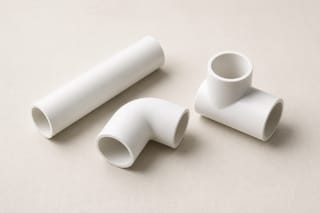
This task involves: Water immersion, Outdoor exposure, Load-bearing / shear, Flexing or movement
Best Glue for This Repair
Solvent-based PVC marine cement / 2-part polyurethane PVC adhesive
Chemically softens and fuses PVC patch layers into a single homogeneous weld capable of holding 15–20+ PSI internal working pressure.
Extra prep
- Cut square, deburr, and wipe both faces clean. Use the primer your plumbing code calls for, then push the joint fully home and hold it — a fitting can back itself out while the plastic is soft.
Not for: Gap or poor fit
Reviewed and adjusted by an editor.
Why Solvent-based PVC marine cement / 2-part polyurethane PVC adhesive Works Here
- The one common household plastic with a purpose-made welding solvent, and that changes the whole answer: for pipe, fittings, and any joint that has to hold pressure, PVC cement is not one option among several, it is the joint. Ordinary adhesives are for the cases cement cannot cover — bonding PVC to something that is not PVC, or closing a gap where the two faces do not meet.
- Soft, porous, and constantly flexing — the adhesive has to stay flexible too, or the seam becomes a stiff ridge that cracks.
- It softens both faces so the fitting and the pipe finish as a single piece — the only joint that holds pressure, and the strongest one on rigid PVC generally. It welds a seam, so it cannot rescue a gap.
- Solvent cement — it wicks straight through the weave and evaporates, stiffening the cloth without leaving any adhesive behind.
- Cut square, deburr, and wipe both faces clean. Use the primer your plumbing code calls for, then push the joint fully home and hold it — a fitting can back itself out while the plastic is soft.
How to do it
Repair a puncture or seam leak in a PVC inflatable SUP or boat: Step by Step
- Deflate the board completely, wipe with soapy water to pinpoint the exact leak, and mark the puncture perimeter with a soft pencil.
- Cut a circular or oval patch from matching marine-grade PVC patch fabric, ensuring at least 1.5 inches of overlap around the puncture in all directions.
- Scuff the glossy coating on both the board surface and the patch back using 180-grit sandpaper, then wipe clean with acetone or MEK solvent.
- Apply a thin, even coat of PVC adhesive to both surfaces, let it flash dry for 5 minutes until tacky, then apply a second thin coat.
- Align the patch over the puncture, roll out all trapped air bubbles from the center outward using a hard seam roller or back of a spoon, and clamp under heavy flat weight for 24–48 hours.
Conditions
When to Use Heavy-duty waterproof contact cement Instead
Inflatable stand-up paddle boards (SUPs) and drop-stitch boats operate under extreme internal air pressures (15 to 20+ PSI) combined with salt water immersion and direct summer sun. Patches glued with household contact cement or super glue blowout immediately upon inflation.
Alternatives
Other Adhesives That Work
Heavy-duty waterproof contact cement
Workable for low-pressure pool floats (under 2 PSI), but softens and leaks under high-pressure SUP expansion and summer sun.
Avoid
Glues to Avoid for This Repair
Avoid
Standard super glue
Zero flexibility under wave impact and rolling pressure, snapping and leaking the instant the board is pressurized.
Questions
Common Questions About This Repair
- Why do rubber bicycle tube patches fail on inflatable paddle boards?
- Bicycle tire kits use vulcanizing fluid formulated exclusively for raw butyl rubber tubes. Paddle boards are constructed from heavy-duty laminated PVC plastic fabric, which chemically repels bicycle tire glue and peels off immediately.
- How much internal pressure can a properly glued PVC patch withstand?
- When bonded with solvent-based PVC marine cement on properly abraded substrates, the patched area becomes a molecular cold weld that comfortably holds the full 15–20+ PSI working pressure of high-performance SUPs.
- Why is MEK or acetone solvent preparation essential for PVC repairs?
- PVC fabrics contain plasticizers and slick factory anti-UV coatings. Wiping with acetone or MEK strips surface plasticizers and chemically softens the top PVC layer so the adhesive can fuse directly into the polymer matrix.
- How long must the patch cure before full inflation and water use?
- Wait at least 24 hours (preferably 48 hours in cooler weather) before inflating beyond 5 PSI or taking the board on open water. Pressurizing too early will blow micro air tunnels through partially cured cement.