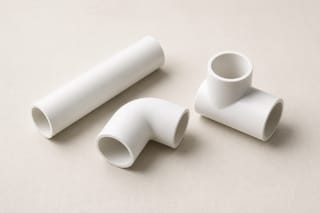
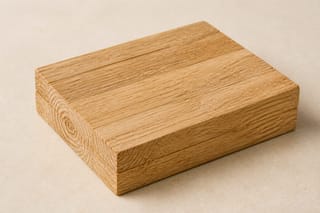
Material pair
How to Glue PVC to Wood
Use polyurethane construction adhesive to bond PVC trim, boards, and moldings to wood studs and framing. For small brackets and rigid fittings, use 2-part plastic epoxy. Standard PVC solvent cement will not work on wood.
Best Adhesive for PVC to Wood
Polyurethane construction adhesive
Fills gaps along long, uneven boards and flexes with seasonal PVC thermal movement without cracking.
Reviewed and adjusted by an editor.
Why Polyurethane construction adhesive Works
- The one common household plastic with a purpose-made welding solvent, and that changes the whole answer: for pipe, fittings, and any joint that has to hold pressure, PVC cement is not one option among several, it is the joint. Ordinary adhesives are for the cases cement cannot cover — bonding PVC to something that is not PVC, or closing a gap where the two faces do not meet.
- Porous and slightly forgiving — glue soaks in, and a well-glued joint ends up stronger than the wood around it. Oily hardwoods like teak need a solvent wipe first.
- For large panels like PVC trim, where a bead along the back is the point.
- A bead thick enough to span the gap between a board and an uneven wall — right for trim and panels, far too coarse for a furniture joint.
Conditions
When to Use 2-part plastic epoxy Instead
Large exterior PVC trim boards expand significantly with ambient temperature, requiring a flexible polyurethane construction adhesive bead. Small repairs use 2-part epoxy.
Alternatives
Other Adhesives That Work
Cures rigid with high strength for small PVC brackets, pipe mounts, or localized repairs to wood.
Better when: Gap or poor fit, Outdoor exposure
Extra prep: Scuff the gloss off both faces and wipe away the dust and any pipe printing ink.
Avoid
What not to use
Avoid
PVC solvent cement
Solvent cement only works by melting plastic together; wood has no polymers to dissolve, leaving the joint bone dry and unbonded.
Avoid
Wood glue (PVA)
PVA glue relies on porous absorption from both sides and peels off smooth PVC in a sheet.
Products
Products for Bonding PVC to Wood
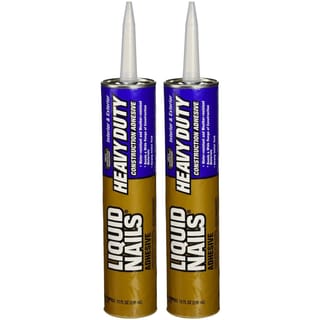
- Liquid Nails Heavy DutyTrim, paneling, and small masonry jobs — anything you'd run a bead along.
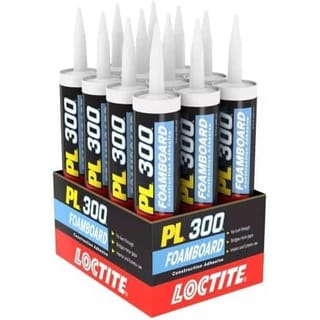
- Loctite PL 300 Foamboard AdhesiveBonding unfaced foam insulation to porous wood, drywall, concrete, or brick without burning through the foam.
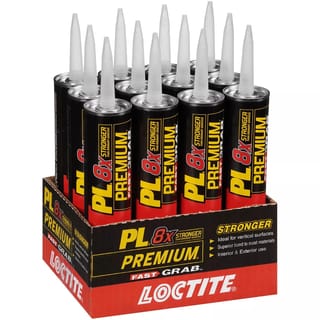
- Loctite PL Premium Polyurethane Construction AdhesiveHeavy-duty structural bonding on subfloors, framing, stairs, concrete, brick, stone, and metal — the 100 % polyurethane formula provides 3x the strength of traditional adhesives and cures in all weather conditions.
Questions
Common Questions About Gluing PVC to Wood
- What glue should I use for PVC exterior trim boards on wood framing?
- Use a heavy-duty polyurethane or advanced hybrid polymer construction adhesive applied in a continuous zigzag bead. Pair the adhesive with exterior composite trim screws to hold the board firmly while the adhesive cures.
- Can I use PVC pipe cement to glue PVC pipe to wood?
- No. PVC cement is a chemical solvent weld, not a contact adhesive. It dissolves PVC but has zero effect on cellulose wood fibers. Once the solvent evaporates, the PVC pipe pulls right off the wood without sticking.
- How do I secure PVC plumbing pipe straps or brackets to wooden studs?
- Apply polyurethane construction adhesive or 2-part epoxy behind the bracket mounting face, then drive mechanical screws for permanent hold against water hammer vibrations.
- How does temperature affect PVC bonded to wood?
- PVC expands and contracts up to three times more than wood with outdoor seasonal temperature swings. Brittle adhesives crack; flexible polyurethane construction adhesive safely absorbs this differential expansion.