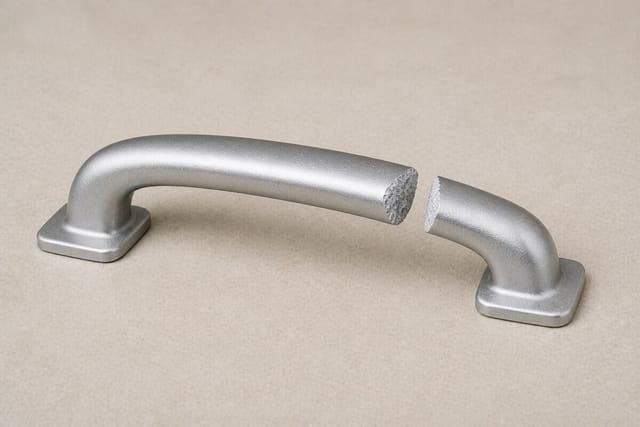
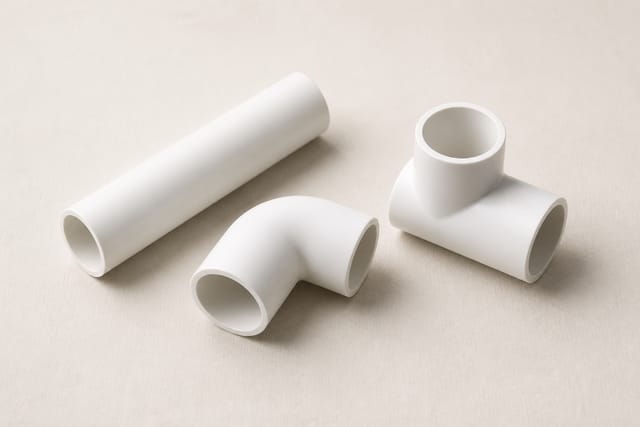
Material pair
How to Glue Metal to PVC
Use polyurethane construction adhesive to bond PVC trim, fence parts, and fixtures to metal. Small rigid brackets can take 2-part epoxy. PVC solvent cement will not weld metal, and it is the wrong tool for a pressurized pipe-to-metal joint — use a transition fitting.
Best Adhesive for Metal to PVC
Polyurethane construction adhesive
Fills the gap along a scuffed PVC face and a metal rail or flashing, and it flexes when the PVC moves with temperature.
Reviewed and adjusted by an editor.
Why Polyurethane construction adhesive Works
- Smooth, dense, and non-porous — the glue sits entirely on the surface, so scuffing and degreasing matter more than which glue you pick.
- The one common household plastic with a purpose-made welding solvent, and that changes the whole answer: for pipe, fittings, and any joint that has to hold pressure, PVC cement is not one option among several, it is the joint. Ordinary adhesives are for the cases cement cannot cover — bonding PVC to something that is not PVC, or closing a gap where the two faces do not meet.
- For fixing a metal panel or trim across a wide area where a thick bead spans the hollows — not for a joint carrying its load through a small footprint.
- For large panels like PVC trim, where a bead along the back is the point.
Conditions
When to Use 2-part plastic epoxy Instead
Long outdoor PVC runs expand more than metal. A flexible construction bead absorbs that movement; rigid epoxy on a long board will crack. Pressurized water or gas is a fitting job, not a glue job.
Alternatives
Other Adhesives That Work
A rigid, high-strength repair on a small scuffed fitting or bracket — not a long trim run, and not a pressure joint.
Better when: Gap or poor fit
Extra prep: Scuff the gloss off both faces and wipe away the dust and any pipe printing ink.
Avoid
What not to use
Avoid
PVC solvent cement
Solvent cement only works by melting PVC into PVC. Metal does not dissolve, so the solvent flashes off and the parts come apart.
Avoid
Wood glue (PVA)
PVA needs porous wood. It beads off metal and smooth PVC and peels in a sheet.
Products
Products for Bonding Metal to PVC
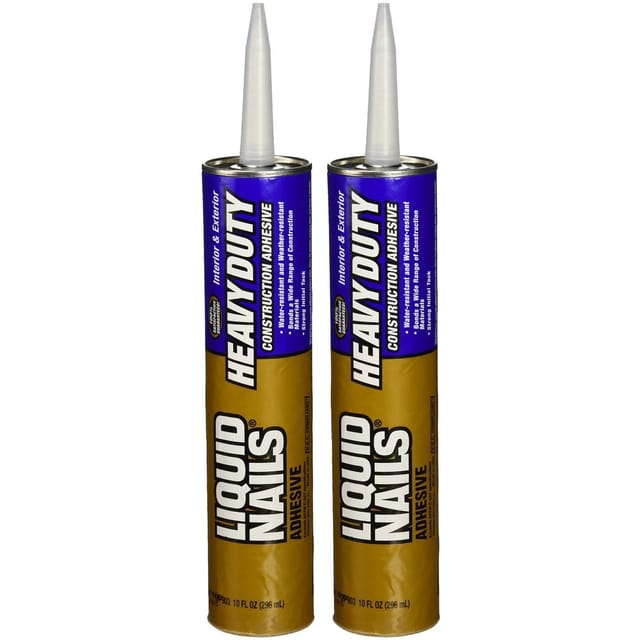
- Liquid Nails Heavy DutyTrim, paneling, and small masonry jobs — anything you'd run a bead along.
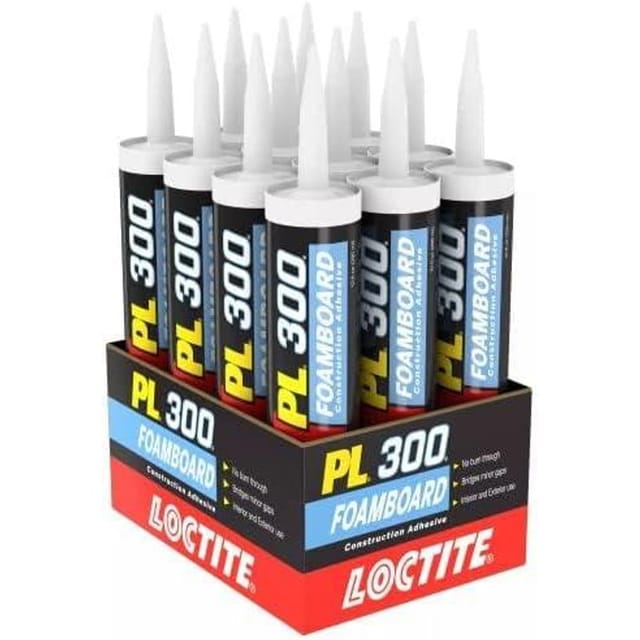
- Loctite PL 300 Foamboard AdhesiveBonding unfaced foam insulation to porous wood, drywall, concrete, or brick without burning through the foam.
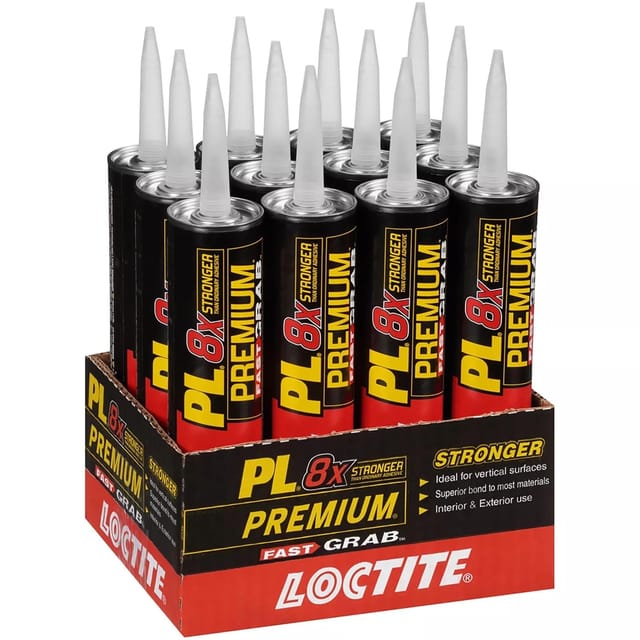
- Loctite PL Premium Polyurethane Construction AdhesiveHeavy-duty structural bonding on subfloors, framing, stairs, concrete, brick, stone, and metal — the 100 % polyurethane formula provides 3x the strength of traditional adhesives and cures in all weather conditions.
Questions
Common Questions About Gluing Metal to PVC
- Can you glue PVC to metal?
- Yes for trim, fence parts, and fixtures — and the same pair if metal is going onto PVC. Scuff both faces and use polyurethane construction adhesive. Small rigid brackets can take 2-part epoxy.
- Does PVC cement work on metal?
- No. PVC cement is a solvent weld. It melts PVC into PVC. Metal does not dissolve, so the solvent flashes off and the parts come apart in your hands.
- Can I glue a PVC pipe to a metal pipe for water?
- No. A pressurized water or gas joint needs a listed transition fitting, not surface glue. Adhesive is for dry trim and fixtures, not a pressure seal.
- Will PVC glued to metal hold outdoors?
- On a long run, PVC moves more than metal when the temperature swings. A flexible construction bead absorbs that. A rigid epoxy fillet on a long board will crack.