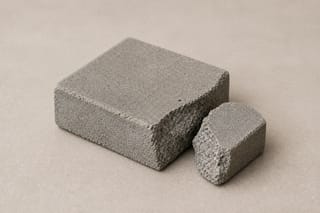
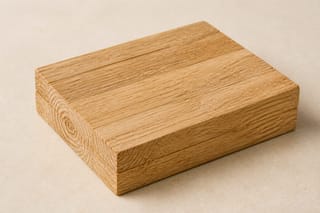
Material pair
How to Glue Natural stone to Wood
Use 100% silicone adhesive sealant to mount granite, marble, or quartz countertops onto wooden cabinets. Silicone holds stone securely while flexing as the wooden frame expands and contracts with indoor humidity.
Best Adhesive for Natural stone to Wood
100% silicone adhesive sealant
High shear hold that stays permanently elastic, accommodating seasonal swelling and shrinking of wooden cabinetry beneath heavy stone.
Extra prep
- Check that the silicone cartridge specifies neutral-cure and non-staining for natural granite or marble.
Not for: Load-bearing / shear
Reviewed and adjusted by an editor.
Why 100% silicone adhesive sealant Works
- Dense, heavy, and brittle in tension. While cement mortar is used to bed large paving slabs, household repairs and countertop seam fabrication rely on 2-part epoxy. Crucially, natural stone is sensitive to chemical staining: standard acetic-cure silicone releases acid that bleeds dark oily halos into porous marble and limestone, requiring dedicated 100 % neutral-cure or non-staining silicone.
- Porous and slightly forgiving — glue soaks in, and a well-glued joint ends up stronger than the wood around it. Oily hardwoods like teak need a solvent wipe first.
- Use 100 % neutral-cure non-staining silicone for perimeter sealing; standard acetic-cure silicone leaches acid and causes dark permanent stains around stone joints.
- Bonds fine to bare wood and stays flexible, but it seals rather than joins — use it where the wood meets glass, tile, or a wet surface.
- Check that the silicone cartridge specifies neutral-cure and non-staining for natural granite or marble.
Preparation
How to Prepare Natural stone and Wood for Gluing
Wipe the unpolished underside of the stone with isopropyl alcohol to remove fine stone slurry and dust.
Ensure cabinet frames or plywood substrate top edges are level, clean, and dry.
Conditions
When to Use Polyurethane construction adhesive Instead
Never use rigid 2-part epoxy across long countertop runs on wood. Solid wood cabinetry moves with seasonal humidity changes; a flexible silicone joint absorbs that movement so the stone slab does not crack.
Alternatives
Other Adhesives That Work
Polyurethane construction adhesive
Heavy structural hold for small vertical stone corbels, decorative stone brackets, or threshold sills on wood.
Better when: Load-bearing / shear
Avoid
What not to use
Avoid
2-part rigid epoxy
Epoxy cures completely rigid; when the wood frame expands with humidity, the locked joint risks cracking the stone slab.
Products
Products for Bonding Natural stone to Wood
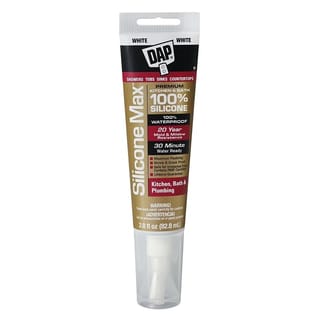
- DAP Silicone Max 100% Silicone SealantKitchen, bath, window, door, and siding perimeter sealing — features maximum flexibility (ASTM C920 Class 50), 30-minute water-ready time, and a 20-year mold and mildew resistance guarantee.
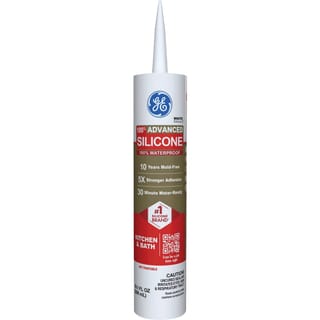
- GE Advanced Silicone 2 Kitchen & BathSealing around tubs, showers, sinks, tile, and countertops — flexible, waterproof, and long-lived.
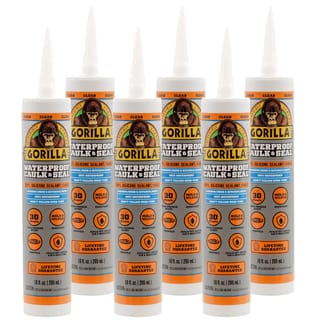
- Gorilla 100% Silicone SealantIndoor and outdoor waterproof sealing for kitchen, bath, window, door, auto, and marine applications — 30-minute water ready and mold/mildew resistant.
Questions
Common Questions About Gluing Natural stone to Wood
- What is the industry standard adhesive for attaching granite countertops to wood cabinets?
- 100% pure silicone adhesive sealant is the universal standard used by professional countertop installers. The weight of the stone provides the downward gravity, while silicone prevents lateral sliding and cushions wood movement.
- Why should I avoid using epoxy to attach a stone countertop to a vanity?
- Epoxy sets rock-hard. Wood constantly expands across its grain during humid summers and contracts in dry winters. A rigid epoxy bond cannot flex, which often causes hairline cracks across narrow stone sections around sink and cooktop cutouts.
- How should silicone be applied on top of the cabinet frames?
- Apply quarter-sized dabs or short beads of silicone every 8 to 12 inches along the top edges of the cabinet perimeter and cross-braces, then gently lower the stone slab into place.
- Can a stone countertop glued with silicone be removed later?
- Yes. Silicone can be sliced through from underneath using an oscillating multi-tool or a long flexible utility knife blade without shattering the stone slab or destroying the cabinet carcasses.