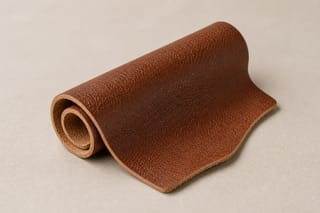
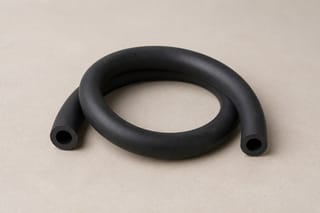
Material pair
How to Glue Leather to Rubber
Use Contact cement for most leather-to-rubber joints. The shoe-repair answer: it flexes with the rubber and covers a whole sole evenly.
Best Adhesive for Leather to Rubber
The shoe-repair answer: it flexes with the rubber and covers a whole sole evenly.
Derived from our material compatibility data.
Why Contact cement Works
- Porous and flexible like fabric but denser — the bond must bend without cracking, and load-bearing seams want stitching as backup.
- Flexible and slightly oily — it needs a bond that flexes with it, plus a quick scuff so the glue has something to grip.
- Grips on contact and stays flexible for years — what a cobbler reaches for.
- The shoe-repair answer: it flexes with the rubber and covers a whole sole evenly.
Conditions
When to Use Polyurethane Instead
Use Polyurethane
Use Polyurethane
Use Polyurethane
This is the shoe repair, and it is a peel joint that flexes with every step, so coverage matters more than strength — coat the whole area, not the edges. Clamp or weight the sole down evenly across its length while it sets; a spring clamp at the toe alone will lift the middle.
Alternatives
Other Adhesives That Work
Waterproof and tough enough for boot soles, but it foams and needs real clamping.
Better when: Outdoor exposure, Water immersion, Flexing or movement
Stays as flexible as the rubber, which suits a thin sheet or a rubber-backed textile — but it is a light-duty bond.
Products
Products for Bonding Leather to Rubber
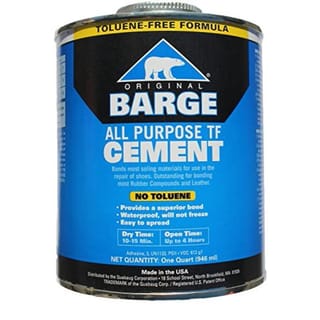
- Barge All-Purpose CementThe professional gold standard for shoe repair, leathercrafting, boot resoling, rubber soles, and heavy fabric laminations — waterproof, permanent, and stays flexible under repeated bending.
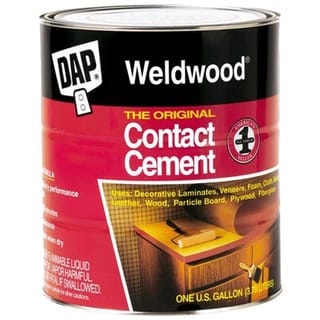
- DAP Weldwood Original Contact CementHigh-pressure laminate on countertops, tabletops, and cabinets; also veneer, leather, fabric, and rubber — a full-coverage bond that needs no clamps.
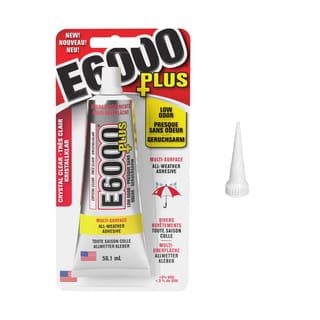
- E6000 Craft & Industrial AdhesiveHigh-strength, flexible bonding across mixed materials — the legendary craft and repair adhesive for jewelry, glass to metal, fabric to leather, and shoe repairs.
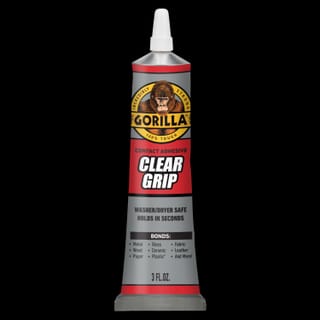
- Gorilla Clear Grip Contact AdhesiveCrystal-clear, flexible, waterproof contact bonding across crafts, home repairs, leather, fabric, wood, metal, glass, and ceramic.
Questions
Common Questions About Gluing Leather to Rubber
- Can you glue leather to rubber?
- Yes — it is the usual shoe-sole repair, and the same pair if rubber is going onto leather. Contact cement coats the whole area, stays flexible, and grabs on contact after both faces are scuffed and old glue is gone.
- Should I use super glue to reattach a shoe sole?
- No. Cyanoacrylate is brittle, has no coverage for a flexing sole, and soaks into leather. Contact cement is the shoe-repair answer; wet outdoor use may switch to polyurethane.
- Does wood glue or epoxy work on a leather sole?
- Neither. PVA and rigid epoxy crack when the sole bends at every step. You need an adhesive that stays flexible across the whole separated area.
- What glue if the shoe gets wet and flexes?
- Polyurethane when water and heavy bending are the job. Contact cement is still right for a dry indoor sole; coat the entire separated area either way, not just the edge.