Best bet
Hand-kneadable epoxy putty bridges large blown-out cavities in particle board and cures into machinable anchor material that holds new screws under heavy leverage.
Reviewed and adjusted by an editor.
Why this answer
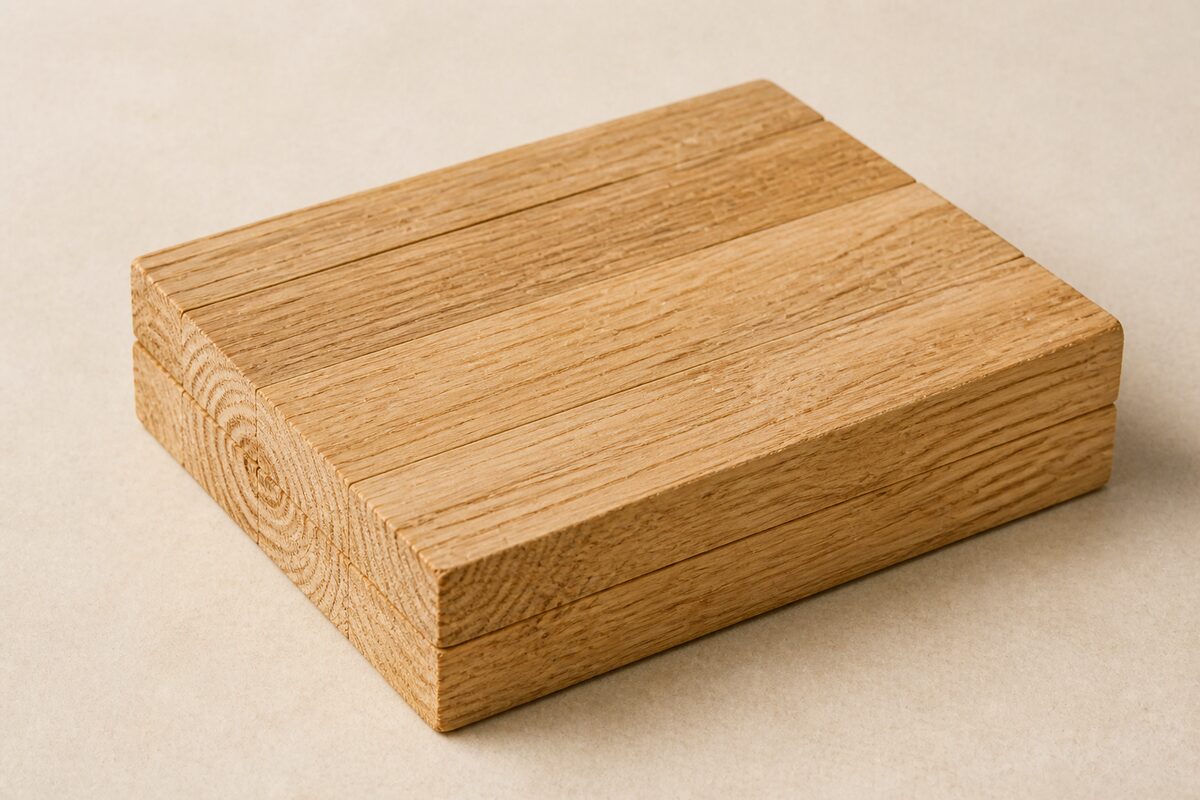
- Porous and slightly forgiving — glue soaks in, and a well-glued joint ends up stronger than the wood around it. Oily hardwoods like teak need a solvent wipe first.
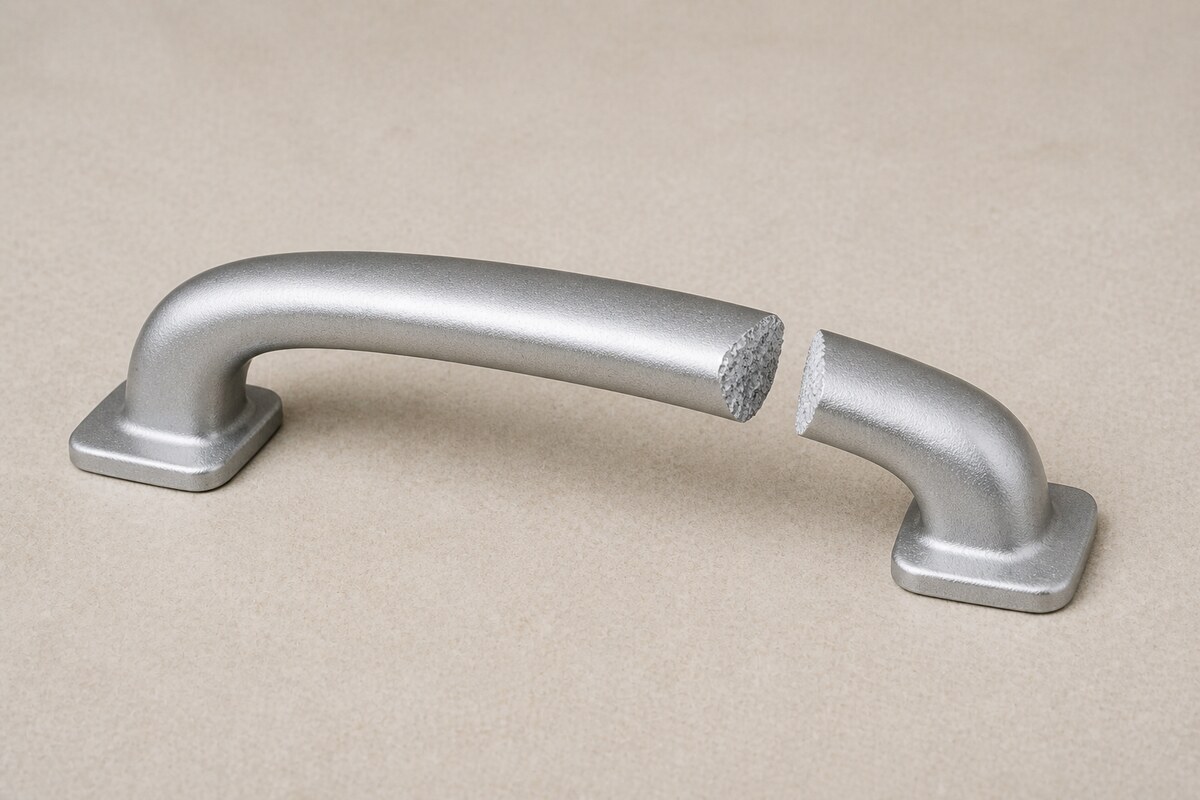
- Smooth, dense, and non-porous — the glue sits entirely on the surface, so scuffing and degreasing matter more than which glue you pick.
- It bonds to surfaces wood glue cannot, and fills a gap instead of shrinking into one — the reason to reach past PVA on a loose joint or a mixed-material one.
- The strongest rigid bond on a scuffed, grease-free surface.
How to do it
Step by step
- Unscrew the hinge plate completely from the cabinet frame or door panel and set the door on a protected work surface.
- Clear away all crumbling particleboard flakes, loose sawdust, and damaged wood from inside the blown-out holes.
- Knead a 2-part epoxy putty stick until the color is completely uniform.
- Pack the putty firmly into the cavity until slightly mounded, then scrape it dead flush with a putty knife.
- Let the epoxy cure rock-hard, mark the exact hinge mounting centers, drill pilot holes, and re-fasten the screws.
Conditions
When the answer changes
For severe blowouts where the entire hinge cup recess is cracked, pair the epoxy repair with a stainless-steel hinge repair plate to distribute door leverage across sound wood.
Alternatives
What else works
PVA wood glue with hardwood dowel plug
Drilling out the damaged spot and gluing in a solid wood dowel creates a permanent repair in solid timber, but is difficult in crumbly manufactured board.
A bead thick enough to span the gap between a board and an uneven wall — right for trim and panels, far too coarse for a furniture joint.
Better when: Gap or poor fit
Waterproof, and it foams into the grain rather than just drying on it — but the expansion pushes the joint apart unless it is properly clamped.
Better when: Outdoor exposure
Avoid
What not to use
Avoid
Contact cement
Ruled out here by Load-bearing / shear
The answer for gluing a laminate or veneer sheet down flat with no clamps — never for a joint that carries load.
Avoid
Silicone
Ruled out here by Load-bearing / shear
Bonds fine to bare wood and stays flexible, but it seals rather than joins — use it where the wood meets glass, tile, or a wet surface.
Avoid
Super glue (CA)
Super glue alone — it grabs wood, but cures brittle and bridges gaps poorly.
Avoid
Flexible fabric adhesive
Ruled out here by Load-bearing / shear
Only when the other side is cloth: it grips bare wood well enough for upholstery but has no strength as a wood joint.
Avoid
Spray adhesive
Spray adhesive — it tacks paper and cloth to wood, but as a wood-to-wood joint it is a film that peels.
Avoid
Solvent cement
Solvent cement — it joins by dissolving plastic, and there is nothing in wood for it to dissolve, so it soaks in, evaporates, and leaves the joint dry.
Questions
Common questions
- Why use epoxy putty instead of liquid epoxy or super glue?
- Liquid epoxy and super glue run out of vertical cavities and soak into porous board without bridging gaps. Epoxy putty has a dense clay-like consistency that stays where pressed, fills irregular blowout craters, and cures without shrinking.
- When is a metal hinge repair plate necessary?
- When the 35 mm hinge cup recess is completely split or the door edge has fractured, add a stainless-steel repair plate over the epoxy patch to spread the heavy swinging leverage across multiple new screw locations in undamaged wood.
- How long should I wait before rehanging the door?
- Let the epoxy putty reach full cure before drilling pilot holes and torquing screws. Hanging a heavy door on partially cured epoxy will strip the newly tapped threads under leverage.
- Can I just use thicker or longer screws instead of filling the hole?
- Longer screws often pierce through the finished exterior face of standard 5/8-inch or 3/4-inch cabinet doors, and wider screws wedge into crumbly particle board and split it further. Rebuilding the anchor base is safer and longer-lasting.