Material pair
Concrete & stone to Metal
Best bet
The strongest thing you can put on masonry, and how a bolt or a bracket gets anchored — but it demands the dust-free, dry surface concrete rarely gives you without work.
Derived from our material compatibility data.
Why this answer
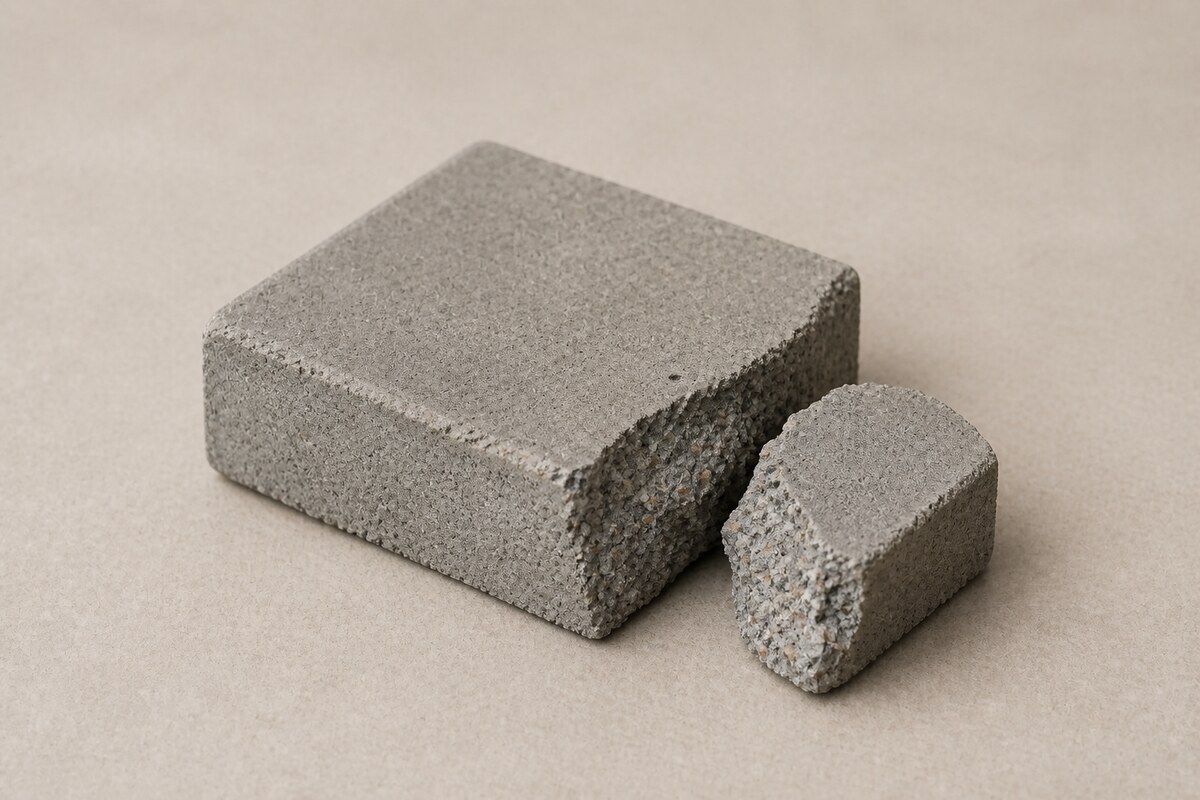
- Very porous with an uneven face — it drinks thin glues, so you want a thick, gap-filling adhesive. Dust is the enemy: brush and vacuum first.
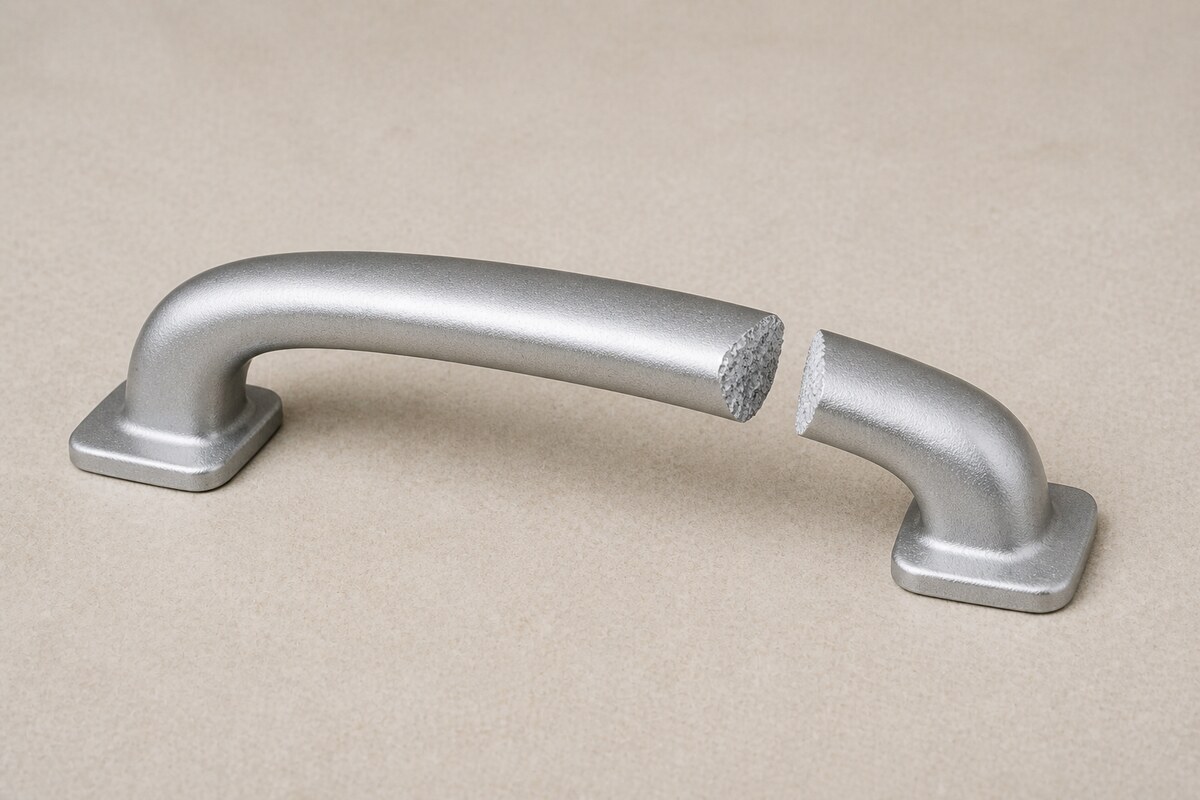
- Smooth, dense, and non-porous — the glue sits entirely on the surface, so scuffing and degreasing matter more than which glue you pick.
- The strongest thing you can put on masonry, and how a bolt or a bracket gets anchored — but it demands the dust-free, dry surface concrete rarely gives you without work.
- The strongest rigid bond on a scuffed, grease-free surface.
Preparation
Prep each side differently
Wire-brush and vacuum the dust out, and let any dampness dry off the surface first.
Scuff to a dull, even finish, wipe with acetone, and do not touch the face again.
Conditions
When the answer changes
A bracket that hangs weight off a wall is loading the joint in peel, which is the direction adhesive is worst at — anchor it mechanically and let the adhesive seal the interface. Outdoors, water sitting in the gap will corrode the metal from behind long before the bond itself tires.
Alternatives
What else works
For fixing a metal panel or trim across a wide area where a thick bead spans the hollows — not for a joint carrying its load through a small footprint.
It foams into the pores and locks in mechanically, which suits a rough face — the expansion means the part has to be weighted or braced while it cures.
The answer for a joint that has to move — an expansion gap, a sill, a wet edge — rather than one that has to hold.
Better when: Flexing or movement, Water immersion, Outdoor exposure
Avoid
What not to use
Avoid
Contact cement
Contact cement — dusty, alkaline concrete gives the film nothing solid to hold, and it lifts with the surface.
Avoid
Super glue (CA)
Super glue — it wicks into the pores before it can bond anything.
Avoid
Flexible fabric adhesive
Fabric adhesive — too thin to bridge a rough surface, and it has no water resistance on masonry.
Avoid
Spray adhesive
Spray adhesive — the mist soaks into the pores and leaves nothing behind to bond with.
Avoid
Wood glue (PVA)
Wood glue — it cannot cope with dust, alkalinity, or the damp that concrete always carries.
Questions
Common questions
- Can a wall bracket be glued to concrete without anchors?
- A projecting bracket turns its load into peel at the wall, which is unfavorable for adhesive. Use correctly selected mechanical anchors to carry the load; adhesive may seal, bed, or stabilize the interface.
- Which surface matters more to prepare, the concrete or the metal?
- Both can supply the weak layer. Concrete must be sound, dust-free, and suitably dry, while metal needs loose coating, grease, and oxidation removed as the adhesive instructions require. Avoid touching a cleaned metal face.
- Why can metal corrode behind an outdoor bond?
- Water can enter at an unsealed edge and remain trapped between metal and concrete. Seal the interface as the design requires, provide drainage, and use corrosion-resistant metal and fasteners suitable for the exposure.
- What if the concrete-to-metal joint moves or stays outdoors?
- Rigid epoxy suits a prepared, stable contact, but movement, water, and outdoor exposure can favor a flexible sealing bond. Follow the condition switches on the page and keep mechanical load paths independent where safety matters.