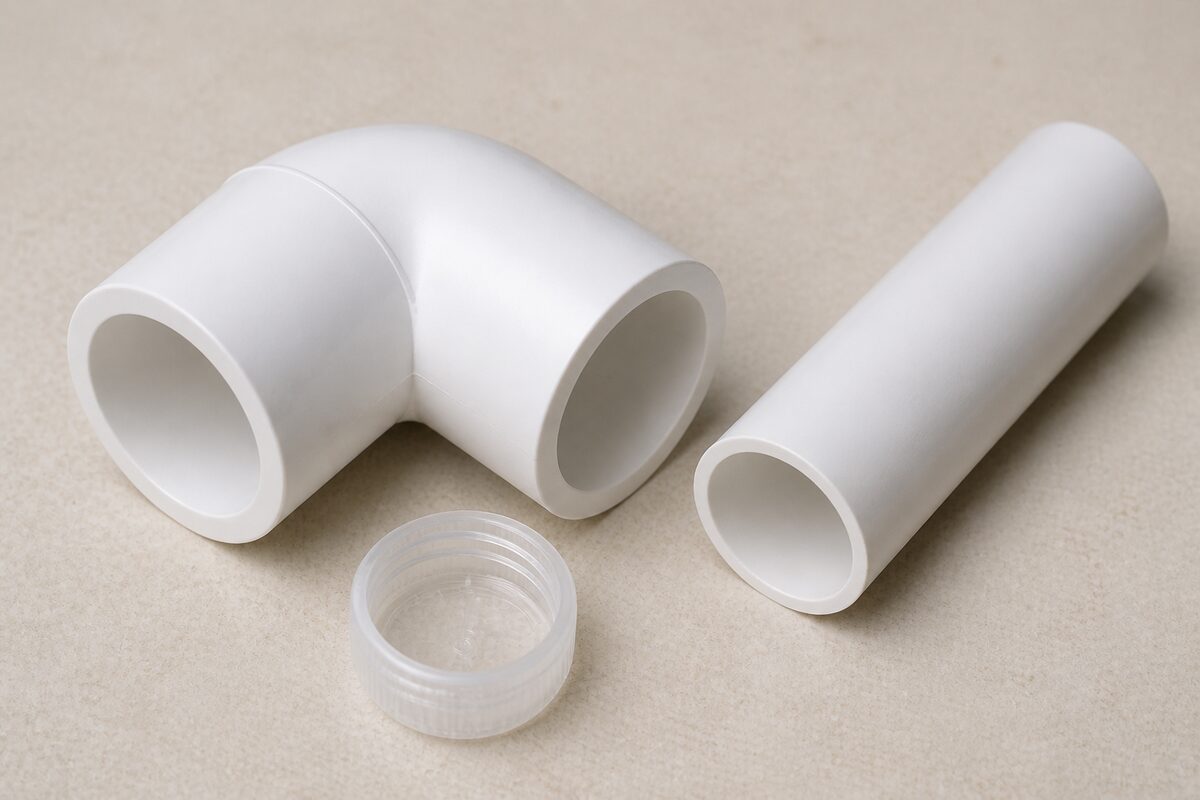
Material pair
ABS plastic to ABS plastic
Best bet
Grabs ABS readily and fills small gaps in cracked housings.
Reviewed and adjusted by an editor.
Why this answer
- One of the well-behaved plastics — hard, non-waxy, and happy to take ordinary plastic epoxy or super glue after a light scuff.
- One of the well-behaved plastics — hard, non-waxy, and happy to take ordinary plastic epoxy or super glue after a light scuff.
- Wets out ABS well, and fills small gaps in a cracked housing.
- Wets out ABS well, and fills small gaps in a cracked housing.
Preparation
Prep each side differently
Scuff glossy faces lightly and wipe off dust; ABS needs no special treatment.
Scuff glossy faces lightly and wipe off dust; ABS needs no special treatment.
Conditions
When the answer changes
Small, tight-fitting breaks can use super glue instead — ABS takes CA well. If the part flexes in use, neither rigid adhesive is right; look at a flexible repair or a replacement part.
Alternatives
What else works
Fast and strong on a clean, tight ABS crack, though it cures brittle and leaves a white bloom around the joint.
For large panels like PVC trim, where a bead along the back is the point.
Waterproof and tough on scuffed rigid plastic, but it needs real clamping and the foam squeeze-out has to be trimmed.
Better when: Outdoor exposure, Water immersion
Only when the other side is cloth: flexible enough for a fabric-to-plastic seam, far too weak for a structural one.
Avoid
What not to use
Avoid
Contact cement
Contact cement — its solvent softens and crazes ABS, leaving a cloudy, weakened surface where the bond should be.
Avoid
Silicone
Silicone — it stays rubbery and peels off rigid ABS under load.
Avoid
Spray adhesive
Spray adhesive — a repositionable film, not a bond; it slides off smooth plastic under any load.
Avoid
Wood glue (PVA)
Wood glue — plastic has no pores for it to soak into, so it peels off in a sheet.