All articles
Guide
Reattach a shoe sole
Use Polyurethane shoe adhesive for this repair. Stays flexible and waterproof through bending and wet pavement.
This task involves: Flexing or movement, Water immersion
Best Glue for This Repair
Stays flexible and waterproof through bending and wet pavement.
Reviewed and adjusted by an editor.
Why Polyurethane shoe adhesive Works Here
- Flexible and slightly oily — it needs a bond that flexes with it, plus a quick scuff so the glue has something to grip.
- Porous and flexible like fabric but denser — the bond must bend without cracking, and load-bearing seams want stitching as backup.
- Soft, porous, and constantly flexing — the adhesive has to stay flexible too, or the seam becomes a stiff ridge that cracks.
- Cures flexible enough to move with the rubber and shrugs off water; it foams, so clamp the part and pare the squeeze-out back afterwards.
- Waterproof and tough enough for boot soles, but it foams and needs real clamping.
- Waterproof and strong, but it foams through the weave and leaves a hard ridge.
How to do it
Reattach a shoe sole: Step by Step
- Clean old glue and dirt from both surfaces; roughen smooth rubber with sandpaper.
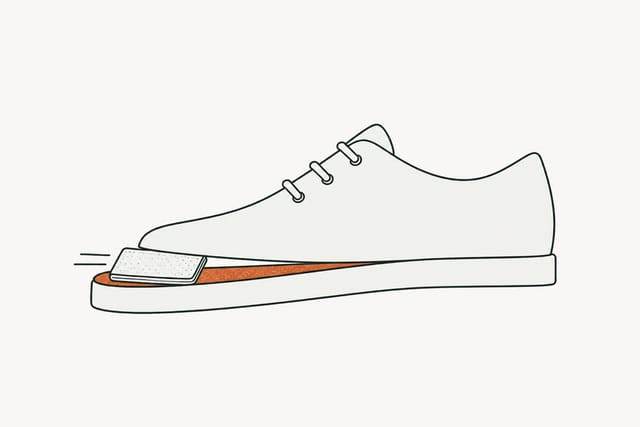
- Apply a thin, even coat of shoe adhesive to both sides.
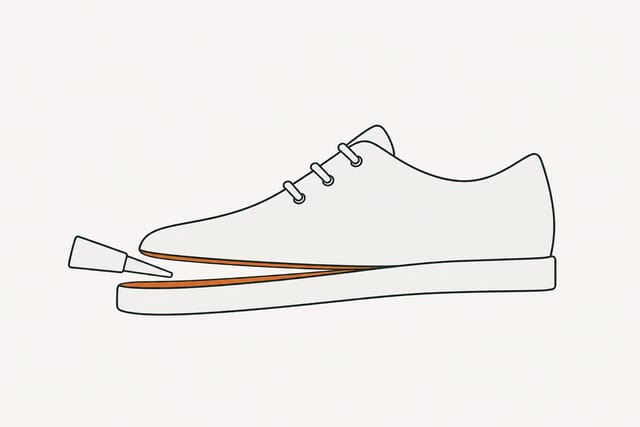
- Wait 10–15 minutes until tacky — contact-style, not wet.
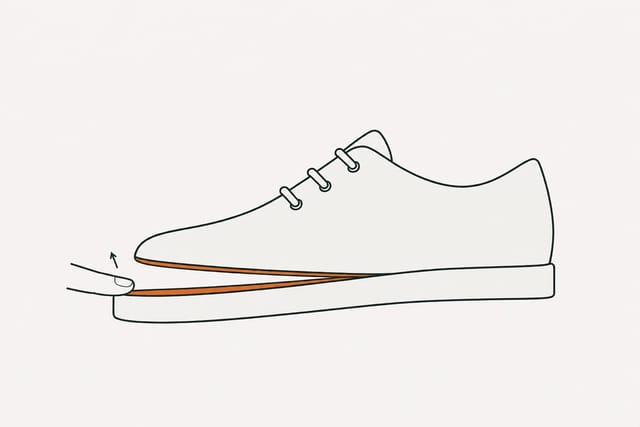
- Press together firmly, working from the center outward.
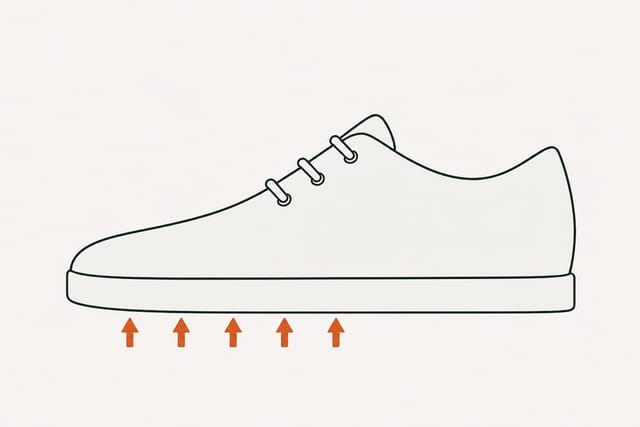
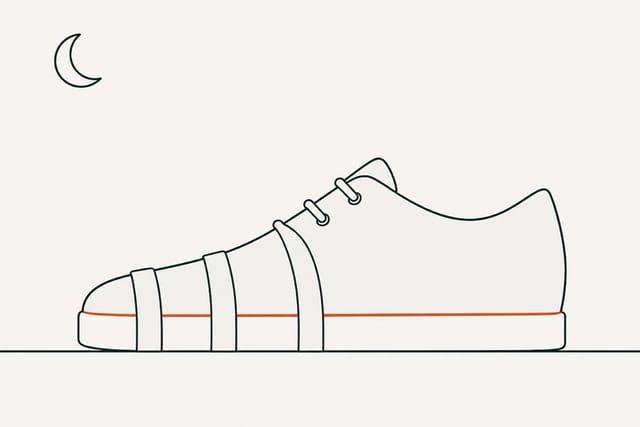
- Clamp or wrap tightly and leave overnight.
Conditions
When to Use Super glue gel Instead
If the sole is cracked through rather than detached, adhesive alone won't hold — that's cobbler territory. Super glue gel works as a quick fix but stiffens the flex point.
Alternatives
Other Adhesives That Work
Super glue — it dries stiff and pale, and the repair cracks the first time the leather bends.
Questions
Common Questions About This Repair
- Can glue repair both a detached sole and a cracked sole?
- A clean separation between otherwise sound layers is a good candidate for adhesive. A sole cracked through its material has structural wear that glue alone cannot restore reliably, so replacement or professional repair is usually the better path.
- Why remove the old shoe adhesive before reglueing?
- Loose or degraded residue prevents the new adhesive from reaching sound rubber, leather, or fabric. Leaving it in place can make the repair fail within the old glue layer even when the new adhesive bonds well to that residue.
- Why does the toe of a reglued sole keep peeling?
- The toe sees repeated bending, edge peel, dirt, and water. Use an adhesive intended to remain flexible, coat and press the whole separated area, and wrap or clamp the edge evenly; repeated failure can mean the shoe needs a cobbler.
- Is super glue a good quick fix for a loose sole?
- It can hold a small, low-flex edge temporarily, but a rigid instant-adhesive line can crack where the shoe bends. A flexible shoe-repair adhesive is the safer general choice for a sole separation.