Material pair
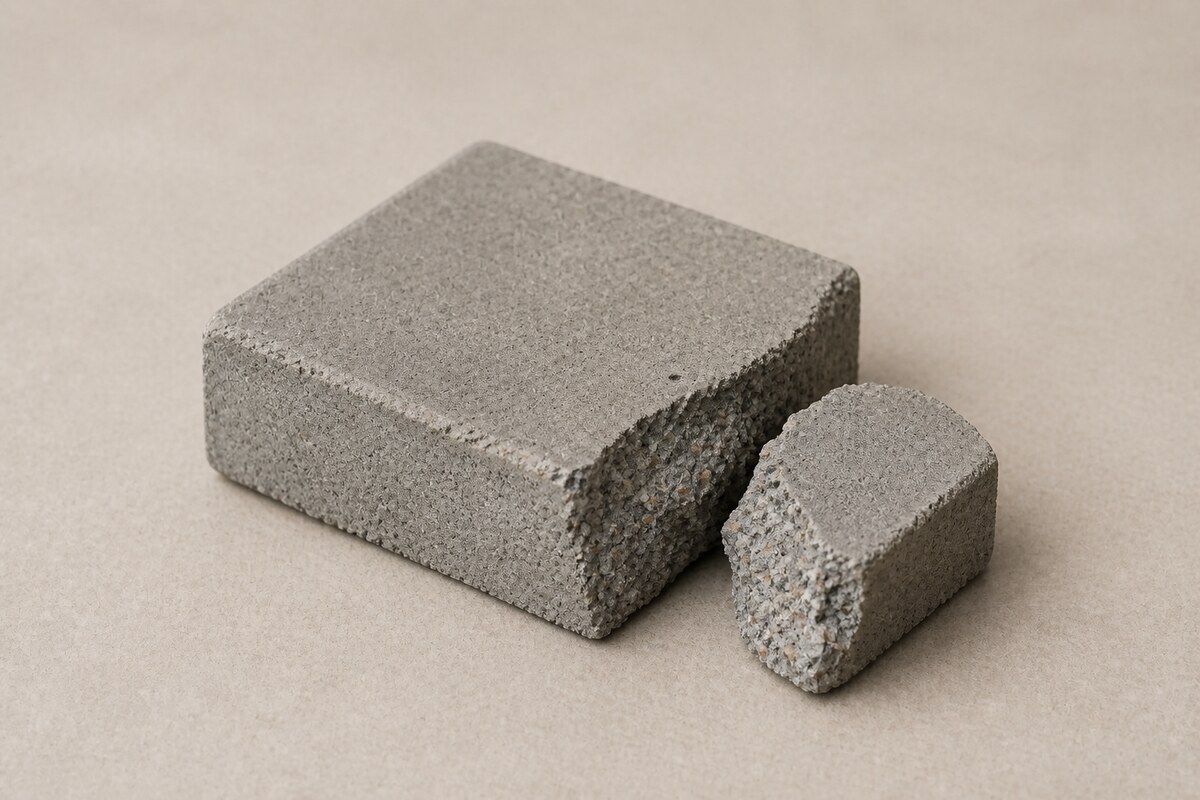
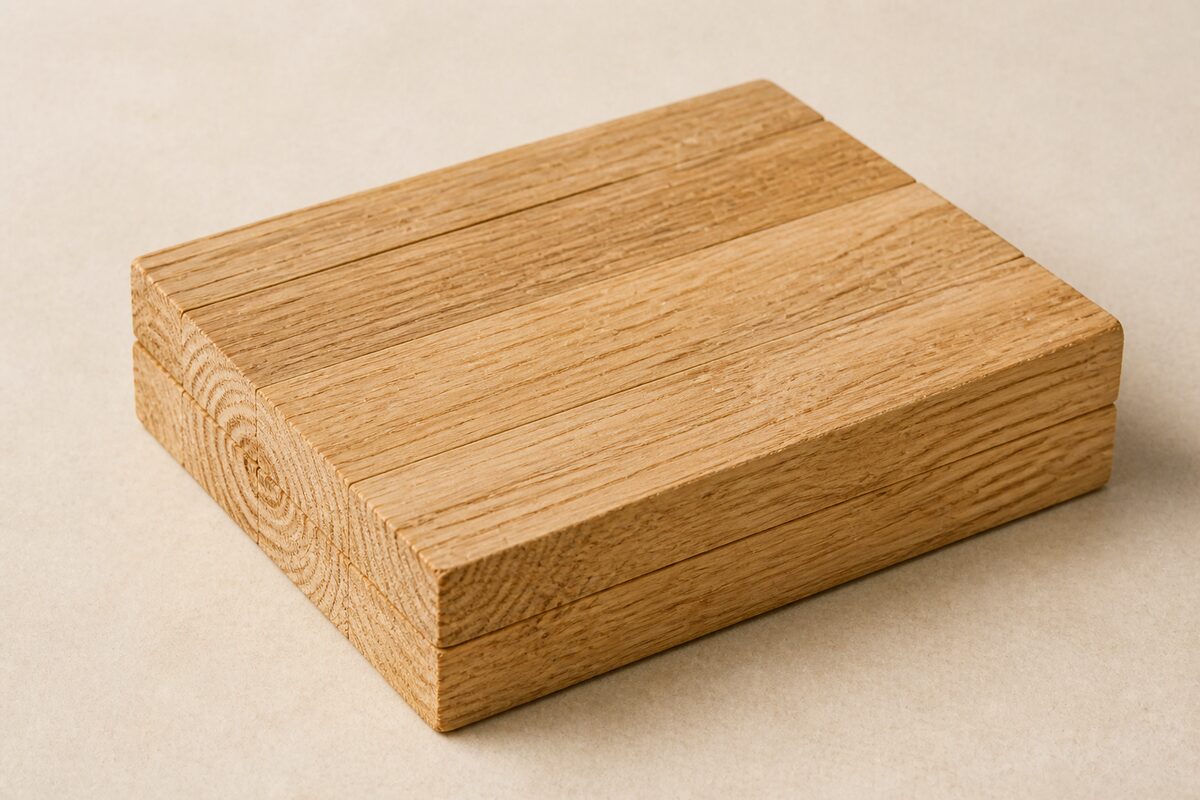
Concrete & stone to Wood
Best bet
The only thing here thick enough to bridge a rough slab and a sawn board at the same time, and it tolerates the damp concrete always carries.
Reviewed and adjusted by an editor.
Why this answer
- Very porous with an uneven face — it drinks thin glues, so you want a thick, gap-filling adhesive. Dust is the enemy: brush and vacuum first.
- Porous and slightly forgiving — glue soaks in, and a well-glued joint ends up stronger than the wood around it. Oily hardwoods like teak need a solvent wipe first.
- Thick and gap-filling — made for rough, porous surfaces.
- A bead thick enough to span the gap between a board and an uneven wall — right for trim and panels, far too coarse for a furniture joint.
Preparation
Prep each side differently
Wire-brush and vacuum until nothing chalks off on your hand, and check the surface is dry.
Sand to fresh fibers and brush off the dust; on a slab, keep the wood off any spot where water collects.
Conditions
When the answer changes
Use Epoxy
Adhesive alone is for furring strips, sleepers, and trim. Anything structural is still bolted or shot down — the bead's job there is to stop the timber drumming and to keep water out of the interface, not to hold the building together.
Alternatives
What else works
Stronger, and the better answer when the contact area is small, flat, and genuinely load-bearing — an anchor plate rather than a length of timber.
Better when: Load-bearing / shear
It foams into the pores and locks in mechanically, which suits a rough face — the expansion means the part has to be weighted or braced while it cures.
Better when: Outdoor exposure
The answer for a joint that has to move — an expansion gap, a sill, a wet edge — rather than one that has to hold.
Better when: Flexing or movement, Water immersion, Outdoor exposure
Avoid
What not to use
Avoid
Wood glue (PVA)
Wood glue — it cannot cope with dust, alkalinity, or the damp that concrete always carries.
Avoid
Contact cement
Contact cement — dusty, alkaline concrete gives the film nothing solid to hold, and it lifts with the surface.
Avoid
Flexible fabric adhesive
Fabric adhesive — too thin to bridge a rough surface, and it has no water resistance on masonry.
Avoid
Spray adhesive
Spray adhesive — the mist soaks into the pores and leaves nothing behind to bond with.
Avoid
Super glue (CA)
Super glue — it wicks into the pores before it can bond anything.
Questions
Common questions
- Can adhesive replace anchors when attaching wood to concrete?
- Use suitable mechanical anchors for structural or safety-critical loads. Adhesive can bed the wood, reduce movement, fill an uneven interface, and help exclude water, but it should not be asked to hold the structure together by itself.
- Why does concrete dust make the joint fail?
- Adhesive placed over chalk or loose grit bonds to that weak layer instead of sound concrete. Wire-brush and vacuum until the surface no longer sheds dust, then confirm it meets the product's moisture requirements.
- Can wood be bonded directly where water collects on a slab?
- Move the wood out of the low spot or correct the drainage first. Standing water repeatedly wets the wood and the bond edge, encouraging swelling, decay, and loss of adhesion even when the adhesive itself is water-resistant.
- Does a rough timber-to-slab joint need the same approach as a small metal-style anchor plate?
- No. A thick construction adhesive can bed a long, rough board against uneven concrete, while a small, flat, genuinely load-bearing contact may call for epoxy plus the appropriate mechanical anchoring. Fit and load direction decide the detail.