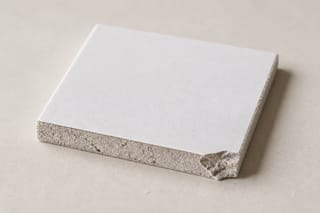
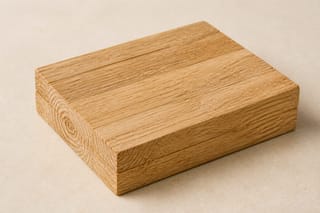
Material pair
How to Glue Drywall to Wood
Use Heavy-duty construction adhesive for most drywall-to-wood joints. A thick, high-tack bead bridges uneven gaps between wood studs or trim and drywall paper, holding instantly with minimal bracing.
Best Adhesive for Drywall to Wood
Heavy-duty construction adhesive
A thick, high-tack bead bridges uneven gaps between wood studs or trim and drywall paper, holding instantly with minimal bracing.
Reviewed and adjusted by an editor.
Why Heavy-duty construction adhesive Works
- You are gluing to paper, and the paper is glued to a core that has almost no strength in peel. Construction adhesive is the right family for trim and light panels; anything heavy, or anything that pulls straight off the wall, still wants an anchor into a stud. Joint compound is not an adhesive. Water ruins the core, so a wet bathroom wall is a different problem than a dry one.
- Porous and slightly forgiving — glue soaks in, and a well-glued joint ends up stronger than the wood around it. Oily hardwoods like teak need a solvent wipe first.
- A thick bead grips the paper face and spans the gaps behind trim or a light panel — the job this family is made for. The gypsum behind still has no peel strength, so a heavy fitting wants a stud.
- A bead thick enough to span the gap between a board and an uneven wall — right for trim and panels, far too coarse for a furniture joint.
Conditions
When to Use Polyurethane construction adhesive Instead
Heavy-duty construction adhesive is the standard for baseboards, wall trim, and wood panels. Heavy fixtures, shelves, and cabinets must always be fastened with screws into wall studs rather than relying on glue alone.
Alternatives
Other Adhesives That Work
Polyurethane construction adhesive
Provides maximum flexibility and moisture resistance for exterior-facing or humid drywall walls.
Better when: Flexing or movement, Outdoor exposure
Products
Products for Bonding Drywall to Wood
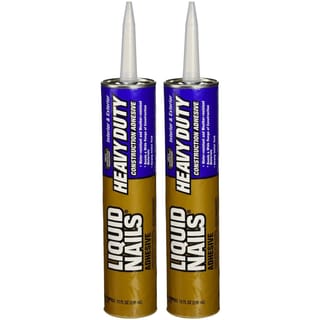
- Liquid Nails Heavy DutyTrim, paneling, and small masonry jobs — anything you'd run a bead along.
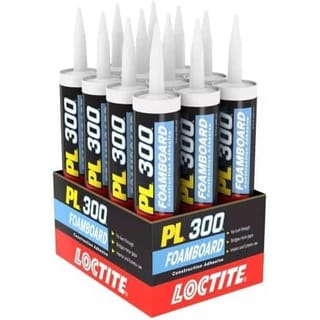
- Loctite PL 300 Foamboard AdhesiveBonding unfaced foam insulation to porous wood, drywall, concrete, or brick without burning through the foam.
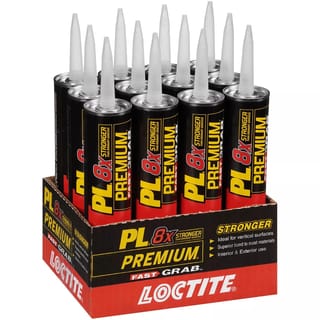
- Loctite PL Premium Polyurethane Construction AdhesiveHeavy-duty structural bonding on subfloors, framing, stairs, concrete, brick, stone, and metal — the 100 % polyurethane formula provides 3x the strength of traditional adhesives and cures in all weather conditions.
Questions
Common Questions About Gluing Drywall to Wood
- Can you glue wood to drywall?
- Yes for light trim — baseboards, molding, a panel — with construction adhesive that bridges the gap between wood and paper-faced gypsum. The same family is used to stick drywall to studs. Heavy shelves are a different job.
- Can I glue heavy wood shelves to drywall without screws?
- No. Even a perfect glue line only holds the paper face. Weight peels that paper off the gypsum. Drive fasteners into studs, or use anchors rated for the load.
- Does wood glue stick baseboards to drywall?
- Not reliably. PVA needs clamping and a snug fit; it soaks into the paper and cannot bridge a warped board. Construction adhesive stays thick enough to fill that gap.
- Can I glue wood trim to painted drywall?
- Yes if the paint is clean and sound. Glossy or flaking paint is a weak layer — scuff until the adhesive has something to bite, and pin or tape the trim while it sets.