All articles
Guide
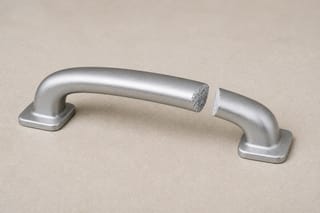
Fix a broken microwave door handle
Use High-strength 2-part epoxy for this repair. Withstands continuous mechanical pulling tension and resists microwave steam and ambient door warmth.
This task involves: Heat exposure, Load-bearing / shear
Best Glue for This Repair
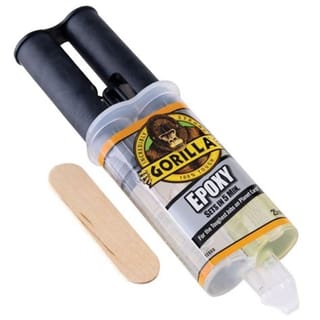
Withstands continuous mechanical pulling tension and resists microwave steam and ambient door warmth.
Not for: Flexing or movement
Reviewed and adjusted by an editor.
Why High-strength 2-part epoxy Works Here
- Two very different families hide under one word. Rigid PVC, ABS, and acrylic bond well; waxy PP and PE shrug off ordinary adhesives.
- Smooth, dense, and non-porous — the glue sits entirely on the surface, so scuffing and degreasing matter more than which glue you pick.
- Wets out hard plastics that ordinary glues bead off.
- The strongest rigid bond on a scuffed, grease-free surface.
- Withstands continuous mechanical pulling tension and resists microwave steam and ambient door warmth.
How to do it
Fix a broken microwave door handle: Step by Step
- Remove the door handle completely by unscrewing any remaining mounting screws from the inside door trim.
- Clean the broken plastic mating edges thoroughly with isopropyl alcohol to strip away all kitchen grease and cooking oils.
- Drill a 1/16-inch matching pilot hole into both broken ends and insert a short cut segment of paperclip or metal wire as an internal reinforcement dowel.
- Mix equal parts of 2-part epoxy, coat the metal reinforcement pin, and apply a thin, even layer across both fractured plastic faces.
- Press the pieces together firmly, secure with tight painter's tape, and let cure undisturbed for a full 24 hours before remounting the handle.
Conditions
When to Use a Different Glue
Door handles experience heavy tensile pull and door latch shock. Surface gluing alone will fail without an internal metal pin or mesh reinforcement. Never use hot melt glue or standard super glue on appliance handles.
Avoid
Glues to Avoid for This Repair
Avoid
Standard super glue
Fails abruptly under repeated dynamic pulling force due to brittle impact shock resistance.