All projects
Best bet
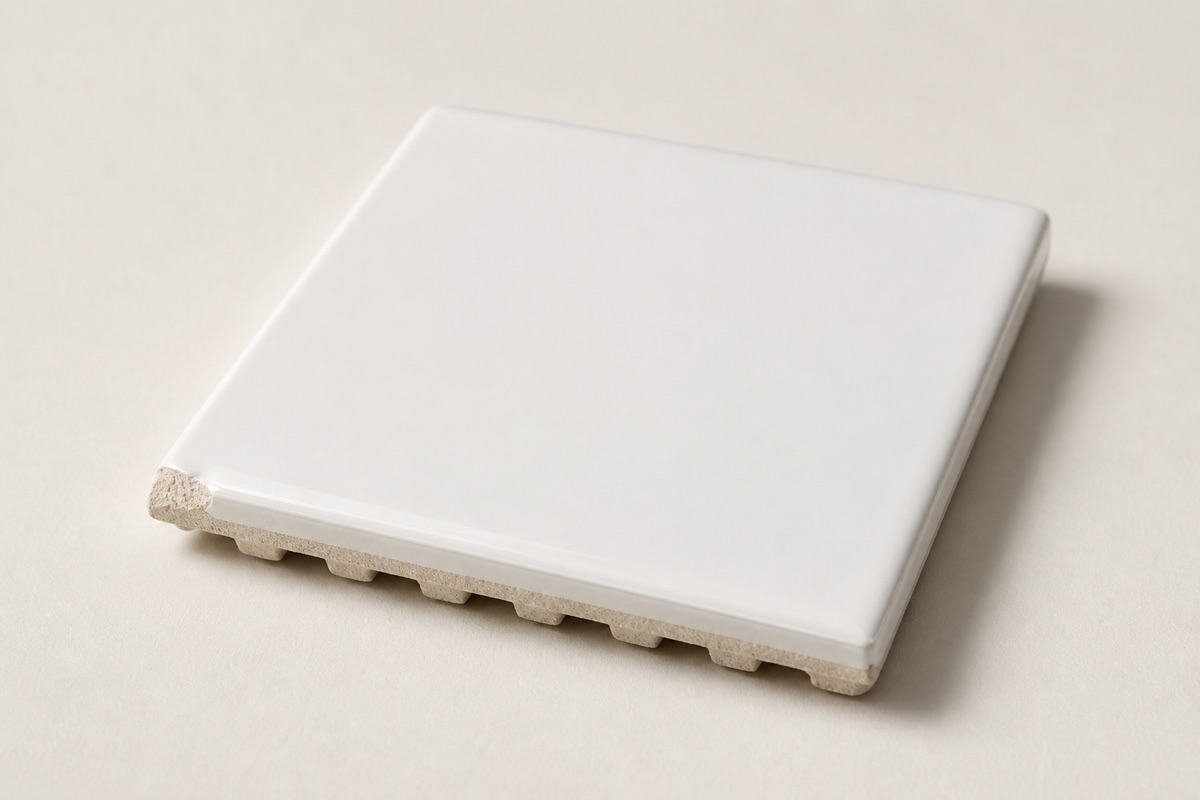
A thick bead on the ridged back spans the gap between biscuit and wall, which is how a loose wall tile goes back on.
Extra prep
- Scrape old mastic off the tile back and the wall until both are sound, dry, and free of dust. A crumbling wall is a masonry repair first.
Reviewed and adjusted by an editor.
Why this answer
- Two jobs that look the same and are not. Setting a tile back onto a wall wants a thick construction adhesive on the biscuit; mending a broken tile is the same clean-break problem as any other ceramic and still wants epoxy. Floor tile and wet areas are laid in thinset mortar, which is not a household adhesive — do not treat a cartridge as a substitute for a bed of mortar underfoot. Silicone seals grout and wet edges; it does not set a tile that has to stay put.
- A thick bead on the ridged back spans the gap between biscuit and wall, which is how a loose wall tile goes back on. It is a repair, not a mortar bed — floor tile and wet areas still want thinset.
- Scrape old mastic off the tile back and the wall until both are sound, dry, and free of dust. A crumbling wall is a masonry repair first.
How to do it
Step by step
- Pop the tile off if it is still hanging, and scrape old mastic from the back and the wall until both are sound, dry, and free of dust.
- Dry-fit the tile so it sits flush with its neighbors and the grout joints line up.
- Butter a zigzag of construction adhesive on the ridged back, staying off the edges so it does not squeeze into the joints.
- Press into place, pull off briefly to let it flash, press back, and tape or brace it so it cannot sag.
- Let the adhesive cure fully, then grout the joints and seal the wet edges — silicone belongs here, not under the tile.
Conditions
When the answer changes
A floor tile, or a shower whose backer is soft, is thinset or a waterproofing repair — a cartridge is not a mortar bed. A tile cracked through its body is a replacement. If the wall behind it is crumbling, fix the wall first.
Questions
Common questions
- Why keep the adhesive off the tile edges?
- Squeeze-out in the grout joint is hard to tool later and can stain the glaze. Leaving the edges clear also lets the grout key into the gap the way it did when the wall was first tiled.
- How do I stop a wall tile from sliding down while the adhesive grabs?
- Tape it to the neighboring tiles, or wedge a spacer under the bottom edge, and check that it is still flush after you let go. Construction adhesive grabs, but a tile on a vertical face can still creep before that grab is enough.
- When should I grout after resticking a tile?
- After the setting adhesive has fully cured, so grouting does not shift the tile. Then seal wet edges with silicone if the joint will see water. Grout and seal are finishes on a set tile, not a way to hold a loose one.
- Will this method work on a loose floor tile?
- No. A few beads under a floor tile leave hollows that crack underfoot. Floor tile needs a full bed of thinset. This page is for a single loose wall tile whose backer is still sound.