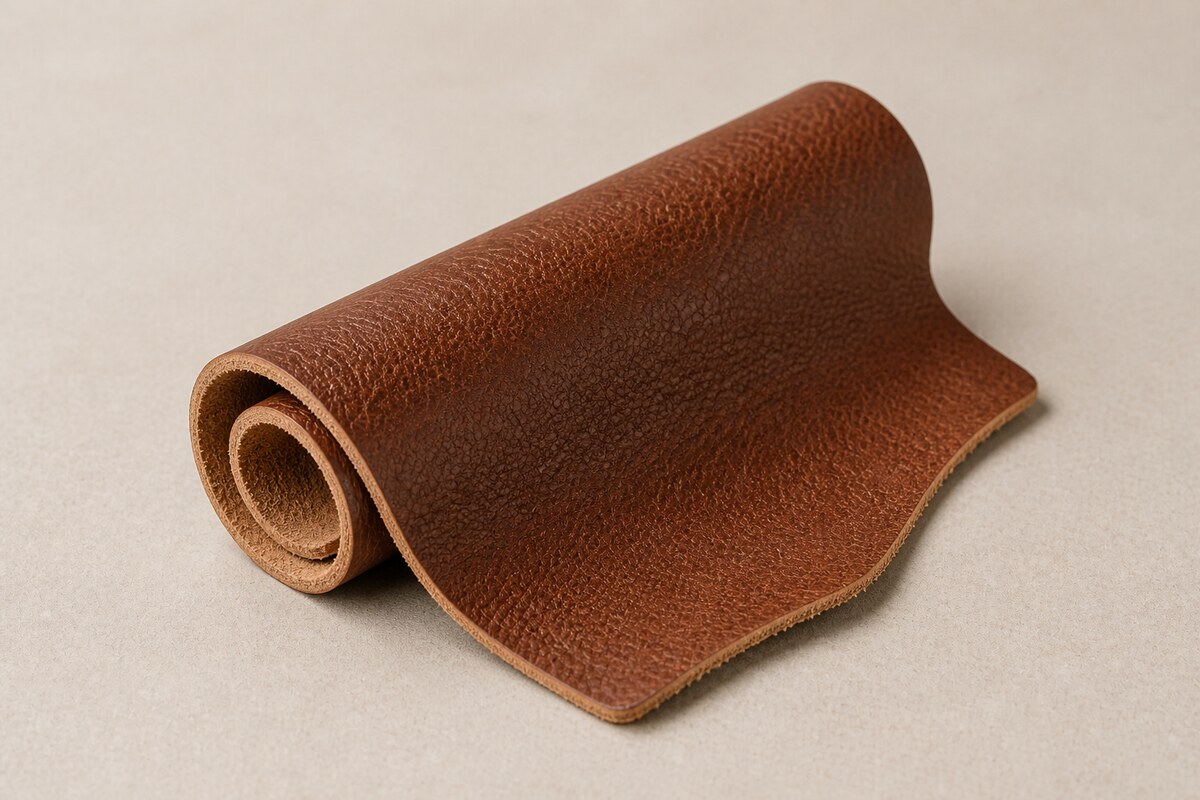
Best bet
Grips on contact and stays flexible — what a cobbler reaches for on a tear that has to bend.
Reviewed and adjusted by an editor.
Why this answer
- Porous and flexible like fabric but denser — the bond must bend without cracking, and load-bearing seams want stitching as backup.
- Grips on contact and stays flexible for years — what a cobbler reaches for.
How to do it
Step by step
- Clean both faces of the tear and let them dry; lift the edges so you can coat them.
- Roughen smooth or finished leather on the flesh side of the tear so the adhesive has something to grip.
- Coat both faces with contact cement and wait until the film is tacky, not wet.
- Align carefully — contact cement grabs at once — and press from the center out.
- Weight the repair flat and leave it until fully cured before flexing or sitting on it.
Conditions
When the answer changes
Thin garment leather prefers a softer fabric adhesive. A load-bearing strap, belt, or handle wants stitching — glue alone is temporary. Finish and dye after the adhesive has cured; contact cement can darken a cut edge.
Alternatives
What else works
Softer and less aggressive than contact cement; right for thin garment leather.
Avoid
What not to use
Avoid
Silicone
Silicone — it sits on the surface as a rubbery film, peels away at the edge, and leaves a permanent shine.
Avoid
Epoxy
Epoxy — it cures into a hard plate, and leather is meant to bend.
Avoid
Wood glue (PVA)
Wood glue — it dries stiff, darkens the leather, and lets go as soon as the piece flexes.
Avoid
Construction adhesive
Construction adhesive — far too thick and stiff for a flexible piece you hold in your hands.
Avoid
Super glue (CA)
Super glue — it dries stiff and pale, and the repair cracks the first time the leather bends.
Avoid
Solvent cement
Solvent cement — it leaves no adhesive behind on hide, and the solvent strips the oils that keep the leather supple.
Questions
Common questions
- Should a leather tear be glued or stitched?
- Glue is enough for a surface tear that only has to flex and look closed. A strap, belt, handle, or other load-bearing seam still wants stitching; adhesive can hold the edges in place while you sew, but it should not carry the load alone.
- Why coat both faces of a leather tear?
- Contact cement bonds to itself. A coat on only one side leaves the other face as a weak, unfinished film. Both sides need a thin, even coat that has gone tacky before they meet.
- Can I glue the finished, shiny side of leather?
- The finish is often the weak layer. Lift the tear and work from the flesh side, or scuff the finished face where the adhesive has to hold. Gluing only to a sealed coating is how the repair peels off in one sheet.
- Will contact cement stain the leather?
- It can darken a cut edge and leave a shine if it squeezes onto the grain. Coat thinly, keep the adhesive off the finished face, and wait until the repair has cured before dyeing or applying a leather finish.