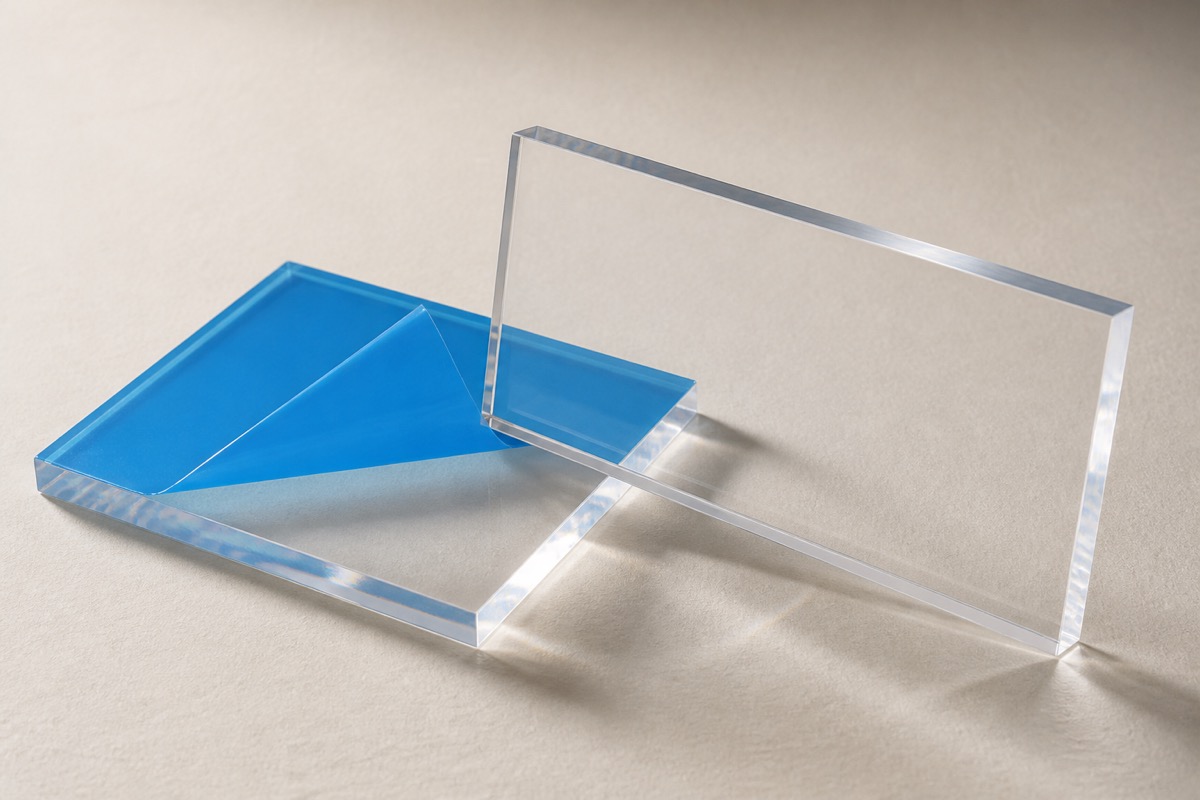
Best bet
It welds two touching edges into one piece and leaves a joint you can see through — the only method that keeps a clear part clear.
Extra prep
- Peel the protective film back only at the joint, make sure both edges are flat and touching along their whole length, and hold the parts square in a jig or with tape while the seam sets.
Not for: Gap or poor fit
Reviewed and adjusted by an editor.
Why this answer
- The only material here where how the joint looks is part of whether it works, because you can see straight through it. Acrylic dissolves in the right solvent, so two clean edges can be welded into a seam that is nearly invisible. The same sensitivity is the hazard: super glue vapour, solvent-based adhesives, and household cleaners all fog or craze the surface with a web of tiny cracks, often nowhere near where you applied them.
- Run into the seam by capillary action, it welds the two edges into one piece and leaves a joint you can see through — the only method that keeps a clear part clear.
- Peel the protective film back only at the joint, make sure both edges are flat and touching along their whole length, and hold the parts square in a jig or with tape while the seam sets.
How to do it
Step by step
- Peel the protective film back only at the joint; leave the rest on so solvent cannot fog the face.
- Dry-fit until the edges touch along their whole length — solvent cement welds a seam, it does not fill a crack.
- Tape or jig the parts square so they cannot drift.
- Apply acrylic cement and let it run into the seam by capillary action; do not flood the face.
- Leave the joint still until it has set, and do not polish or load the sheet until the cement has fully cured.
Conditions
When the answer changes
A crack you can see daylight through needs a clear epoxy fill or a new sheet — cement cannot bridge a gap. Super glue bonds acrylic quickly but its vapour blooms white across the surrounding surface. Contact cement and other solvent adhesives attack the sheet on contact.
Alternatives
What else works
The choice when the fit is bad. It fills what a weld cannot close, but the glue line stays visible and a general-purpose epoxy can yellow in sunlight.
Better when: Gap or poor fit
Avoid
What not to use
Avoid
Spray adhesive
Spray adhesive — a repositionable film, not a bond; it slides off smooth plastic under any load.
Avoid
Wood glue (PVA)
Wood glue — plastic has no pores for it to soak into, so it peels off in a sheet.
Questions
Common questions
- Why not use super glue on cracked acrylic?
- It can bond the edges quickly, but the vapour often blooms as a white frost across the surrounding sheet and can craze the plastic. That damage sits well away from the crack and cannot be polished out reliably.
- Can acrylic cement close a crack I can see through?
- No. Cement welds edges that already touch. Daylight in the crack means a gap, so use a clear epoxy as a visible fill or replace the sheet.
- Why leave the protective film on while cementing acrylic?
- The film keeps stray solvent off the face. Peel it back only at the joint so the cement can reach the edge; uncovered sheet is what fogs when vapour or runoff lands on it.
- Will an epoxy acrylic repair stay clear outdoors?
- A general-purpose epoxy can yellow in sunlight even when it starts clear. Cement is the better outdoor joint when the edges fit; if you must fill a gap, choose a product whose maker documents outdoor or UV use, or plan to replace the sheet.