Todos los tipos de pegamento
Tipo de pegamento
Adhesivo solvente
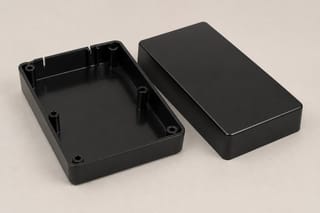
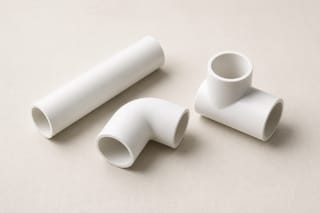
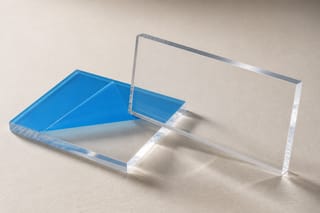
No es un pegamento al uso: el disolvente ablanda ambas caras de plástico, se presionan entre sí y, al evaporarse el disolvente, las dos piezas quedan fusionadas en una sola. Así es como se unen tuberías de PVC, placas de acrílico y accesorios de desagüe de ABS.
Ideal para
Qué une mejor Adhesivo solvente
También funciona, con condiciones
No adhiere en
Madera, Metal, Vidrio, Cerámica, Tejido / Tela, Caucho / Goma, Hormigón y piedra, Cuero / Piel, Espuma, Polipropileno (PP), Polietileno (PE / PEAD / PEBD), Nailon (Poliamida), Goma EVA (Espuma EVA), Fibra de vidrio (PRFV), Pladur (Cartón yeso)
Herramienta equivocada
Cualquier cosa que no pueda disolver. En metal, vidrio, madera o polipropileno no hay nada que ablandar, por lo que se evapora y deja las piezas sueltas. También necesita un ajuste perfecto: suelda una junta, no la rellena.
Uso
Cómo usar Adhesivo solvente
- 01Usa el adhesivo exacto para cada plástico. PVC, CPVC, ABS y acrílico tienen fórmulas distintas, y una errónea no hará nada o dañará la pieza.
- 02La unión debe encajar justa. El adhesivo solvente suelda superficies en contacto directo; un hueco se queda en hueco.
- 03Limpia y desbarba ambas caras, y aplica la imprimación/primer cuando la normativa de tuberías lo requiera.
- 04Ensambla de inmediato y mantén la unión quieta: el plástico ablandado puede expulsar el accesorio antes de fijar.
- 05Trabaja en un área bien ventilada y lejos de llamas: estos disolventes son volátiles e inflamables.
- 06Deja que gane resistencia antes de aplicar presión o carga. El curado continúa incluso después de que la junta se sienta sólida.
Pares de materiales
Pares de materiales para los que Adhesivo solvente es la mejor opción
Guías
Reparaciones que usan Adhesivo solvente
Preguntas
Preguntas frecuentes sobre Adhesivo solvente
- Is solvent cement the same as glue?
- No. Glue cures into a separate layer holding two parts together; solvent cement dissolves the surface of both plastics so they fuse and finish as one piece. That is why a properly cemented seam is usually as strong as the parts themselves, and why it cannot be undone.
- Can I use PVC cement on any plastic?
- No. Each formula is made for a specific plastic, and the label names it. PVC cement does nothing on polyethylene or polypropylene because it cannot dissolve them, and on acrylic it can craze and fog a clear part rather than weld it.
- Will solvent cement fill a gap in a cracked part?
- No. It only welds surfaces that actually touch, so a wide crack, a missing chip, or a sloppy fit stays weak. Use a gap-filling adhesive such as epoxy when the two faces do not meet cleanly.
- Do I need primer before solvent cement?
- It depends on the material and the job. Plumbing codes commonly require primer on pressure PVC pipe because it cleans and pre-softens the surfaces, while many acrylic and model applications use the cement alone. Follow the cement's own instructions and any code that applies.
- How soon can I use a joint made with solvent cement?
- Later than it feels ready. The seam gets firm quickly, but full strength arrives as the remaining solvent leaves the joint, and cold or damp conditions slow that down. Manufacturers publish set and cure times per pipe size and temperature — go by that chart, not by touch.