Guía
Unir tuberías y accesorios de PVC
Usa PVC cement para esta reparación. It softens both faces so the fitting and the pipe finish as a single piece — the only joint that holds pressure.
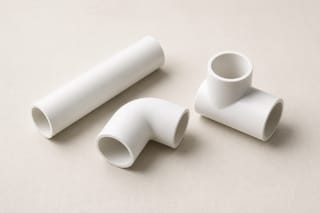
Esta tarea implica: Inmersión en agua
Mejor pegamento para esta reparación
It softens both faces so the fitting and the pipe finish as a single piece — the only joint that holds pressure.
Preparación extra
- Corta a escuadra, desbarba y limpia con limpiador de PVC antes de insertar sin girar.
No para: Holgura o mal ajuste
Revisado y ajustado por un editor.
Por qué PVC cement funciona aquí
- El plástico doméstico más fácil de unir gracias al adhesivo solvente para PVC, que funde y suelda químicamente las piezas. Para unir PVC con otros materiales, usa adhesivo de montaje híbrido o epoxi tras lijar.
- Ablanda y suelda el accesorio y el tubo en una pieza estanca bajo presión.
- Corta a escuadra, desbarba y limpia con limpiador de PVC antes de insertar sin girar.
Cómo hacerlo
Unir tuberías y accesorios de PVC: paso a paso
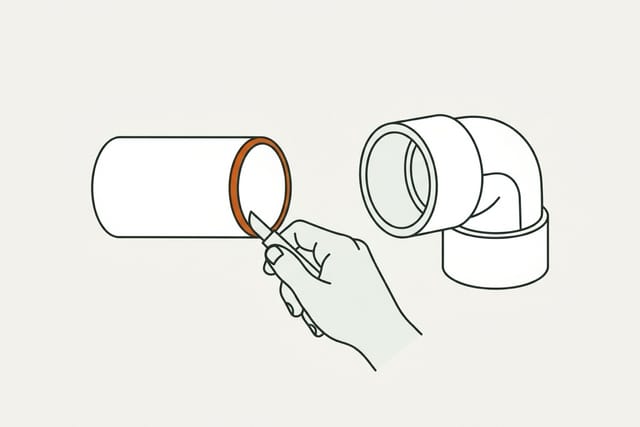
- Corta el tubo a escuadra y desbarba el canto interior y exterior.
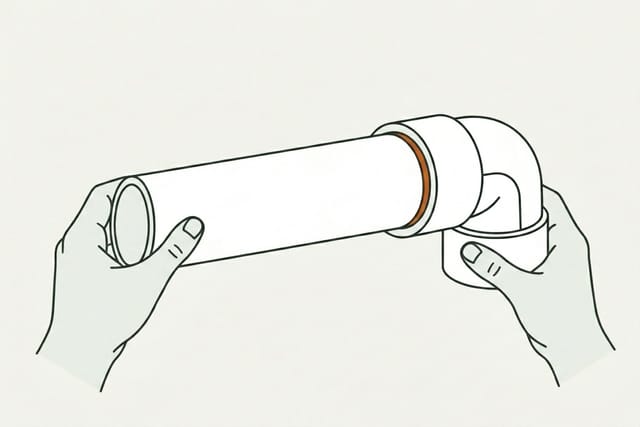
- Haz una prueba en seco y marca la posición con un rotulador.
- Aplica limpiador de PVC en el tubo y en el interior del accesorio.
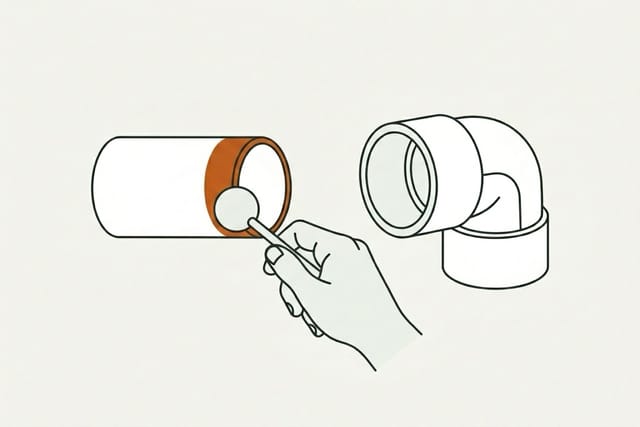
- Aplica adhesivo solvente abundante en el tubo y una capa fina en el accesorio.
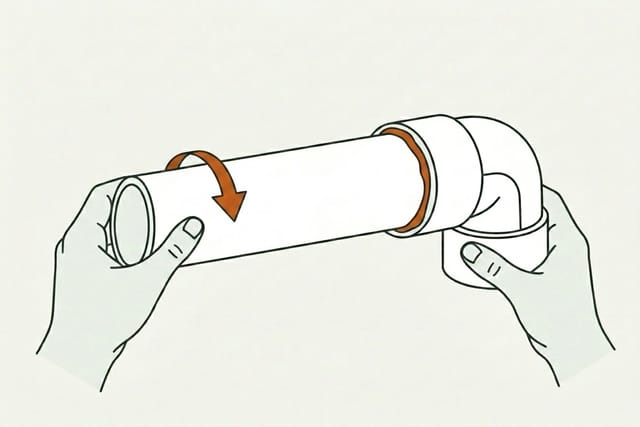
- Inserta el tubo a fondo girando un cuarto de vuelta para alinear las marcas y mantén presionado 20 segundos.
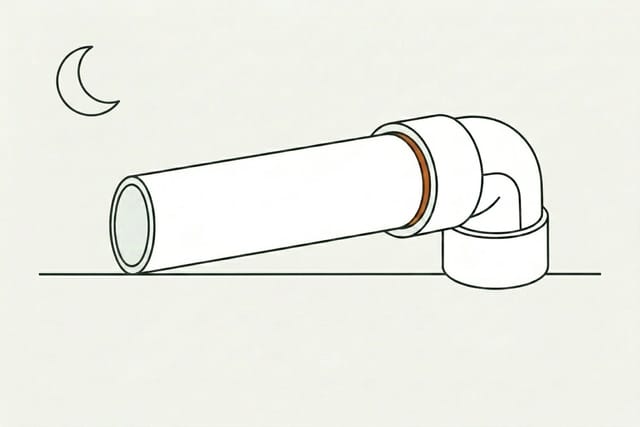
Condiciones
Cuándo usar 2-part plastic epoxy en su lugar
Sigue las instrucciones del bote de adhesivo solvente y el código de fontanería. La unión debe realizarse en los primeros 5 segundos tras aplicar el producto.
Alternativas
Otros adhesivos que funcionan
The repair once cement is out: it fills a broken or badly fitting joint that a weld would leave hollow. It is not a pressure joint.
Mejor cuando: Holgura o mal ajuste
Preparación extra: Scuff the gloss off both faces and wipe away the dust and any pipe printing ink.
Preguntas
Preguntas frecuentes sobre esta reparación
- Can I join PVC pipe with ordinary glue instead of PVC cement?
- Not for a joint that has to hold water or pressure. PVC cement softens both faces so they finish as one piece. A general-purpose adhesive sits on the surface and is a repair at best, not a plumbing joint.
- Do I have to use primer with PVC cement?
- Follow the pipe standard and the cement can. Primer cleans the gloss off and starts softening the plastic; where the code or the product calls for it, skipping it is how a joint looks assembled and still leaks.
- Can solvent cement repair a cracked PVC pipe?
- No. Cement welds faces that already touch. A crack, a chip, or a fitting that will not close needs a replacement section, or a filled repair that is not treated as a pressure joint.
- Will PVC cement work on ABS or CPVC?
- Only a cement whose label names that plastic. PVC, CPVC, and ABS each have their own formula; the wrong can either does nothing or attacks the fitting.