Guide
Réparer une fissure sur une plaque d'acrylique
Utilisez Acrylic cement pour cette réparation. It welds two touching edges into one piece and leaves a joint you can see through — the only method that keeps a clear part clear.
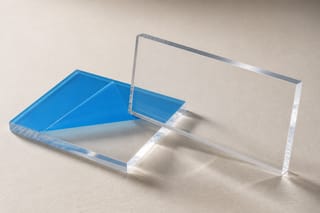
Cette tâche implique: Joint de colle visible
Meilleure colle pour cette réparation
It welds two touching edges into one piece and leaves a joint you can see through — the only method that keeps a clear part clear.
Préparation supplémentaire
- Les chants doivent être polis ou rabotés d’équerre sans rayures pour une soudure invisible.
Pas pour : Jeu ou mauvais ajustement
Relu et ajusté par un rédacteur.
Pourquoi Acrylic cement fonctionne ici
- Pour assembler de l’acrylique sur de l’acrylique, la colle solvant dédiée (soudure chimique) est la référence absolue : elle fusionne les surfaces en un joint totalement invisible. La cyanoacrylate provoque des blanchiments (voile opaque) et l’époxy standard peut jaunir avec le temps.
- Elle dissout chimiquement l’acrylique pour fusionner les pièces en un joint parfaitement transparent.
- Les chants doivent être polis ou rabotés d’équerre sans rayures pour une soudure invisible.
Comment faire
Réparer une fissure sur une plaque d'acrylique : étape par étape
- Nettoyez la fissure à l'alcool et bloquez son extrémité avec un petit trou de foret fin (1 mm).
- Alignez parfaitement les deux bords de la fissure.
- Déposez une goutte de solvant acrylique avec une seringue : il s'infiltre instantanément.
- Maintenez la pièce sans bouger pendant 2 minutes.
- Laissez polymériser 24 heures avant d'exercer une quelconque contrainte.
Conditions
Quand utiliser Clear 2-part epoxy à la place
Utiliser Clear 2-part epoxy
Percez un micro-trou à l'extrémité de la fissure pour stopper sa progression, puis appliquez la colle solvant.
Alternatives
Autres colles qui conviennent
The choice when the fit is bad. It fills what a weld cannot close, but the glue line stays visible and a general-purpose epoxy can yellow in sunlight.
Mieux quand : Jeu ou mauvais ajustement
Questions
Questions fréquentes sur cette réparation
- Why not use super glue on cracked acrylic?
- It can bond the edges quickly, but the vapour often blooms as a white frost across the surrounding sheet and can craze the plastic. That damage sits well away from the crack and cannot be polished out reliably.
- Can acrylic cement close a crack I can see through?
- No. Cement welds edges that already touch. Daylight in the crack means a gap, so use a clear epoxy as a visible fill or replace the sheet.
- Why leave the protective film on while cementing acrylic?
- The film keeps stray solvent off the face. Peel it back only at the joint so the cement can reach the edge; uncovered sheet is what fogs when vapour or runoff lands on it.
- Will an epoxy acrylic repair stay clear outdoors?
- A general-purpose epoxy can yellow in sunlight even when it starts clear. Cement is the better outdoor joint when the edges fit; if you must fill a gap, choose a product whose maker documents outdoor or UV use, or plan to replace the sheet.